Buying real estate in Costa Rica can feel like Canada or the U.S. at first glance: you find a place, make an offer, put down a deposit, complete due diligence, and close. The difference is that many of the guardrails you may be used to—industry regulation, a single comprehensive MLS, and third-party “system” checks—are lighter or more fragmented here, so the buyer’s process needs to be more intentional.
This is general information, not legal advice. For legal guidance, work with an independent Costa Rica lawyer/notary.
What’s the typical step-by-step flow for buying property in Costa Rica?
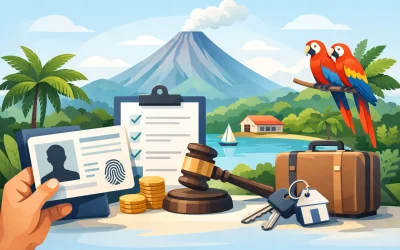
Most purchases follow an offer–deposit–due diligence–closing sequence, but you’ll want your paperwork and checks lined up earlier than you might back home. (Quatro Legal)
A common flow looks like this:
- Locate a property (and confirm what’s actually included: title, appliances, furniture, water rights, access).
- Gather key facts before offering (survey plan, registry details, taxes, HOA/condo rules if applicable).
- Put the offer into writing (ideally reviewed by your lawyer before you sign). (Quatro Legal)
- Place a deposit into escrow (often around 10%, but the amount and triggers are negotiable).
- Complete legal due diligence (title, liens, boundaries, zoning, municipal status, utilities, and more).
- Satisfy the conditions (or renegotiate/exit if something doesn’t match what you were sold).
- Close with a Costa Rica notary (the deed is drafted, signed, taxes paid, and the transfer is filed).
Why do Costa Rica purchases require a different mindset than Canada or the U.S.?
Because the market’s information systems and professional oversight are less standardised, your “trust but verify” work moves to the top of the checklist.
Two practical realities shape everything:
- Listings are fragmented. Costa Rica doesn’t operate like a single, authoritative MLS pipeline, so you’re relying more on networks and local knowledge.
- The notary role is central. A Costa Rican Notary Public is a qualified lawyer who executes the transfer deed and files it through the formal system (“protocolo” and registration).
How do you choose a realtor wisely when there’s no single “master listing”?
Pick an agent based on proof of local competence, not just friendliness or a glossy Instagram feed.
Use this quick filter:
- Hyper-local experience: “How many deals have you closed in this specific district in the last 12 months?”
- Comparable sales reality check: “Show me the comps you’re using and where they came from.”
- Transparency: “Are you representing me only, the seller only, or both?”
- Problem spotting: “What’s the most common deal-breaker you see here—water, access, zoning, title, or construction quality?”
If an agent gets vague or defensive when you ask for specifics, treat that as information.
Why should your lawyer be independent of the seller and the agent?
Because your lawyer’s job is to find problems early—especially the ones that would make you walk away or renegotiate—without any pressure to “keep the deal alive.”
In Costa Rica, the closing is typically handled by a notary-lawyer who drafts the transfer deed and registers it, which makes legal competence (and independence) non-negotiable.
What exactly happens at closing in Costa Rica?
Closing is the moment the notary executes the transfer deed and begins the formal registration process.
Key points foreign buyers often miss:
- “Wet ink” formality: Transfers are signed personally before a Costa Rican notary and entered into the notary’s official book (“protocolo”).
- Registration matters: The deed is filed with the National Registry as part of completing the transfer.
What is “due diligence” in Costa Rica, and what should it cover?
Due diligence is a structured set of legal and practical checks to confirm the property is what you think you’re buying—and that you can use it the way you intend.
A solid due diligence list often includes:
- Registry title search: ownership, liens/encumbrances, easements, boundaries.
- Survey plan (plano catastrado): confirm the recorded plan matches the reality on the ground.
- Municipal status: property taxes and municipal obligations (buyers don’t want inherited surprises).
- Zoning/land use: what can be built, setbacks, height limits, commercial use, etc.
- Utilities and access: legal road access, water availability/permissions, power, and drainage.
- If it’s a condo/HOA: bylaws, fees, arrears, restrictions on rentals or renovations.
Buying vacant land usually needs extra scrutiny (water and legal access can make or break a build), while buying a finished home adds condition, permits, and compliance checks.
How does escrow work, and what should you insist on?
Escrow protects both sides by holding funds with a neutral third party until the contract conditions are met.
Smart escrow habits:
- Use a proper escrow agreement with clear release triggers (not “we’ll sort it out later”).
- Tie releases to milestones (due diligence approval, deed signing, registry filing steps).
- Put the “what if” scenarios in writing (late documents, title issues, seller non-performance).
What are typical closing costs in Costa Rica, and who pays them?
Closing costs are negotiable between buyer and seller, and they often total roughly 4–6% depending on the structure of the deal.
Common components include:
- Property transfer tax (often cited at 1.5%).
- National Registry fees/stamps (varies by price and filing).
- Notary/legal fees (plus VAT on professional services).
- Escrow fees if you use an escrow service.
The practical takeaway: negotiate costs in the offer, not after everyone is emotionally attached.
Is title insurance a thing in Costa Rica?
Title insurance can exist but it’s not the default safety net here, so buyers should treat due diligence as the main protection.
Because availability and usage vary by provider and transaction, ask your lawyer what is realistic for your specific property type and location.
What should you ask before you sign anything?
You want answers that are specific, documented, and easy to verify.
Ask for:
- Registry title report + confirmation of liens/encumbrances
- Survey plan (plano catastrado) and boundary confirmation
- Proof property taxes/municipal fees are current.
- Clear statement of what conveys (fixtures, furniture, appliances)
- For condos: HOA bylaws, budgets, fee history, and any pending assessments
- A written closing-cost allocation in the offer
FAQ
Do foreigners have the same right to buy property in Costa Rica as locals?
Yes—foreigners generally can own property in Costa Rica, similar to locals, though certain special zones and structures can add complexity.
How long does a typical purchase take?
Many deals aim for a 30–60 day window, but due diligence findings, document delays, or extra permitting questions can stretch timelines.
What documents will I hear mentioned most often?
You’ll commonly see the plano catastrado (survey plan) and the escritura de traspaso (transfer deed).
Who actually prepares the transfer deed?
A Costa Rican notary-lawyer typically drafts and authorises the deed and coordinates the registration steps.
Where can I read more from a Costa Rica–focused legal perspective?
Costa Rica Canada Law publishes practical explainers on closings, escrow, and closing costs. (

Howler Staff are John, Terry and whomever else we can get to write great articles.