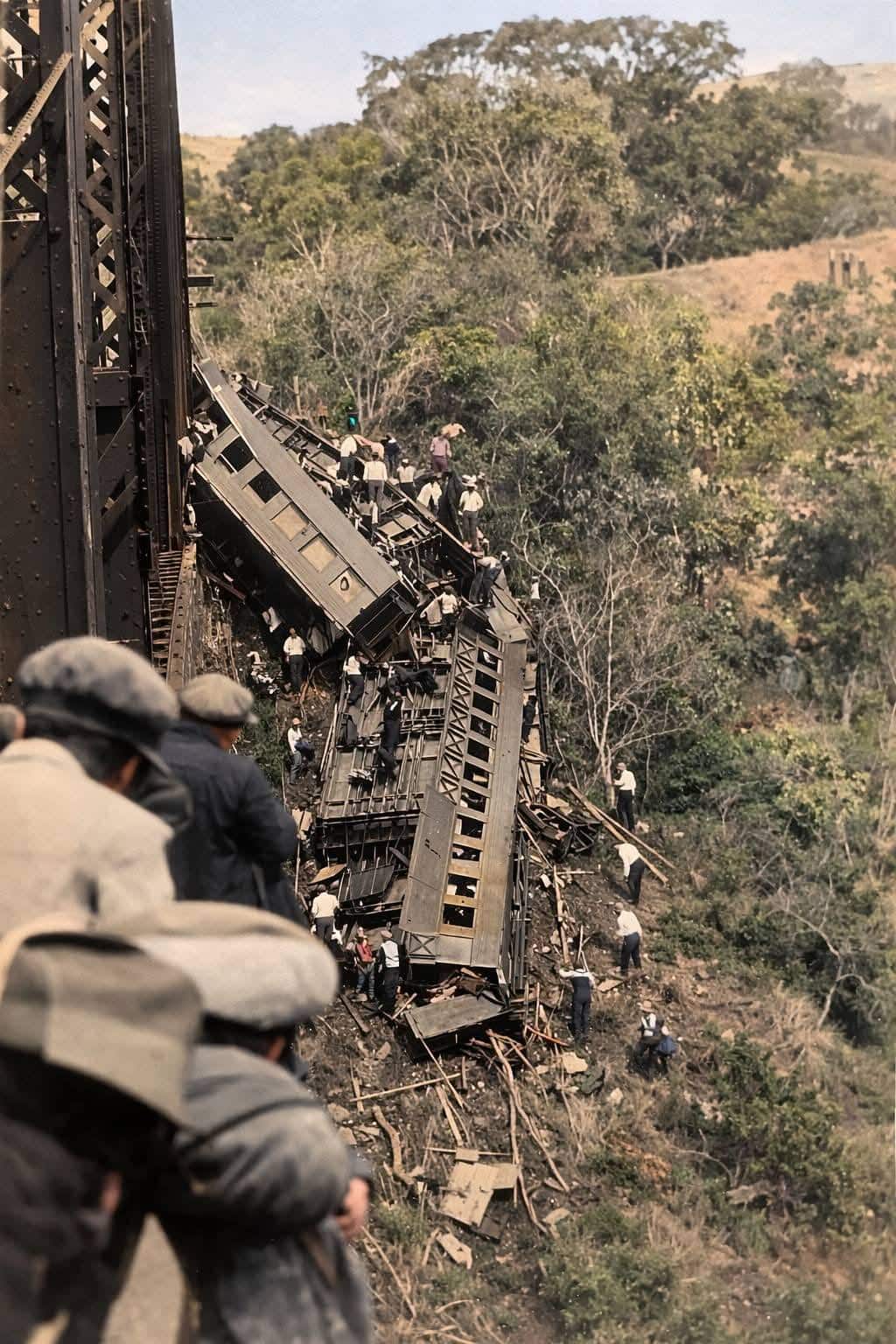
On the morning of March 14, 1926, what should have been a day of faith, charity, and community became one of the darkest days in Costa Rican history. Families from Alajuela and Heredia boarded a special passenger train bound for Cartago, where a charity fair was being held to raise funds for the Asilo de la Vejez. Instead of arriving at a celebration, many never arrived at all. As the train entered the Black Bridge over the Virilla River canyon at about 8:17 a.m., disaster struck. One hundred years later, the Virilla Tragedy still stands as the deadliest train accident in Costa Rica and is widely regarded as the worst rail disaster in Central America. (Una Comunica)
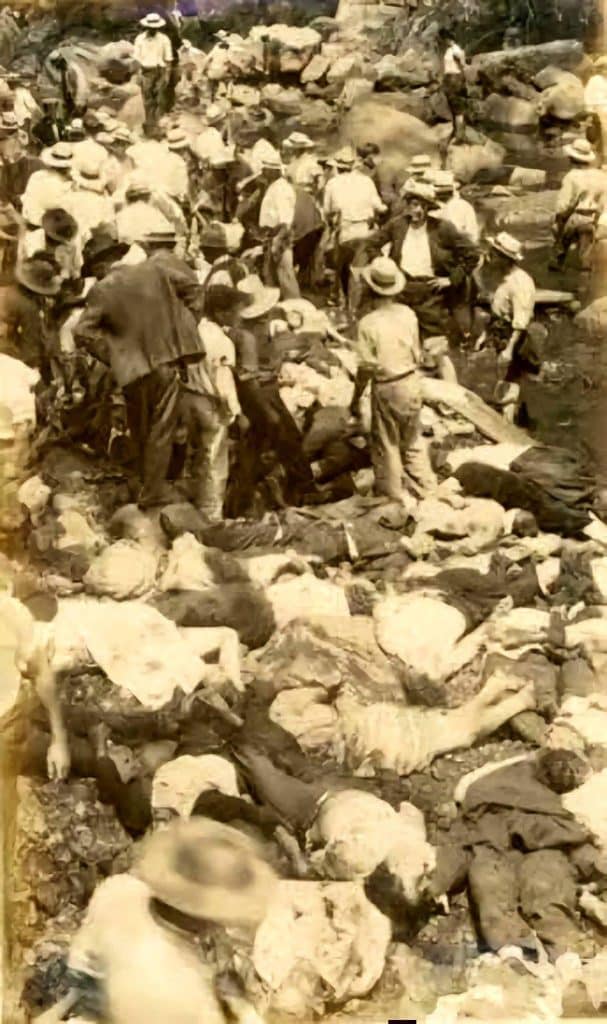
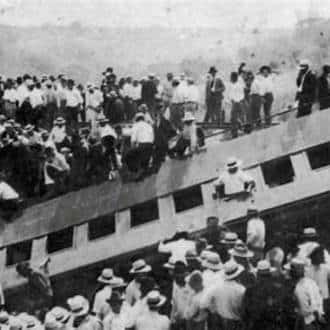
That is part of what makes this centennial so powerful. The Virilla Tragedy is not simply an old headline or a faded history lesson. It is one of those national scars that never quite disappears. Even a century later, the story still carries a strange immediacy because it was not an abstract disaster. It happened to ordinary people on an ordinary journey, on a route that was meant to bring them together for something good. (Una Comunica)
The train consisted of six cars, but the numbers tell the real story of how dangerous that trip had become before it ever reached the bridge. Later investigations, cited by the Universidad Nacional and echoed in current reporting, found that each wagon was built for 52 passengers, yet the average load was around 130 people per car. Ticket resale, weak controls, and overcrowding turned a routine excursion into a rolling risk. Add in a speed greater than what was recommended for a section with a curve before the bridge, and the conditions for catastrophe were already in place. (Una Comunica)
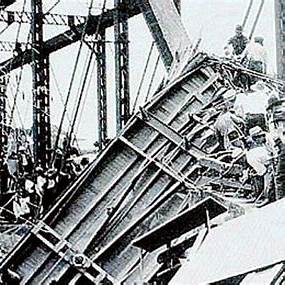
When the convoy reached the Virilla crossing, three cars made it through. The others did not. Contemporary accounts say one car was left hanging, another plunged into the ravine, and another was smashed against the structure. The bridge itself was about 48 metres long, and the canyon below dropped roughly 60 metres to the river, making the accident even more devastating and rescue efforts extraordinarily difficult. (Una Comunica)
The official count most often cited today is 248 dead and 93 injured. That remains the clearest same-day figure supported by current Costa Rican reporting and university research. At the same time, some later retellings have placed the death toll much higher, sometimes at 385. Historians have noted that the variation comes from inconsistent records, the way the story was repeated over time, and the fact that some victims may have died after the first counts were reported. Even the uncertainty says something important: the scale of the tragedy was so immense that the country struggled to measure it cleanly. (Una Comunica)
There is also something deeply human in the details that survive. This was not a train filled with anonymous passengers. These were neighbours, relatives, parishioners, and working families. Whole communities in Alajuela and Heredia were touched by the loss. In many cases, the tragedy entered family memory and stayed there, passed down not as a statistic but as a missing person at the table, a surname on a monument, a story told softly by grandparents who never forgot. The Virilla Tragedy endures because it belongs not just to the archive, but to bloodlines and local memory. (Una Comunica)
What makes the story even more haunting is how preventable it appears to have been. The findings later pointed toward excess speed, severe overcrowding, poor supervision, and a lack of effective control by both organisers and authorities. In other words, this was not simply bad luck at a bridge. It was a failure of responsibility. That truth is part of why the event still resonates so strongly in Costa Rica today. The Virilla Tragedy was a human disaster, but it was also a warning about what happens when systems fail the people trusting them. (Una Comunica)
The 100th anniversary, marked on March 14, 2026, brought that warning back into public view. In the days surrounding the centennial, Costa Rica’s Fire Department conducted a rescue simulation at the Virilla Bridge area, using the anniversary not only as a tribute but also as a reminder that complex emergencies in difficult terrain still demand preparation, coordination, and training. The message was clear: memory has value only if it sharpens the present. (Teletica)
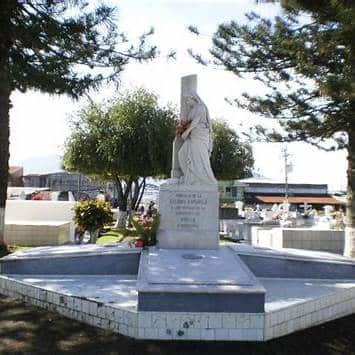
The tragedy is also still anchored in physical places that people can visit today. A commemorative plaque remains in the park of Santo Domingo de Heredia, and a larger monument stands in the cemetery of Alajuela. These are not grand tourist sites. They are quieter than that. They ask for pause rather than spectacle. They remind visitors that history in Costa Rica is not only found in museums and textbooks, but also in parks, cemeteries, bridges, and the landscapes where lives changed in an instant. (Una Comunica)
A century later, the Virilla Tragedy still matters because it speaks to more than loss. It speaks to accountability. It speaks to memory. And it speaks to the fragile line between celebration and catastrophe when safety is treated as an afterthought. Costa Rica has changed enormously since 1926, but the questions left behind by the Virilla disaster still feel modern: Were warnings ignored? Were limits pushed for convenience? Did institutions protect people the way they should have? That is why the story remains alive. The bridge is part of the history, but the lesson reaches far beyond it. (Una Comunica)
For many readers, the centennial is a chance to rediscover a piece of Costa Rican history that deserves to be remembered with more than a date and a number. It deserves to be remembered as a national turning point, a story of lives interrupted, and a reminder that behind every historical tragedy are ordinary people who woke up expecting a normal day. The Virilla Tragedy remains unforgettable precisely because it was so heartbreakingly human. (Una Comunica)
FAQs
What was the Virilla Tragedy?
The Virilla Tragedy was a train derailment that happened in Costa Rica on March 14, 1926, at the Black Bridge over the Virilla River canyon. It is widely considered the worst train accident in Costa Rican and Central American history. (Una Comunica)
How many people died in the Virilla Tragedy?
The figure most commonly supported in current Costa Rican reporting is 248 dead and 93 injured, although some later accounts have cited higher death tolls. (Una Comunica)
What caused the Virilla train disaster?
Investigations pointed to severe overcrowding, ticket resale, weak supervision, and excessive speed on a curved section before the bridge. (Una Comunica)
Where did the Virilla Tragedy happen?
It happened at the Black Bridge over the Virilla River canyon, in the area between Tibás and Santo Domingo de Heredia. (CR Hoy)
Why is the Virilla Tragedy still important today?
It remains important because it exposed major safety failures and left a lasting mark on families and communities across Costa Rica. Its centennial has renewed interest in remembrance and emergency preparedness. (Una Comunica)
How did Costa Rica mark the 100th anniversary in 2026?
Costa Rica marked the centennial with public remembrance and a Fire Department rescue simulation near the Virilla Bridge to honour the victims and reinforce modern emergency response training. (Teletica)
Are there memorials for the victims of the Virilla Tragedy?
Yes. A plaque remains in Santo Domingo de Heredia, and a larger monument stands in the Alajuela cemetery. (Una Comunica)