

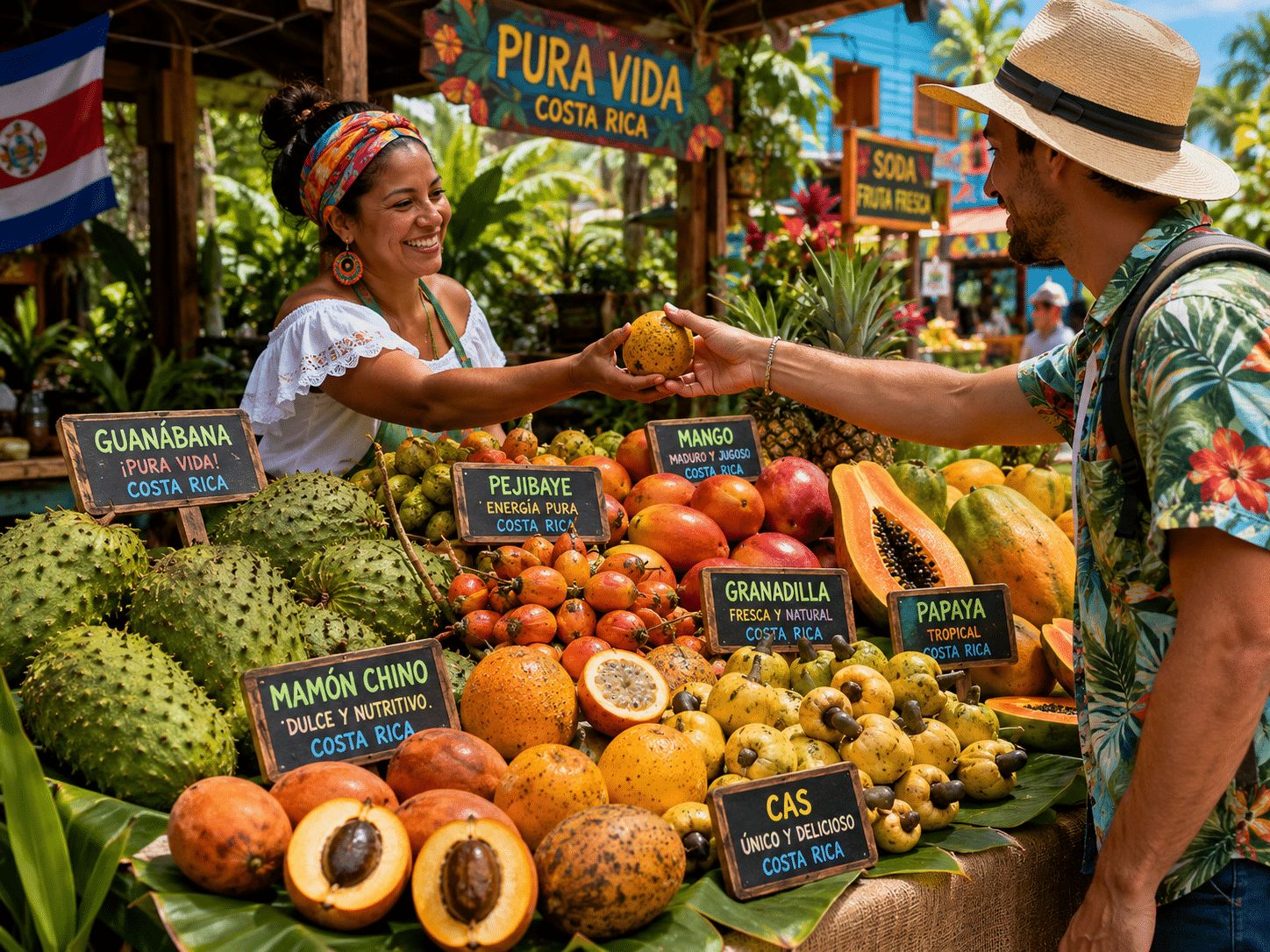
Costa Rica’s exotic fruits are some of the most colourful, flavour-packed and surprising foods travellers can discover. From roadside fruit stands to farmers’ markets and breakfast plates at jungle lodges, native and locally grown tropical fruits offer a delicious way to understand the country’s climate, culture and connection to the land.
What makes Costa Rica’s tropical fruits so special?
Costa Rica’s tropical fruits are special because they grow in rich volcanic soils, warm climates and diverse microclimates. The country’s mountains, rainforests, coastal plains and fertile valleys create ideal conditions for an extraordinary range of fruits.
Some are sweet and familiar. Others look like they were designed by nature after too much coffee. You may find fruits with spiky skins, jelly-like centres, electric colours and flavours that seem to mix pineapple, lime, banana, mango and perfume in one bite.
Costa Rican fruit culture is part of daily life:
- Fresh fruit is served at breakfast
- Smoothies, or batidos, are found almost everywhere
- Roadside stands sell seasonal favourites
- Markets offer fruits many visitors have never seen
- Local families use fruits in juices, desserts, sauces and snacks
Which exotic fruits should visitors try first?
Visitors should start with guanábana, pejibaye, cas, mamón chino, granadilla and jocote. These fruits offer a fun introduction to the flavours and textures that make Costa Rica so memorable.
A few local favourites include:
- Guanábana: Creamy, white and slightly tangy, often used in smoothies
- Cas: A tart guava-like fruit commonly made into juice
- Pejibaye: A starchy palm fruit usually boiled and eaten with mayonnaise or salt
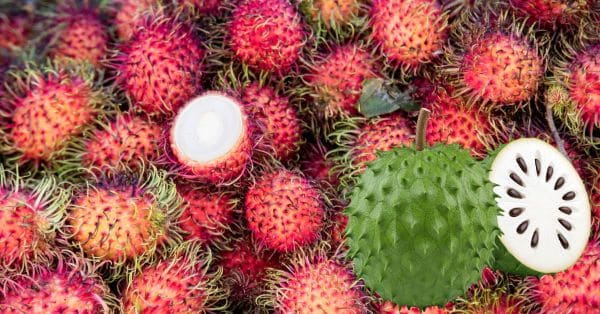
- Mamón chino: Also known as rambutan, with a hairy red shell and juicy centre
- Granadilla: A sweet passion fruit relative with crunchy seeds
- Jocote: A small fruit eaten ripe and sweet or green with salt
- Nance: A tiny yellow fruit with a strong flavour, often used in drinks or preserves
The best approach is simple: ask what is in season, buy a small bag and taste without overthinking it.
What is guanábana and why do people love it?
Guanábana is a large green fruit with soft white flesh and a flavour that is creamy, tropical and slightly sharp. Many people describe it as a mix of pineapple, strawberry, citrus and banana, although guanábana really tastes like itself.
In Costa Rica, guanábana is especially popular in:
- Fresh smoothies
- Ice cream
- Juices
- Desserts
- Chilled fruit drinks
Its texture makes it perfect for blending. If you see guanábana juice on a menu, order it cold and fresh. It is one of those flavours that makes a hot day feel instantly more forgiving.
Why is pejibaye such a Costa Rican classic?
Pejibaye is a Costa Rican classic because it is hearty, traditional and completely different from the juicy fruits tourists usually expect. It comes from the peach palm and is usually boiled before eating.
Pejibaye is not sweet like mango or papaya. It is dense, earthy and filling, almost like a tropical cousin of a chestnut or sweet potato. Locals often eat it with:
- Mayonnaise
- Salt
- Sour cream
- Coffee
- Simple breakfast plates
It may not win everyone over on the first bite, but it deserves respect. Pejibaye is not trying to be dessert. It is old-school Costa Rican comfort food.
What fruit makes the best Costa Rican juice?
Cas is one of the best fruits for Costa Rican juice because its tart flavour becomes wonderfully refreshing when blended with water and sugar. If you ask for a fresco de cas, you are getting a true local favourite.
Cas is small, green and not especially glamorous from the outside, but it shines in a glass. Its flavour is bright, acidic and slightly floral, making it ideal for humid afternoons.
Other excellent juice fruits include:
- Tamarindo
- Guanábana
- Maracuyá
- Mora
- Piña
- Papaya
- Mango
A good Costa Rican fruit juice does not need to be complicated. It just needs ripe fruit, cold water, ice and someone who knows when to stop adding sugar.
What are the strangest-looking fruits in Costa Rica?
Mamón chino, granadilla and guanábana are among the strangest-looking fruits visitors are likely to encounter. They may look unusual, but they are easy to enjoy once you know how to eat them.
Mamón chino looks like a tiny red sea creature with soft spikes. Crack it open and you will find a juicy, translucent fruit around a seed. Granadilla has a hard orange shell and a slippery seed-filled centre that tastes much better than it looks. Guanábana, with its green spiky skin, looks slightly prehistoric but delivers one of the smoothest flavours in the tropics.
Strange-looking fruits to try include:
- Mamón chino
- Granadilla
- Guanábana
- Pitahaya
- Maracuyá
- Pejibaye
- Nance
In Costa Rica, odd-looking fruit is usually a good sign. Nature rarely bothers with boring packaging.
Where can travellers find exotic fruits in Costa Rica?
Travellers can find exotic fruits at farmers’ markets, roadside stands, supermarkets, local sodas and hotel breakfasts. The best selection is usually at a feria del agricultor, or farmers’ market.
Good places to look include:
- Weekend farmers’ markets
- Roadside fruit stands
- Central markets
- Local grocery stores
- Beach-town produce shops
- Small family-run restaurants
- Smoothie stands
If you are unsure how to eat something, ask the vendor. Costa Ricans are often happy to explain whether a fruit should be peeled, boiled, blended, salted or avoided until riper.
Are Costa Rica’s exotic fruits healthy?
Yes, Costa Rica’s exotic fruits are generally healthy because they are rich in water, fibre, vitamins and natural plant compounds. They are also a smart way to stay refreshed in a hot climate.
Fresh tropical fruits can support:
- Hydration
- Digestion
- Energy
- Vitamin intake
- A more varied diet
- Healthier snacks while travelling
That said, fruit juices can include added sugar, and some fruits are naturally very sweet. Whole fruit is usually the better option if you want fibre and a slower release of energy.
How can visitors enjoy fruit like a local?
Visitors can enjoy fruit like a local by eating seasonally, trying juices, visiting markets and being open to flavours that are unfamiliar. Costa Rica rewards curious eaters.
Try these simple local habits:
- Order a fresh batido with breakfast
- Buy fruit from a roadside stand
- Try green mango with lime and salt
- Eat pejibaye warm
- Ask what fruit is in season
- Choose a new fruit every market visit
- Try fruit in ice cream or sorbet
- Keep chilled fruit in your hotel fridge for snacks
The joy of Costa Rican fruit is not only the flavour. It is the moment: sticky fingers, roadside views, warm air and the feeling that the country just handed you something bright from the tree.
Why do Costa Rica’s fruits matter beyond taste?
Costa Rica’s fruits matter because they connect travellers to farming, biodiversity, local traditions and the rhythm of the seasons. Every fruit tells a small story about climate, soil, family kitchens and regional identity.
A mango tree in a garden, a cas juice at lunch, a bag of mamón chino from a roadside seller or a breakfast plate with papaya and pineapple all reveal something about daily life. These fruits are not just colourful extras for tourists. They are part of how Costa Rica eats, shares and celebrates abundance.
FAQ
What is the most popular fruit in Costa Rica?
Mango, pineapple, banana and papaya are among the most popular fruits, but local favourites such as cas, guanábana and pejibaye are especially worth trying.
What fruit is unique to Costa Rica?
No single fruit belongs only to Costa Rica, but fruits such as cas, pejibaye, jocote and guanábana are deeply connected to local food culture.
What is cas fruit?
Cas is a small, tart guava-like fruit commonly used in Costa Rica to make a refreshing juice.
What does guanábana taste like?
Guanábana tastes creamy, sweet and tangy, with hints that may remind people of pineapple, strawberry, citrus and banana.
How do you eat pejibaye?
Pejibaye is usually boiled, peeled and eaten with mayonnaise, salt, sour cream or coffee.
What is mamón chino?
Mamón chino is rambutan, a red hairy-looking fruit with juicy, translucent flesh inside.
Are Costa Rican fruits safe to eat?
Yes, fresh fruits are generally safe when washed, peeled or prepared properly. Buy from clean vendors and use normal food-safety judgment.
What fruit should I try at a Costa Rican farmers’ market?
Try cas, guanábana, mamón chino, granadilla, jocote, pejibaye, pitahaya and maracuyá if they are available.
Can I bring Costa Rican fruit home?
Fresh fruit is often restricted by customs rules, so check your destination country’s regulations before trying to bring fruit home.
What is the best fruit drink in Costa Rica?
A cold fresco de cas is one of the most refreshing and locally loved fruit drinks in Costa Rica.




Howler Staff are John, Terry and whomever else we can get to write great articles.