

Are there trees only found in Costa Rica?
Yes, Costa Rica has tree species found nowhere else on Earth, although they are far less famous than the country’s monkeys, toucans and orchids. These are endemic trees, meaning their natural wild range is limited to Costa Rica.
The tricky part is that tree endemism is not always as tidy as a tourism brochure would like. Forests do not care about borders. Some species grow across Costa Rica and Panama, while others are known only from a small mountain range, a wet forest pocket, or a handful of herbarium records. For this reason, the most honest approach is to focus on verified examples and explain why these trees matter.
One strong example is Pleurothyrium amissum, a laurel-family tree described as endemic to the highland oak forests of Costa Rica’s Talamanca range. Kew’s Plants of the World Online also lists its native range as Costa Rica.
Why does Costa Rica have trees found nowhere else?
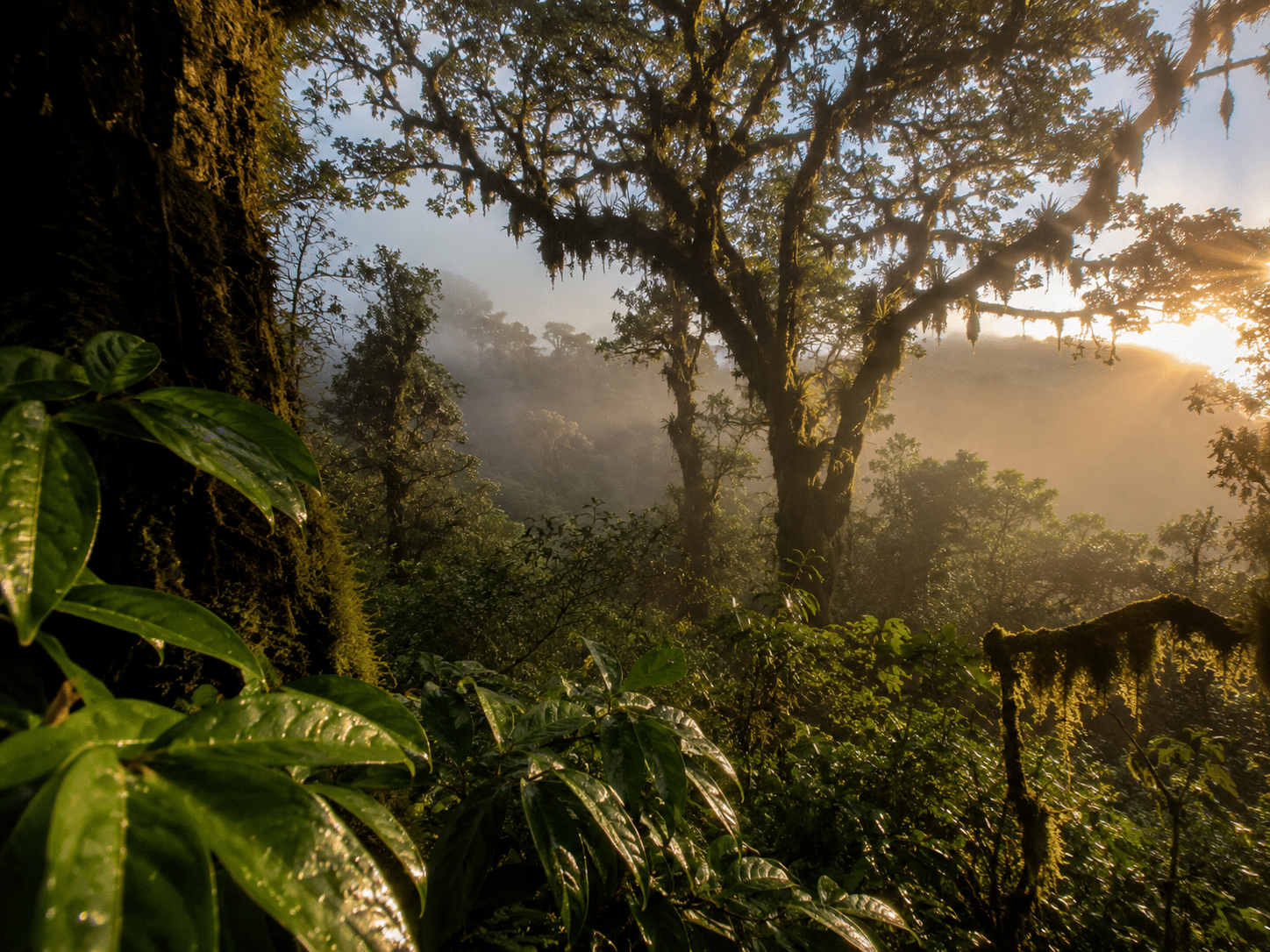
Costa Rica has endemic trees because its mountains, rainfall patterns, volcanic soils and isolated forest zones create highly specialised habitats. A tree growing in a chilly Talamanca oak forest is living in a very different world from one rooted in the hot Osa Peninsula or the dry Pacific northwest.
Costa Rica’s endemic trees are shaped by:
- Steep elevation changes
- Wet tropical and cloud forest conditions
- Volcanic and mountain soils
- Isolated valleys and ridges
- Long periods of forest evolution
- Specialised pollinators and seed dispersers
- Protected but fragile highland ecosystems
In simple terms, Costa Rica is small only if you are looking at a road map. Botanically, it is a many-roomed mansion where each room has its own weather.
Which Costa Rica-only trees should nature lovers know?
Nature lovers should know the name Pleurothyrium, because several species in this laurel-family genus are listed with Costa Rica as their native range. Kew’s Plants of the World Online lists Pleurothyrium pauciflorum, Pleurothyrium guindonii and Pleurothyrium immersum as trees whose native range is Costa Rica.
Examples of Costa Rica-only or strongly Costa Rica-endemic trees include:
- Pleurothyrium amissum — a Talamanca highland oak forest tree
- Pleurothyrium pauciflorum — a wet tropical forest tree listed as native to Costa Rica
- Pleurothyrium guindonii — a Costa Rica-native wet tropical tree
- Pleurothyrium immersum — another Costa Rica-native tree in the laurel family
These are not the trees most visitors point at from a shuttle bus. They are not the giant Guanacaste tree in the town square or the beach almond shading a hammock. They are quieter botanical signatures, known more to botanists, forest guides and herbarium shelves than to souvenir shops.
Why are Costa Rica’s endemic trees important?
Costa Rica’s endemic trees are important because they support wildlife, store carbon, protect water and represent genetic life found nowhere else. If an endemic tree disappears from Costa Rica, it disappears from the planet.
These trees help forests by:
- Feeding insects, birds and mammals
- Holding soil on steep mountain slopes
- Creating shade and humidity for smaller plants
- Supporting fungi, mosses and epiphytes
- Capturing carbon in trunks, branches and roots
- Preserving rare genetic adaptations
- Strengthening Costa Rica’s conservation identity
A tree can be a habitat, a pantry, a nursery and a weather-maker all at once. When the tree is endemic, that whole living system becomes even more precious.
Where are Costa Rica’s rare endemic trees found?
Many Costa Rica-only trees are found in wet tropical forests, highland forests and mountain regions such as the Talamanca range. The Talamanca mountains are especially important because they contain cool, wet, isolated habitats where unusual species can persist.
Places and habitats linked to rare Costa Rican trees include:
- Talamanca montane forests
- Highland oak forests
- Wet tropical forest zones
- Cloud forest edges
- Protected mountain reserves
- Remote valleys with limited disturbance
The article describing Pleurothyrium amissum identifies it as a new endemic tree from the Talamanca montane forest, specifically linked to highland oak forest habitat.
Can visitors see trees only found in Costa Rica?
Yes, visitors can experience the habitats where endemic Costa Rican trees grow, but identifying individual species usually requires an expert guide. Unlike a scarlet macaw or a sloth, a rare tree may not announce itself with colour, noise or movement.
To appreciate these trees, try:
- Visiting cloud forest reserves with trained naturalist guides
- Exploring Talamanca highland trails
- Asking guides about endemic trees, not just animals
- Visiting botanical gardens and research collections
- Looking closely at leaves, bark, flowers and fruit
- Supporting conservation groups that protect highland forests
A good guide can turn “nice green forest” into a living library. Suddenly the canopy is no longer background scenery; it is a cast of characters.
What threatens Costa Rica’s endemic trees?
Costa Rica’s endemic trees are threatened by habitat loss, climate change, limited distribution and lack of public awareness. Some may exist in small areas, which makes them more vulnerable to changes in rainfall, temperature, disease and land use.
Key threats include:
- Forest fragmentation
- Warming cloud forest conditions
- Agricultural expansion
- Road building
- Illegal logging in vulnerable zones
- Poorly studied populations
- Small natural ranges
- Loss of seed dispersers and pollinators
A 2025 article on Costa Rica’s endemic tree Red List work notes that many threatened endemic trees occur in protected areas, but conservation data and concrete actions are still limited for some species.
How can travellers help protect Costa Rica-only trees?
Travellers can help by supporting protected areas, hiring knowledgeable local guides and treating forests as more than scenery. Conservation starts when people care about what they can barely pronounce.
Simple actions include:
- Choose eco-lodges that protect native forest
- Support reforestation with native species
- Stay on marked trails
- Avoid buying rare or illegally sourced wood
- Visit botanical gardens and conservation projects
- Ask tour operators about local tree species
- Share stories about forests, not just wildlife
Costa Rica’s rare trees are not asking to be famous. They are asking to remain standing.
FAQ: Trees Only Found in Costa Rica
What is an endemic tree?
An endemic tree is a tree that naturally grows in one specific place and nowhere else in the wild. In this article, it refers to trees whose natural range is limited to Costa Rica.
Is the Guanacaste tree only found in Costa Rica?
No, the Guanacaste tree is not only found in Costa Rica. It is the national tree and culturally important, but its natural range extends beyond Costa Rica.
Are Costa Rica’s endemic trees easy to identify?
No, many endemic trees are difficult to identify without botanical training. Leaves, flowers, fruit, bark and habitat all matter.
What is one confirmed tree found only in Costa Rica?
Pleurothyrium amissum is a strong example. It was described as a new endemic tree from Costa Rica’s Talamanca montane forest.
Why are rare trees less famous than rare animals?
Rare trees are less famous because they do not move, pose or appear on wildlife checklists as easily as birds and mammals. Yet they may support hundreds of other living things.
Where should I go to learn about Costa Rica’s rare trees?
Cloud forest reserves, Talamanca highland areas, botanical gardens and guided nature walks are good starting points.