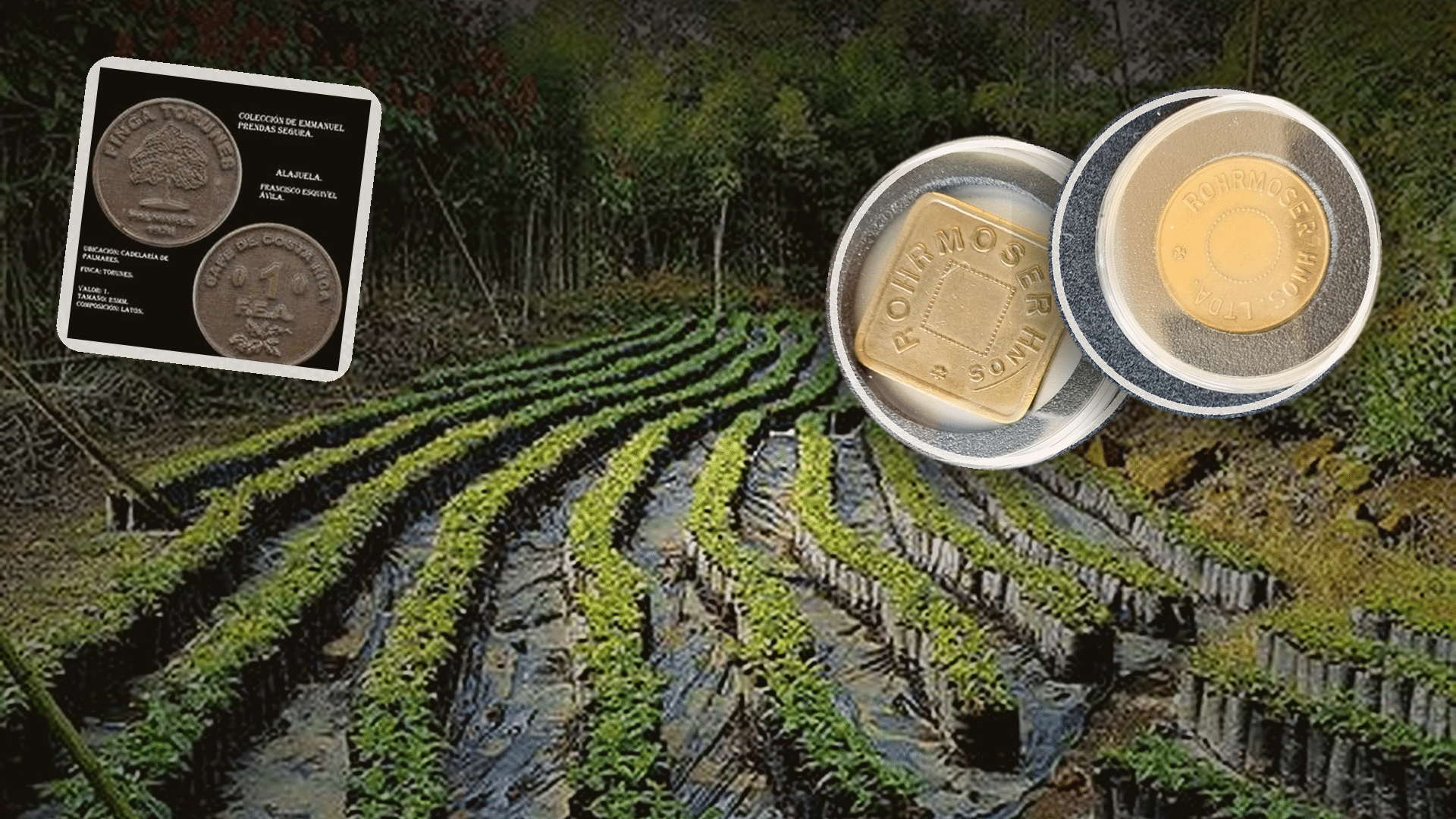
Torunes Farms sits in Costa Rica’s coffee country with one foot in the present—soil care, thoughtful processing, and honest storytelling—and the other planted firmly in the past, when a harvest day could be measured in baskets of cherries and tallied in small brass tokens called fichas. Hold a few of those worn pieces in your hand and you can almost hear the rhythm: pick, weigh, tally, redeem. They’re not just collectibles. They’re working artefacts from the machinery of coffee history—how farms organised labour, tracked output, and settled accounts long before digital scales, bank transfers, or reliable access to cash were part of daily life.
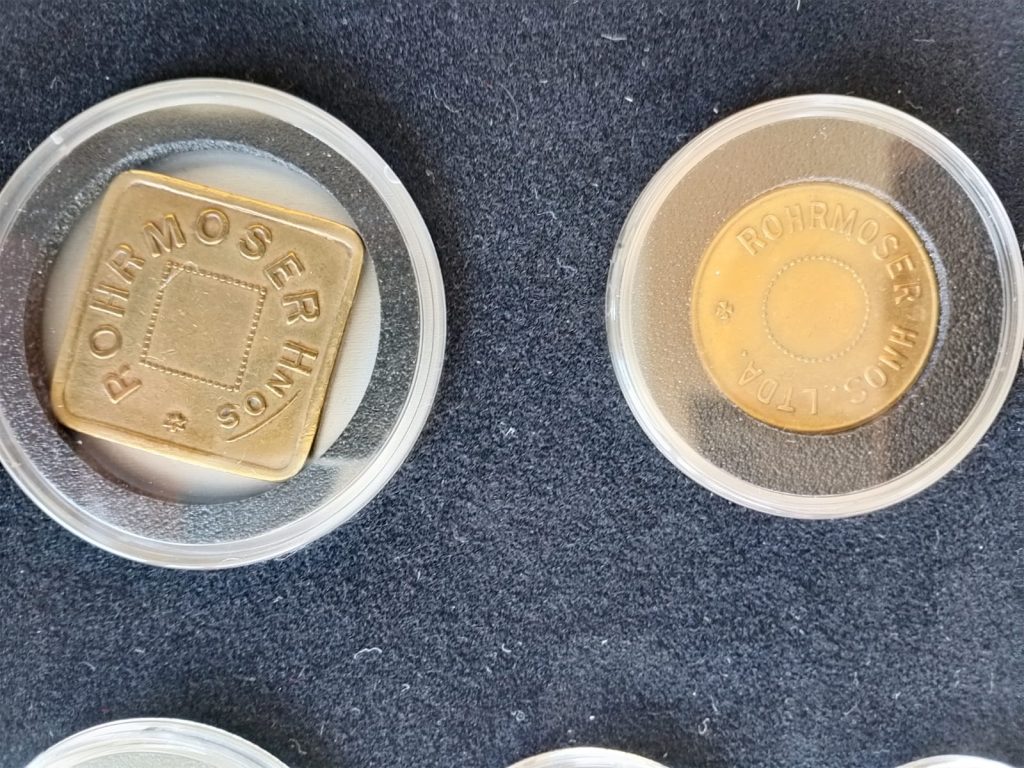
Lead photo suggestion: a close-up of three fichas on black felt, with one tilted so the patina and raised lettering catch the light.
Who are Torunes Farms and Romashar, and why does their history matter?
Torunes Farms and Rohrmoser represent two living chapters of Costa Rica’s coffee story—one shaped by modern transparency, the other tied to the estate-era systems that defined how coffee labour and trade once worked.
Torunes Farms (short history): Torunes Farms is a working, small-scale coffee project rooted in stewardship and quality, with a focus on sharing the real story behind the cup—from cultivation decisions to harvest realities. It reflects today’s Costa Rican direction: a more direct connection between producer and customer, clearer practices, and a farm identity built on trust.
Rohrmoser (short history): Rohrmoser is remembered within the older plantation lineage—part of the historic estate model where coffee production ran on structured management systems, seasonal labour flows, and the practical tools of the era used to track and settle work.
What were the “coins” used to pay coffee workers on plantations?
They were private plantation tokens (fichas) issued by an estate to record work completed and, in many cases, redeem value on-site.
Fichas were not the national currency. They functioned as a practical system during intense harvest periods, especially where cash was scarce, transport was risky, or payroll needed to be handled quickly and consistently.
What fichas typically show:
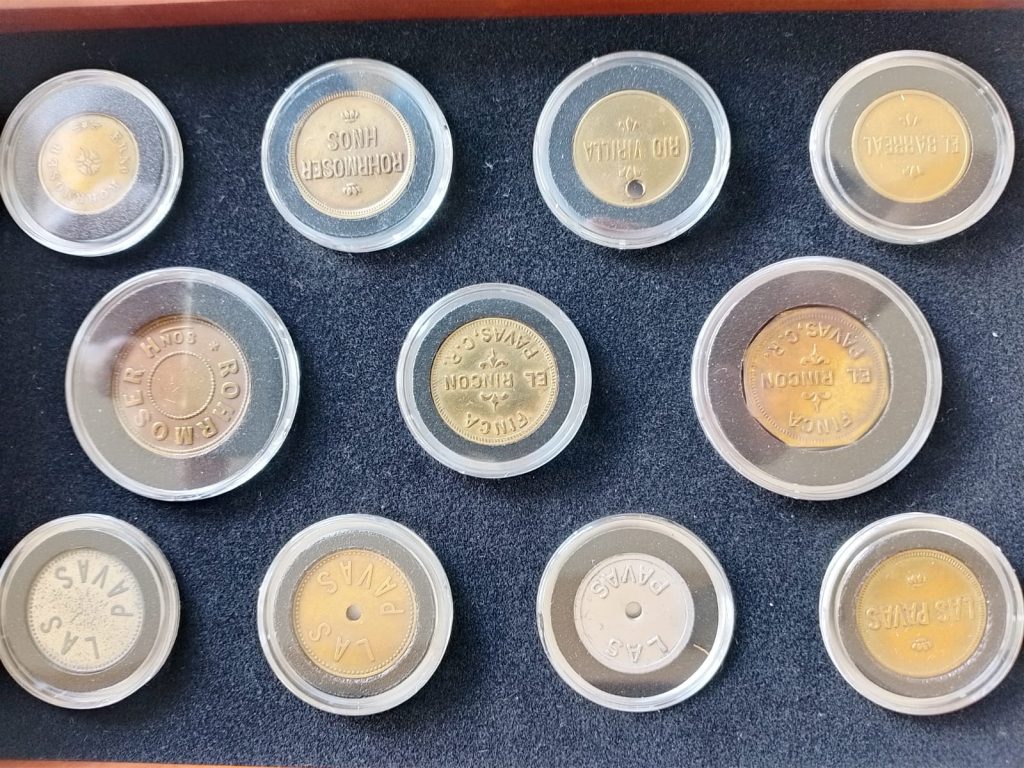
- The estate or family name stamped around the rim (like Rohrmoser or “Las Pavas” in your photos)
- Brass/bronze tones that deepen with age into a honey-brown patina
- Centre holes on some pieces, making them easier to string, sort, and count fast
- Bold, simple lettering designed to be read at a glance
Why did Costa Rican coffee farms use fichas at all?
They existed because they made harvest logistics faster when coffee work was paid by output and cash wasn’t always convenient or available.
Coffee picking is seasonal, labour-heavy, and often calculated by measured containers or weight. Fichas helped farms keep records consistent and keep the harvest moving when speed mattered.
Common reasons farms used tokens:
- Tracking piecework (how much a picker delivered)
- Reducing field disputes by providing a physical proof of tally
- Cutting down on cash handling in remote areas
- Supporting on-site estate stores where tokens could be redeemed
How did a worker actually “get paid” with these tokens?
A worker earned fichas as proof of daily picking, then exchanged them later based on the estate’s rules—sometimes for cash, sometimes for store credit, sometimes both.
The routine could be strict or flexible depending on the finca, the era, and the local economy.
A typical harvest-day pattern:
- Coffee cherries are delivered to a counting or weighing point
- A foreman confirms the amount and issues a token (or records the figure)
- Tokens accumulate as portable proof of work
- At day’s end or week’s end, tokens are counted and redeemed
Were fichas fair—or could they be used to control workers?
They could be either, depending on whether workers had real choices and transparent redemption rates.
When tokens were redeemed at a fair, clearly stated value—and not only at an overpriced company store—they behaved like receipts. When redemption was restricted or pricing was controlled, the system could keep workers economically boxed in.
Healthier systems tended to include:
- Clear exchange rules
- Option to redeem in cash
- Transparent weighing/counting practices
More exploitative versions often involved:
- Limited redemption options
- Estate-store price control
- Debt cycles through credit
When and why did plantation tokens fade away in Costa Rica?
They declined as banking access, wage standards, and labour protections expanded, making direct cash payment more common and expected.
As Costa Rica modernised, farms increasingly moved to formal payroll practices. In some places, token-style systems survived only as internal tally markers, not payment instruments.
What do historic fichas mean at Torunes Farms and Rohrmoser today?
They turn a simple coffee tasting into a time machine—and a chance to tell the truth about how coffee economies worked, without sanding down the rough edges.
At Torunes Farms, fichas can help visitors understand what has changed and what Torunes chooses to do differently now: clearer accounting, stronger transparency, and a direct relationship between the farm and the people enjoying the coffee.
At Romashar, fichas can anchor the older chapter—estate-era efficiency, the human cost that sometimes travelled alongside that efficiency, and the long shift toward the more open models many farms aim for today.
Ways to bring it to life on tours:
- A small “Fichas & Harvest” display with protected originals and clear captions
- A quick demo: “Here’s how tallies were tracked—here’s how we track them now”
- A guide story prompt: how farm systems moved from estate control to producer-led transparency

FAQ: Coffee fichas in Costa Rica
Were fichas official money?
No, they were private estate tokens, not government-issued currency.
Why do some have holes?
To string, sort, and count them quickly during harvest.
Did every finca use them?
No—some used ledgers and cash only, while others used mixed systems.
Are they collectible today?
Yes, especially tokens tied to specific estate names or rarer runs.