Tamarindo’s Secret Neighbours: The Catalina Islands and the Wild World Beneath the Waves
Tamarindo Beach is famous for its waves curling along the bay, making it a rare place where beginners can learn and experienced surfers can still find a challenge. What many visitors don’t realise is that the same Pacific energy that shapes those surf lines also feeds an offshore “front garden” of volcanic rock, blue water, and marine life that can feel like another planet.
What are the Catalina Islands (Las Catalinas), and why do people call them “The Cats”?
They’re a cluster of small volcanic islands and rocky outcrops off Guanacaste that locals and divers nickname “The Cats” because “Las Catalinas” quickly turns into “The Cats” in beach-town shorthand. PADI and local operators regularly refer to the group by that nickname and highlight signature sites such as Dirty Rock (Roca Sucia), The Point (La Punta), and Elephant (El Elefante).
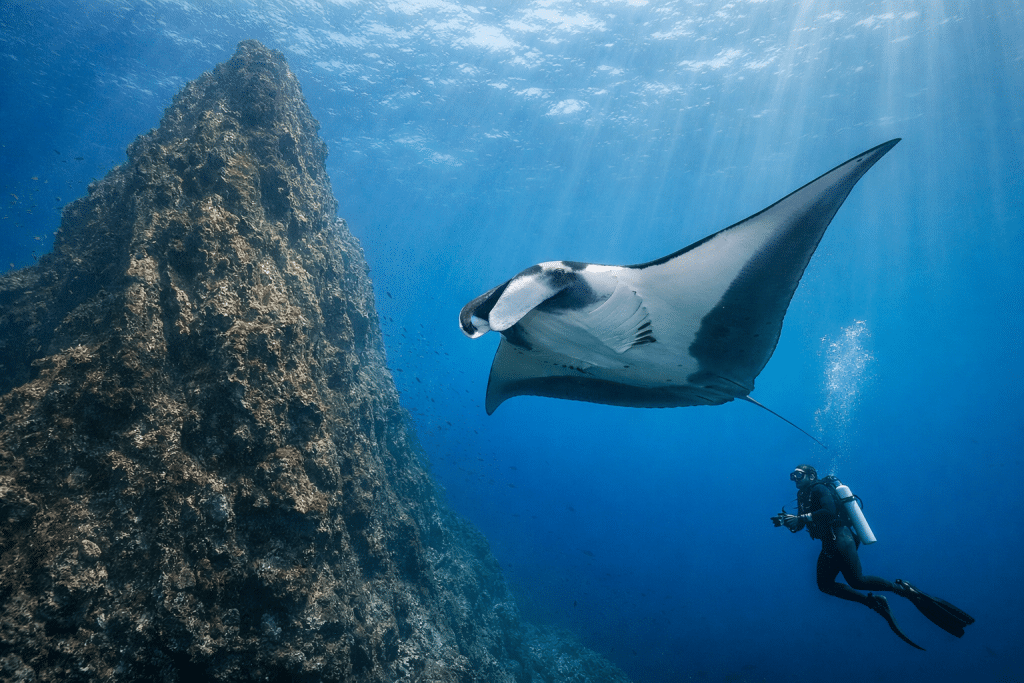
Above the surface, the islands look rugged and sculpted—dark rock, white spray, and sharp silhouettes that fishermen have been naming for generations. Under the surface, the same volcanic shapes become walls, ledges, cleaning stations, and sandy pockets where rays glide and reef sharks rest.
How far is it from Tamarindo to the Catalinas?
It’s typically a 30–45 minute boat ride, depending on where you depart and what the sea is doing that day. Many trips run from nearby Flamingo/Potrero marinas (often used by Tamarindo-based tours), and tour descriptions commonly list roughly 30 minutes to the islands.
That short ride is part of the magic: you can eat breakfast in Tamarindo, and before your coffee has fully kicked in, you’re looking at open ocean and volcanic rock rising from blue water.
What might you see on the boat ride out?
You can often spot dolphins and sea turtles during the crossing, especially when the water is calmer. Some dive operators also note that certain months bring more surface life (like calmer seas and seasonal wildlife activity), which makes the ride feel like an eco-tour before you even get wet.
Keep your eyes scanning the wake and the horizon—this is Guanacaste’s offshore “highway” for marine life, and surprises are part of the deal.
What marine life makes the Catalinas worth it?
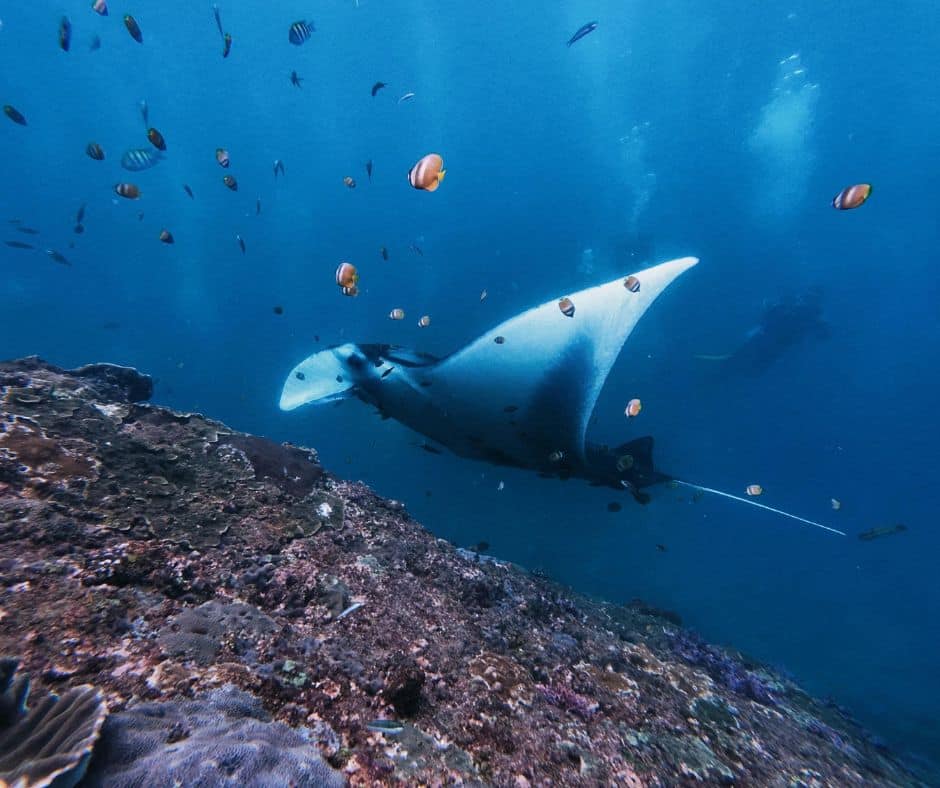
The Catalinas are best known for rays—especially giant/oceanic mantas—plus schooling fish, turtles, and whitetip reef sharks around rocky and sandy areas. Dive-site guides regularly highlight Roca Sucia (Dirty Rock) for big life and cleaning interactions, and multiple sources describe whitetip reef sharks and eagle rays as common sightings in the area.
Here’s what people love most (and why it feels so cinematic):
- Manta and mobula rays: they don’t “swim” so much as they fly, cruising past rock points and cleaning stations like they own the place.
- Spotted eagle rays: often seen in pairs or small groups, moving with that unmistakable wingbeat.
- Whitetip reef sharks: frequently resting on the sand or tucked near structure during the day—calm, sleepy, and oddly endearing.
- Schooling fish: jacks and other schooling species can form shifting clouds that change shape as you approach.
- Macro life in the cracks: moray eels, octopus, nudibranchs, lobsters and other “treasure hunt” finds in crevices and caves.
A quick reality check, said kindly: whale sharks and orcas are possible but not everyday sightings—think “lottery ticket”, not “guaranteed item on the menu”. Some local sources mention occasional encounters, but plan your expectations around rays, sharks, turtles, and fish first.
When is the best time to go for mantas and whales?
For mantas, the most commonly advertised window is during the dry-season months (often roughly December to April), while humpback whales have two seasonal windows in Costa Rica due to migrations from different hemispheres. Operators in Guanacaste frequently highlight the manta season, and Costa Rica’s tourism materials describe two humpback seasons: North Pacific, roughly December through March and South Pacific roughly July through October.
That said, conditions change week to week. If your goal is “best chance of big encounters,” ask your operator what has been seen in the last 7–10 days and choose your trip accordingly.
Do you need to be certified to enjoy the Catalinas?
No—you can experience the Catalinas by snorkelling, doing a beginner “try dive” (where available), or diving as a certified diver, depending on your comfort and the day’s conditions. Many tours market the islands for both snorkellers and divers, which makes sense because the same rocky structure that draws divers can also hold plenty of surface-visible life when visibility and swell cooperate.
Your best match looks like this:
- Snorkelling: best if you’re comfortable in open water and want a lighter, simpler day.
- Discover/intro scuba: best if you want that first “I can breathe underwater” moment with professional supervision.
- Certified scuba: best if you want to explore walls, channels, and deeper structure, where more action often happens.
What are the water conditions like around the Catalinas?
Expect warm water at the surface at many times of year, but be ready for sudden cooler layers (thermoclines) and current, especially around points and channels. Dive-condition guides regularly mention strong currents at certain sites and note that temperatures can vary by season, with warmer stretches often reported around May–November and cooler periods during the dry season.
This is exactly why the islands are so alive: moving water brings nutrients, which brings fish, which brings bigger fish, which brings the creatures everyone travels for.
How do you stay safe in the water in Tamarindo and on a Catalina trip?
The safest approach is to treat the ocean here with respect, because rip currents and changing surf can catch out even confident swimmers. Costa Rica travel advisories and local safety guides warn that riptides are common and that many beaches have limited lifeguard coverage or inconsistent warning flags.
Beach safety in Tamarindo (swimming and wading)
If you’re entering the water from the beach, use a simple checklist:
- Look for flags and follow them (red = don’t enter; yellow = caution), remembering some beaches may not have flags at all.
- Swim near lifeguards where present, and don’t assume they’ll be there every hour.
- Avoid “strangely calm” gaps in breaking waves, which can be a rip-current channel.
- Never swim alone, especially at dusk or in bigger surf days.
If you suspect you’re in a rip current: stay calm, don’t fight straight back to shore, swim parallel until you’re out, then angle back in. NOAA’s guidance is clear on this escape strategy.
Snorkel and dive safety at the Catalinas
If you’re going offshore, the priorities shift from “rip current” to “current, boats, and fatigue”:
- Choose a reputable operator and listen to the briefing (sites like La Punta can run current).
- Use the right exposure protection (even on warm days, thermoclines can surprise you).
- Stay close to your guide and buddy and avoid chasing wildlife into open water.
- For scuba: never hold your breath while ascending and keep your buoyancy tidy around rock and reef.
- Signal clearly at the surface and follow the boat crew’s instructions for entries/exits.
One more “quiet pro tip”: if you’re not feeling 100% (sleep, hydration, nerves), choose the easier option that day. The ocean will still be there tomorrow, and you’ll enjoy it more when you’re comfortable.
What should you bring for a Catalina day trip?
Bring less than you think, but bring the right things.
- Reef-safe sunscreen and a rash vest for sun protection
- Water and a light snack
- Dry bag for phone/keys
- Motion-sickness tablets if you’re prone (take them early)
- Towel and a change of clothes
- A sense of humour (the ocean occasionally rearranges plans)
What’s the “secret” feeling people talk about?
It’s the moment your world goes quiet and wide, and you realise the bay you surfed yesterday has an entirely different personality offshore. The Catalinas don’t feel like an attraction so much as a backstage pass to Guanacaste’s living Pacific—volcanic stone, moving water, and animals doing what they’ve always done, long before any of us showed up with masks and fins.
FAQ
Are the Catalina Islands good for beginners?
Yes, but only on the right day and with the right supervision, because currents can be strong at certain sites.
What’s the best month to see manta rays near Tamarindo?
Many operators promote the dry-season window (roughly December to April) as the most reliable time for mantas around the Catalinas.
Can I see whales from Guanacaste, or is that only southern Costa Rica?
You can see humpbacks in Costa Rica in two seasonal windows: the North Pacific season, roughly December to March, with another migration affecting the South Pacific later in the year.
How long is the boat ride from Tamarindo?
Many tours last about 30–45 minutes, depending on departure point and sea conditions.
Are there rip currents at Tamarindo?
Rip currents can occur on Costa Rican beaches, and safety guidance strongly recommends watching flags, swimming under supervision, and knowing how to escape a rip.
References
- NOAA on rip currents and how to escape them.
- Costa Rica beach safety guidance (flags, lifeguards, rip currents).
- Visit Costa Rica material noting humpback seasons in the North vs South Pacific.
- Catalina dive sites and common names (Dirty Rock/Roca Sucia, Elephant, La Punta, The Wall).
- Diving conditions and seasonal notes for the Catalinas (temperature, currents, thermoclines).