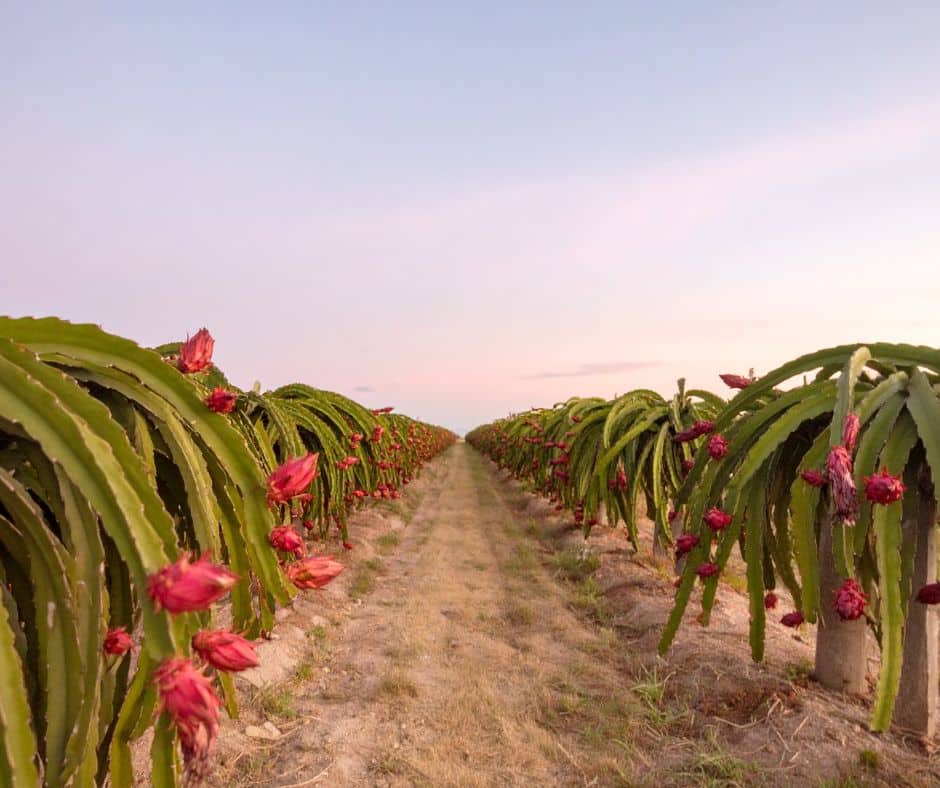
Pitahaya (dragon fruit) is the kind of plant that feels like a friendly prank by nature: a cactus that behaves like a jungle climber, throws out aerial roots like grappling hooks, and saves its biggest floral performance for the middle of the night. In Costa Rica—especially in warmer lowland zones—you’ll spot it clinging to fence posts, scrambling up tree trunks, and draping itself along walls like living, spiky bunting. Then, when the rains line up and the buds are ready, it opens enormous, pale flowers after dusk and closes them by morning, as if nothing happened.
The best part? That night shift can turn into fruit—glowing, pink-red dragon fruit that looks like it belongs in a fantasy cookbook. And if you don’t have space for a farm? Pitahaya can still be a surprisingly satisfying houseplant, as long as you treat it less like a tiny cactus and more like a climbing vine with desert ancestry.
What exactly is the pitahaya cactus in Costa Rica?
Pitahaya is a fast-growing, climbing cactus grown for dragon fruit and prized for its huge night-blooming flowers.
The species often called Hylocereus costaricensis is widely treated today as Selenicereus costaricensis (the Costa Rican pitahaya), with Hylocereus costaricensis listed as a synonym in many references. (Wikipedia)
What makes it unusual is its “two lives”:
- Food plant: cultivated for pitahaya/dragon fruit (especially red-fleshed types). (Wikipedia)
- Ornamental climber: grown as an architectural plant with dramatic blooms. (Wikipedia)
Why does pitahaya climb fences and trees instead of sitting politely in the ground?
Pitahaya climbs because it’s built to scramble toward light and anchor itself with aerial roots.
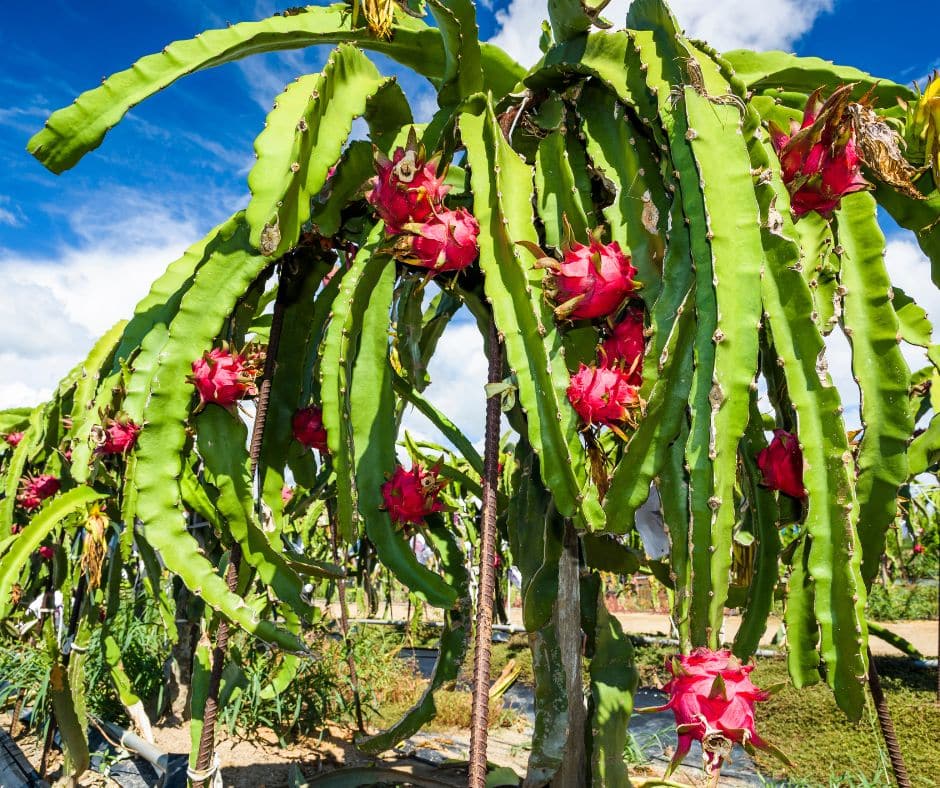
Unlike a classic round cactus that stands alone, pitahaya grows in long, ribbed segments that behave more like a vine—using roots along the stems to grip whatever’s available. (tropical.theferns.info)
In Costa Rica, that means it happily claims:
- Wood fence posts (the classic roadside look)
- Tree trunks (especially where it can reach brighter canopy edges)
- Walls and wire fencing (perfect climbing “ladders”)
If you’ve driven near Orotina’s mango country and noticed thick green cactus arms climbing posts like they pay rent—that’s the vibe.
When does pitahaya flower, and why is it always at night?
Pitahaya flowers open after nightfall and usually fade by morning, often lasting just one night. (Wikipedia)
Night-blooming is a smart strategy in the tropics: it lines up with nocturnal pollinators and cooler temperatures, and it protects delicate petals from harsh midday sun.
What you’ll notice if you catch it at the right hour:
- Big, pale, fragrant blooms that feel almost unreal up close (Tico Times)
- A “now or never” window—miss the evening and you might wait another year for that exact flower
If you want to see it bloom, the easiest trick is simple: check buds at sunset during the rainy season and keep an eye on the ones that suddenly look “about to pop”.
What does dragon fruit taste like, and how do locals actually use it?
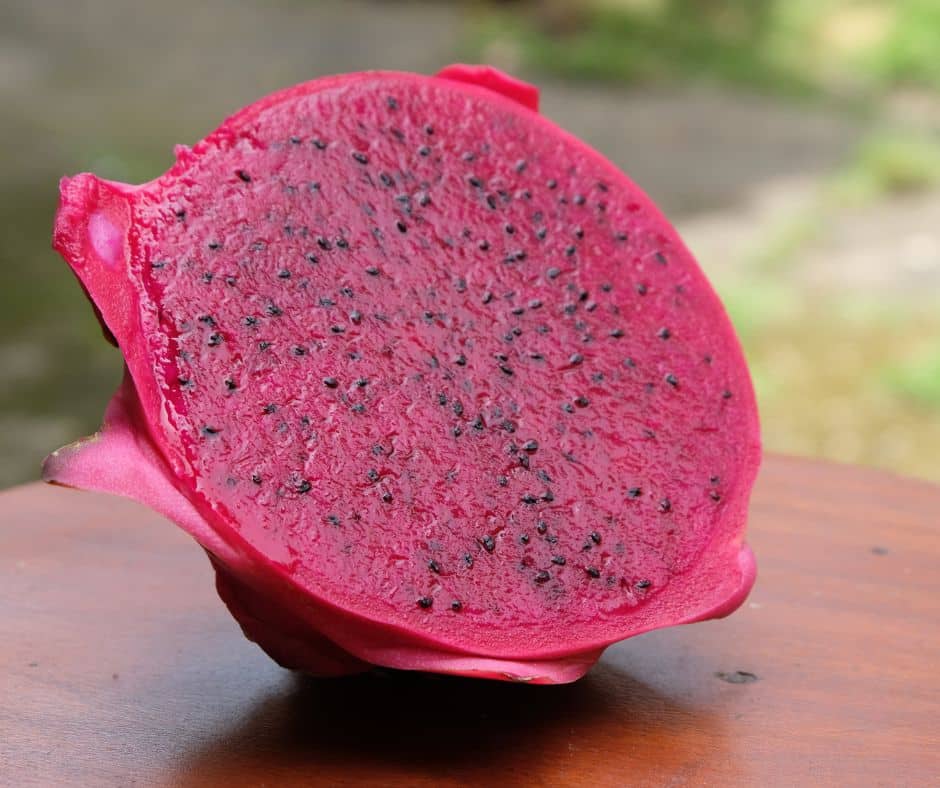
Dragon fruit tastes mildly sweet and refreshing, with a soft bite from the tiny seeds.
Think “kiwi texture meets gentle pear-ish sweetness”—not loud, not syrupy, just clean and easy.
Try it in Costa Rica-style, everyday ways:
- Cold smoothies with banana, pineapple, or papaya
- Fruit bowls with lime and a pinch of salt (trust the salt)
- Agua fresca (blended fruit + water + ice)
- Jams and preserves when you’ve got a surplus
- Desserts: sorbet, yoghurt bowls, or folded into whipped cream
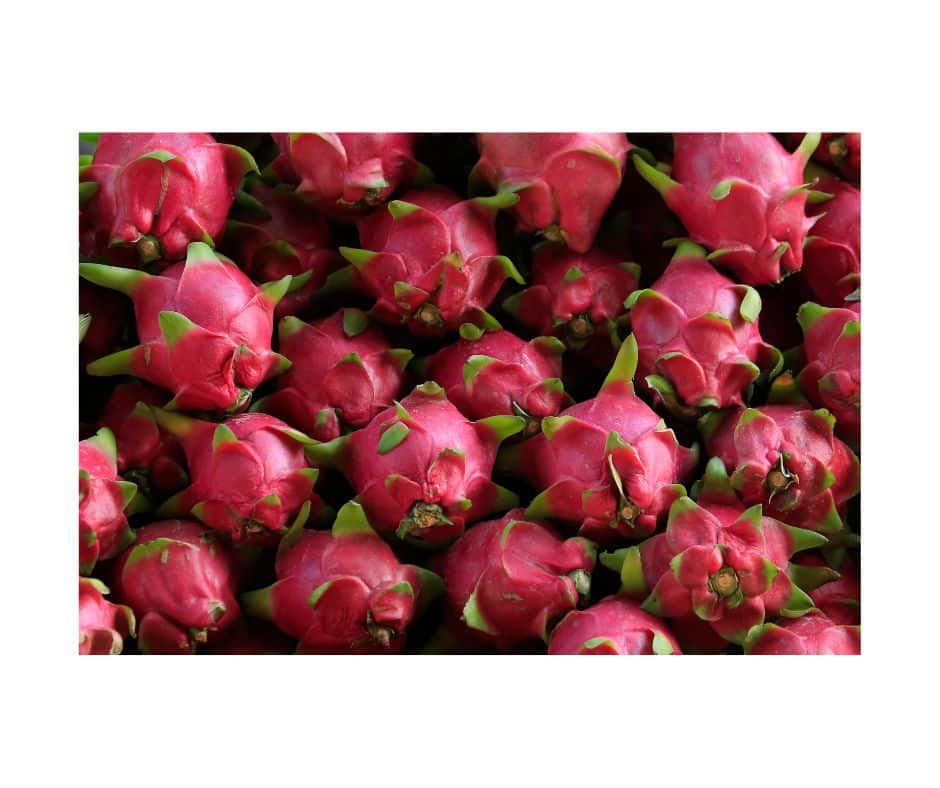
Quick selection tip: choose fruit with bright colour and a slight give—too firm can mean under-ripe, too soft can mean it’s past its peak.
Is dragon fruit actually good for you, or is “superfood” just marketing?
Dragon fruit is genuinely nutrient-rich, especially for fibre, magnesium, vitamin C, and antioxidants. (Verywell Fit)
It’s not a magic spell, but it’s a solid “real food” choice that fits easily into everyday eating.
Notable nutrition points (depending on variety and serving size):
- Magnesium and vitamin C show up consistently in nutrition data (Verywell Fit)
- Antioxidants are a major reason it’s discussed in health writing and reviews (Medical News Today)
- Seeds contain fats often described as omega-3 and omega-9 in consumer health references (still: eat the fruit because you enjoy it, not because you’re trying to hit a “seed oil target”). (Verywell Health)
Practical takeaway: it’s a hydrating, fibre-friendly fruit that plays well with breakfast and post-beach snacks.
How do you grow pitahaya as a houseplant without it taking over your living room?
Pitahaya can thrive indoors if you give it strong light, fast-draining soil, and something sturdy to climb or hang from.
This is the big mindset shift: you’re not growing a tiny windowsill cactus—you’re training a climbing cactus.
Houseplant setup that works:
- Light: as bright as you can manage; strong light speeds growth and supports future flowering (Fast Growing Trees)
- Soil: well-draining cactus/sandy mix; pitahaya hates “wet feet” (Fast Growing Trees)
- Pot: heavier is better (this plant gets top-heavy)
- Support: a trellis, stake, or overhead hook so stems can drape
Watering rule that saves most beginners:
- Water deeply, then let the mix dry out before watering again (more often in hot weather, far less in cooler months). (LetPlant : AI – Powered Growth)
How do you propagate pitahaya from cuttings successfully?
Propagation is easiest from stem cuttings, as long as you let the cut end dry and callus before planting.
That short “drying” step is what reduces rot and makes the whole process feel almost unfairly simple.
A reliable cutting routine:
- Cut a healthy segment with a clean blade
- Let it dry for a few days until the cut end seals (calluses)
- Plant in dry, fast-draining cactus mix
- Wait to water until you see signs of rooting or new growth (then water lightly)
Your original note about cinnamon is a popular home trick; the bigger win is still drying the cut end properly.
How long does it take to get fruit at home?
Fruit can take a couple of years, and indoors you may need hand pollination to help it along.
Pitahaya’s flowers open at night and may depend on pollination timing, so if you’re growing it as a houseplant, the “fruit step” is often the hardest.
If it flowers indoors, try this:
- Use a small, clean brush or cotton bud
- Gently transfer pollen between flowers during the evening opening window
- If you only have one plant, results vary—some types set fruit more easily than others
FAQ: Pitahaya (Dragon Fruit) in Costa Rica
Is pitahaya native to Costa Rica?
Pitahaya is native to parts of the tropical Americas, and the Costa Rican pitahaya is widely associated with Central America and cultivated broadly in the region. (Wikipedia)
Do pitahaya flowers really last only one night?
Many night-blooming cactus flowers open after dark and fade by dawn, and pitahaya blooms are often described as a one-night event. (Wikipedia)
Is dragon fruit safe to eat every day?
For most people it’s a safe, nutritious fruit; moderation is sensible, and rare allergies can happen with any food. (Medical News Today)
Why isn’t my pitahaya growing?
It’s usually not enough light, soil staying too wet, or a pot that’s too small for the root system—bright light and fast drainage matter most. (Fast Growing Trees)
Can I grow pitahaya from seed?
Yes, but it’s much slower than cuttings; cuttings are the quick, reliable route for home growing.