

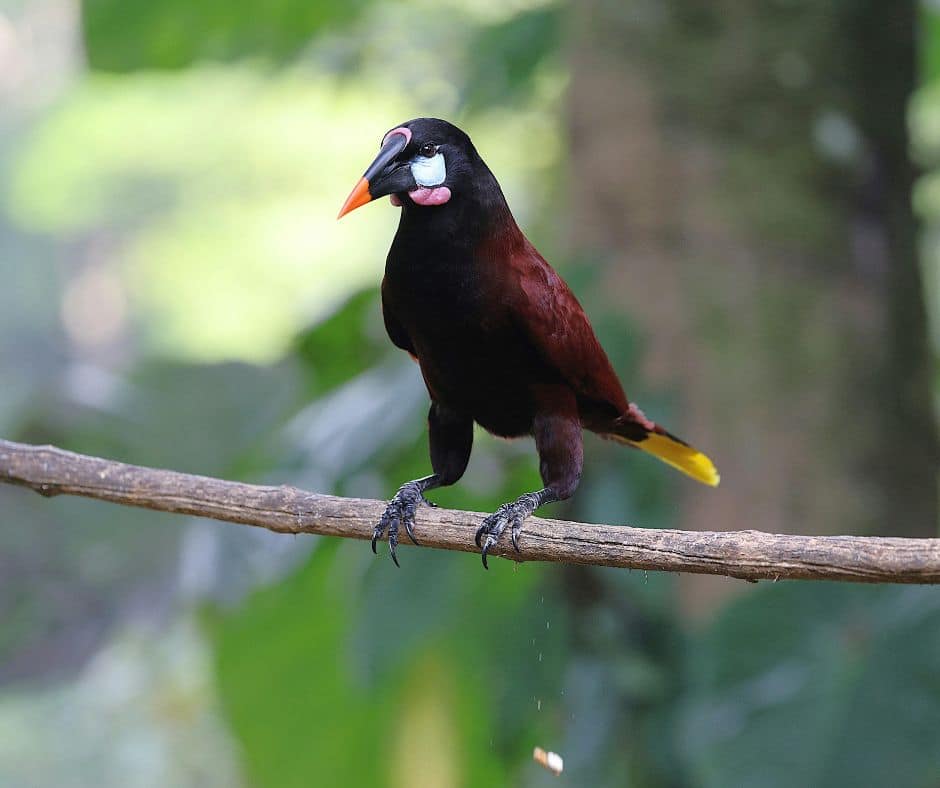
Gregarious and loud, their unmistakable calls resembling a crowd of people all gargling at the same time, they are heard before being seen. Oropendolas, the largest member of the blackbird family that includes blackbirds, orioles, grackles and cowbirds, are found exclusively in Latin America. In fact, their extremely descriptive name is in Spanish – oro meaning gold and péndulo meaning pendulum. “Golden pendulum” describes the male bird’s behavior of wagging its yellow tail from side to side to attract females.
Highly communal, oropendolas are also known for their hanging nests that will fill a single tree — sometimes with 40 or 50 nests — into a community habitat. It is believed the hanging nests are designed to avoid predators, especially monkeys.
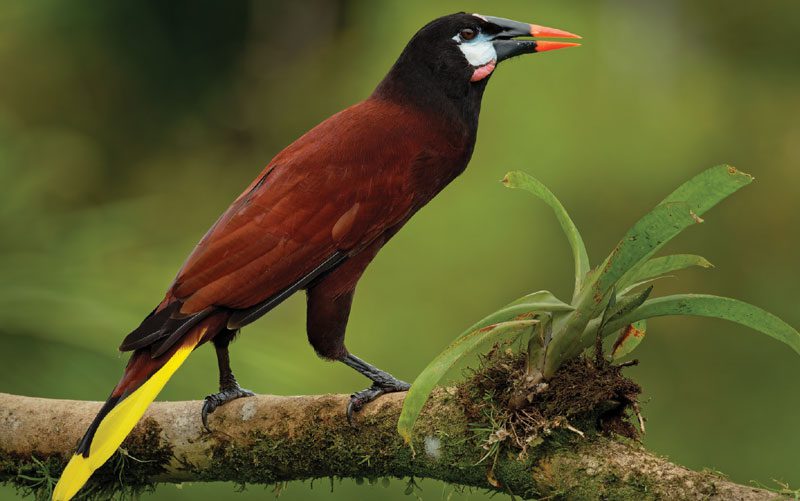
Costa Rica and Panama are the only two countries in the world where you can see both the northern and southern species of oropendola: Montezuma, Chestnut-headed and Crested. Each has a different range intersecting the narrow isthmus area of Central America.
‘Golden pendulum’ describes the male bird’s behavior of wagging its yellow tail from side to side to attract females.
The most easily seen and colorful is the Montezuma oropendola, whose clownish, brightly hued bicolor beak has been likened to a giant piece of candy corn. This species can be seen all over the northern part of Costa Rica and into the Central Valley, the southernmost end of their habitat range extending from Mexico (hence the Montezuma name).
On Costa Rica’s Caribbean side, you can see both the Montezuma and the other northern oropendola species, the chestnut-headed. It is a little harder to find, but common on the Atlantic coast from southern Mexico to Honduras, then following the Caribbean all the way to Ecuador in South America.
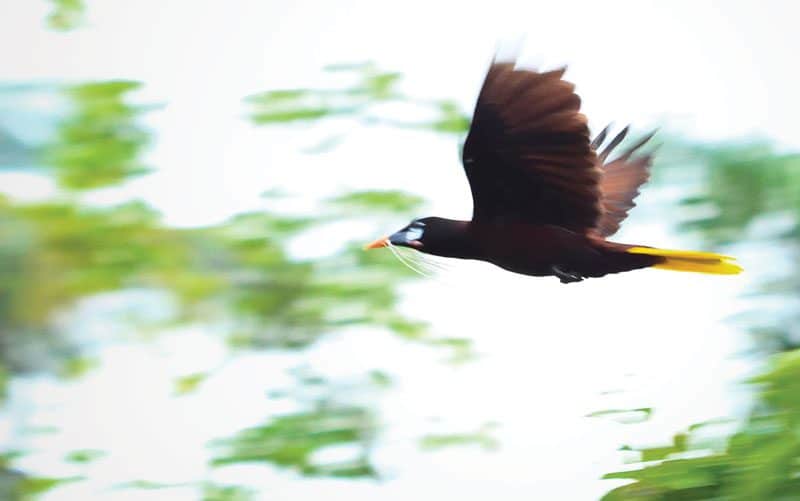
The third type of oropendola in Costa Rica is really hard to find if you do not know where to look. The crested oropendola is actually the most common in countries to our south, from Chile and Argentina all the way to Panama. A few, however — just a very few — cross over to Costa Rica around San Vito and a few other places. Sightings may be possible by traveling a short distance past Wilson Botanical Gardens near San Vito. Keep driving towards Ciudad Neily and take the next right turn onto a dirt road, just a few kilometers from the Panama border. You can usually spot crested oropendolas right there in the trees.
With their clownish face and bizarre gargling call, the oropendola is one of the most visible and easily spotted, yet special, birds to be seen in Costa Rica. They always make me smile, so go out and find some and you are sure to smile too!
HOWLER Monkey
Bullet Ants, Pain You Don’t Want to Feel
Tree Boas
Toucan Species
Jaguars: Cool Cat has crucial Place in Ecosystem
Coati
Leatherbacks: a close-to-home concern
A Unique Mix of Animals in Costa Rica
The Costa Rican Coral Snake