Suggested lead photo
A late-afternoon street scene: a cimarrona brass band leading a mascarada (giant papier-mâché heads) past a town church, with spectators on kerbs and mountains in the distance.
What counts as a “mini-festival” in Costa Rica?
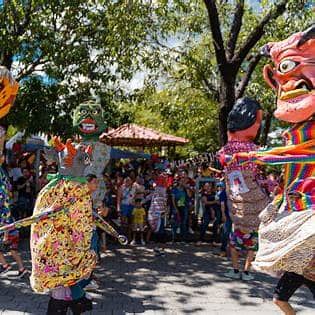
A mini-festival is a town-sized celebration—music, food, craft, faith, harvest, sport—publicised mostly through locals’ channels, not glossy tourism schedules.
You’ll recognise them by the giveaways:
- Posters on pulpería doors and school gates
- A Facebook event shared by the municipality, parish, or local committee
- A sudden appearance of food stalls, loudspeakers, and a cimarrona warming up on a corner
- The whole town acting like it’s hosting a reunion
Why are hyper-local events absolute gold for travellers?
They’re gold because you get real community energy—the kind you can’t buy with a wristband.
Expect:
- Low-cost entry (often free) and generous portions
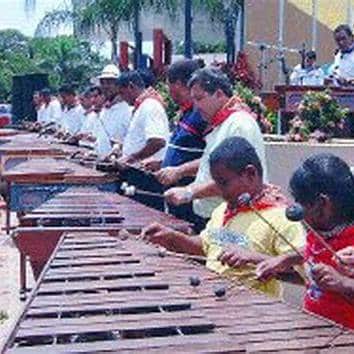
- Traditions in motion: marimba, folkloric dance, mascaradas, parades, roping arenas, horse processions
- People actually talking to each other, not just filming each other
- Handmade things you didn’t know you needed until you saw them
How do you find mini-festivals before you land?
You find them by searching the way locals search: by town, by “fiestas”, and by next weekend.
Try these tactics (they work embarrassingly well):
- Search by format + place: “fiestas patronales + (town)”, “turno + (district)”, “mascarada + (canton)”, “feria + (product) + (town)”
- Follow the right pages: municipal Facebook pages, local “Comité de Fiestas”, cultural associations, and district sports committees
- Use local event aggregators: sites that list turnos and patronales can surface events you’d never otherwise see (CRTurnos is one example). (CRTurnos)
- Ask one good question on arrival: “¿Qué hay este fin de semana?” at a soda, a coffee shop, or your hotel reception—then follow the thread.
Voice-search phrases that tend to work:
- “What’s on in Santa María de Dota this weekend?”
- “Patron saint festival in León Cortés dates”
- “Mascarada parade near me Costa Rica”
- “Acosta citrus fair Costa Rica”
When should you plan, and how last-minute can you be?
You can plan in weeks, not months, because many committees confirm programme details close to the date.
A sensible rhythm:
- 2–6 weeks out: lock in transport and a flexible stay
- 7–10 days out: confirm the schedule, parade routes, road closures, and whether there’s a main night
- Day before: check the organiser’s latest post (weather changes plans fast)
What should you bring so you look like you’ve done this before?
Bring small practical things and you’ll enjoy the day more than someone carrying three camera lenses and no cash.
Pack:
- Small cash notes and coins
- A light rain layer (even in “dry” season, Costa Rica improvises)
- Sunscreen, insect repellent, and a reusable water bottle
- Closed-toe shoes if there’s a fairground, rodeo area, or muddy field
- A power bank and a zipped crossbody bag
Local etiquette that earns instant goodwill:
- Ask before photographing children or intimate moments (church, blessings, family groups)
- If a parade is coming, don’t block the route—stand back and let it breathe
- If you’re invited to try something (food, dance, a quick lesson), say yes once
2026 diary: mini-festivals with dates and places
These are the kinds of events that often stay “local-local”, plus a few cultural dates that trigger brilliant town celebrations around them. Dates can shift for program details, but the core windows and locations below are widely used.
Late December 2025 into early January 2026
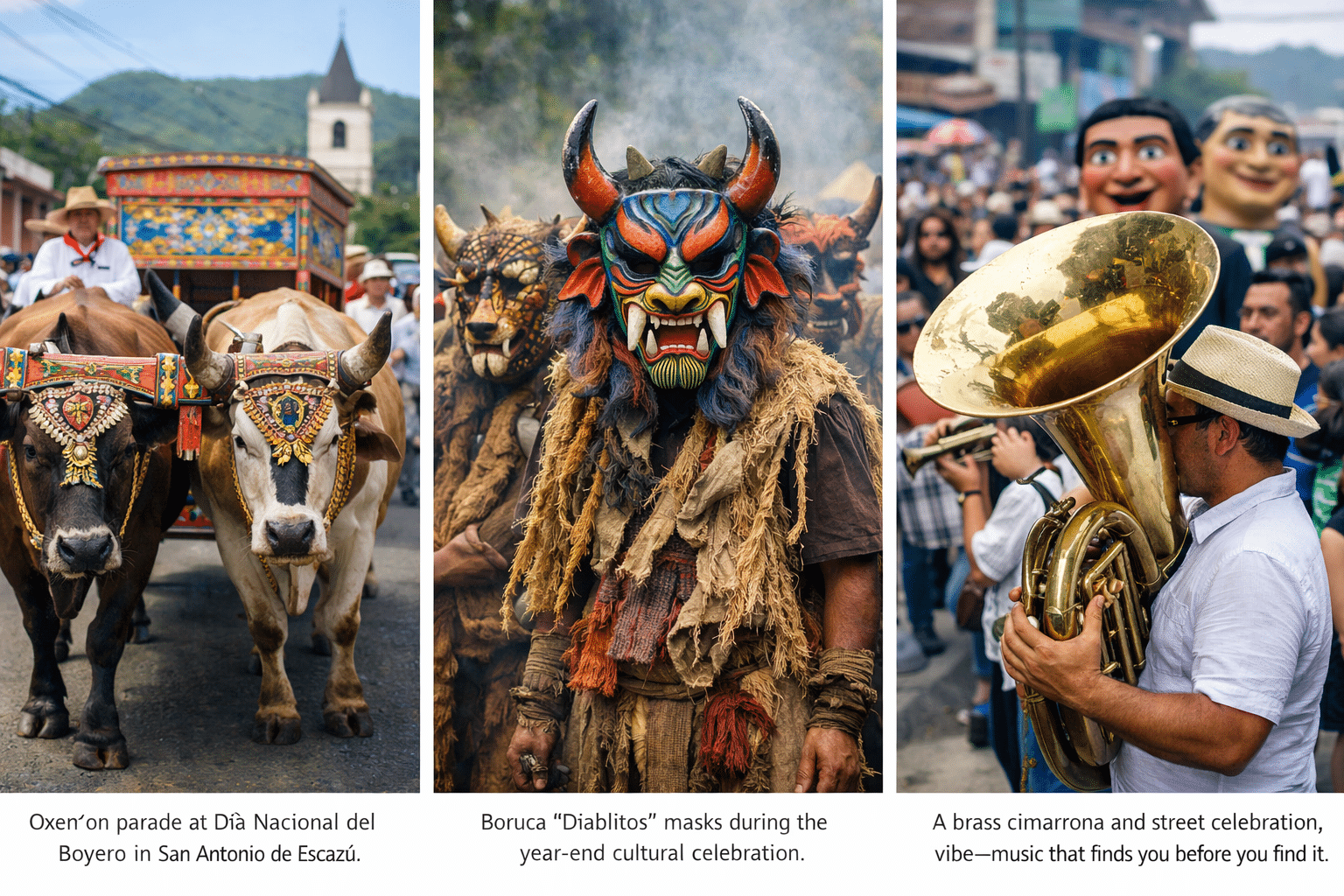
- Fiesta (Baile) de los Diablitos — Boruca (Buenos Aires, Puntarenas) — 31 Dec 2025 to 2 Jan 2026 — Indigenous Boruca tradition featuring carved masks, music, and ritual theatre. (ranchobrugra.com)
- Fiesta (Baile) de los Diablitos — Rey Curré (Buenos Aires, Puntarenas) — typically the first weekend of February (variable dates) — Same tradition, different community timing. (ranchobrugra.com)
January 2026
- Fiestas Típicas Nacionales — Santa Cruz, Guanacaste — 14–18 Jan 2026 — Marimba, traditional events, parades, and a town running on pride and polvo. (CR Hoy)
- Fiestas Patronales — San Pablo de León Cortés, San José — 21–27 Jan 2026 — Classic community patronales: food, music, family nights, and local traditions. (CRTurnos)
February 2026
- Fiestas Patronales — Santa María de Dota, San José — 5–9 Feb 2026 — Mountain-town celebration with a cosy, neighbourly feel. (CRTurnos)
- Feria Nacional de los Cítricos — Acosta, San José — 6–15 Feb 2026 — Citrus, local food stalls, and the kind of agricultural pride that tastes like it. (CRTurnos)
- Festival Nacional de las Mulas — Parrita, Puntarenas — 6–16 Feb 2026 (main mule parade noted for 14 Feb) — A one-of-a-kind rural tradition that feels like stepping into an older Costa Rica. (CRTurnos)
- Festejos Peninsulares — Cóbano, Puntarenas (Nicoya Peninsula) — 12–23 Feb 2026 — Beach-area “locals’ fiestas” energy, not a polished resort event. (CRTurnos)
- Feria de la Papa y la Cebolla — Tierra Blanca, Cartago — 20 Feb to 1 Mar 2026 — Produce, food, and community programming in the highlands. (CRTurnos)
- Recorridos de Mascarada (Fiestas Patronales) — San Juan de Dios, Desamparados (San José) — 28 Feb to 8 Mar 2026 — Giant heads, cimarrona brass, and pure street joy. (CRTurnos)
March 2026
- Día Nacional del Boyero — San Antonio de Escazú, San José — Sun 8 Mar 2026 (second Sunday of March) — Decorated oxcarts, oxen, and heritage you can hear before you see it. (si.cultura.cr)
- ExpoCafé Tarrazú — San Marcos de Tarrazú, San José — 13–15 Mar 2026 — Coffee culture, tastings, local stands, and serious mountain flavour. (CRTurnos)
- Fiestas de Verano — Bahía Ballena / Uvita, Osa (Puntarenas) — 13–23 Mar 2026 — Beach-town summer celebration with community programming. (Facebook)
- Feria Nacional de la Toronja Rellena — Atenas, Alajuela — 27–29 Mar 2026 — Yes, it’s a thing, and yes, you should try it at least once. (CRTurnos)
April–May 2026
- Feria Internacional del CATIE — Turrialba, Cartago — 18–19 Apr 2026 — Agriculture, plants, food, and local innovation in a gorgeous setting. (CRTurnos)
- Fiestas Bijagua — Bijagua de Upala, Alajuela — 30 Apr to 4 May 2026 — A rural-town celebration near nature-heavy adventures (Tenorio area). (CRTurnos)
July–August 2026 (nationwide “local” celebrations)
- Anexión del Partido de Nicoya — Guanacaste (especially Nicoya, Santa Cruz, Liberia and surrounding towns) — 25 Jul 2026 — The date sparks local parades, music, food, and folklore across the province. (mep.go.cr)
- Día de la Virgen de los Ángeles (Romería) — Cartago (and routes nationwide) — 2 Aug 2026 — A powerful cultural moment, with many communities organising their own walks and vigils. (Telediario Costa Rica)
October 2026
- Día de la Mascarada Tradicional Costarricense — nationwide (varies by town) — 31 Oct 2026 — Look for local parades with mascaradas and cimarrona—some of the best street culture you’ll ever stumble into. (Teletica)
Late November (varies year to year)
- Festival Cultural del Maíz — Mollejones, Turrialba (Cartago) — typically the last week of November — Corn-based food, community culture, and a proud local identity. (si.cultura.cr)
How do you turn a local rumour into a real plan?
You turn it into a plan by confirming three things: date, location, and “the main moment”.
Use this quick checklist:
- Date window: is it one weekend, two weekends, or a full week?
- Main moment: parade day, horse run, masquerade walk, concert night, harvest fair day
- Where to show up: central park, church, plaza, sports field, municipal building
- Transport reality: parking fills early; buses may change routes; rain can slow everything
Is it safe to go to mini-festivals as a visitor?
Yes, most are safe and family-friendly, as long as you use normal event awareness and respect local space.
Do this:
- Keep valuables zipped and close in crowds
- Choose well-lit routes back to your car or accommodation
- If driving at night, go slow—pedestrians and bikes appear without warning
- If you’re unsure where to stand, follow families (they know the flow)
FAQ
Do I need tickets for local festivals in Costa Rica?
Usually no, because many events are free or donation-based, but specific concerts or enclosed areas may charge.
What’s the easiest way to find a festival near where I’m staying?
Search “fiestas patronales” plus your town name, check the municipality’s social pages, and ask locally for “qué hay este fin de semana”.
Are these events suitable for children?
Most are, because communities build them around families, though late-night concerts and crowded fairgrounds can be tiring.
What time should I arrive?
Arrive before sunset for the best atmosphere, easier parking, and the most social part of the day.
Can I go if I don’t speak much Spanish?
Yes, because music, food, and parades do most of the talking, and a few polite phrases will carry you far.
What if the weather changes the programme?
Expect it, because schedules are flexible; check organiser updates the day before and be ready to swap a parade for food stalls and music.