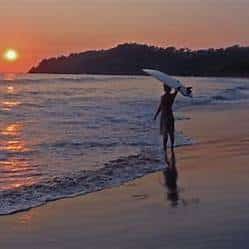
March mornings in Costa Rica have a particular sound: a quiet hiss of groomed foam, a few early scooters, and that first zip of wax being peeled like a promise. People call it “dry season” and leave it at that, but surfers know March as something more specific—a month of sharp little wind windows that can turn an average swell into a session you remember in embarrassing detail.
This is a practical guide, but not the stiff kind. It’s the kind you’d get from someone who’s already checked the palms, sniffed the air, looked at the tide, and still packed a second board because March likes options.

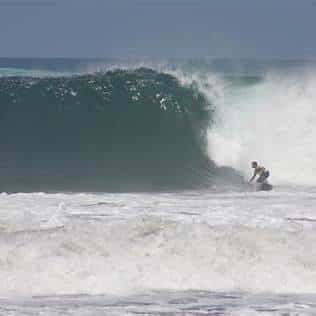
Why does March feel like “the last great offshore” in Costa Rica?
Because March still benefits from trade-wind patterns that favour early groomed conditions on many Pacific breaks, before daytime heating flips winds and textures the surface. On the northern Pacific, the famous Papagayo winds (a dry-season feature) can blow hard and offshore on the Pacific coast, especially in the November–April window. (Witch’s Rock Surf Camp)
March also sits in a transition zone: you can still see winter’s influence (north-west swell energy at times), while the first more meaningful south pulses begin to show up as the calendar edges forward. (Bodhi Surf + Yoga)
What exactly is a “wind window” and how long does it last?
A wind window is the short period when wind direction and strength clean up the face instead of wrecking it, and in March it’s often 30 minutes to three hours.
In real life, it looks like this:
- Pre-dawn to early morning: lighter winds, smoother surface, better shape
- Mid-morning: wind starts to lean, sections get bump
- Late morning into afternoon: onshores or strong side-shore dominate many open beaches
Local habit in March is simple: treat the first good hour like it’s the only hour.
How do you read a March offshore without being glued to an app?
You read March offshores by watching what the land is doing before the ocean “shows” it. Try this quick, very unromantic checklist:
- Palm fronds and flags: moving steadily = wind has already arrived
- Whitecaps beyond the lineup: if they’re stacked early, you may want a more sheltered spot
- Cloud texture at sunrise: fast-moving streaks often mean wind aloft that can mix down
- Temperature shift on your skin: that cool push can be the wind turning “on”
- Sound on the water: glassy surf sounds softer; chop makes a harsher rattle
Apps help, but March rewards the five-minute car-park scan.
When should you paddle out in March to score the cleanest faces?
The best March paddle-out time is usually at first light, with a second chance only if you pick a sheltered break or a tide-assisted corner. (Witch’s Rock Surf Camp)
Use this as a rough March playbook:
- Plan A (best odds): sunrise to 9:00 am
- Plan B (spot-dependent): 4:00 pm “wind easing” session at protected points/coves
- Plan C (when it’s nuking): find a bay, a headland, or a reef with built-in wind shadow
If you’re choosing between coffee and paddling, March is the month you take the coffee to-go.
How does tide timing change everything in March?
Tide timing matters more in March because cleaner surfaces expose every small mistake in peak choice and positioning. Costa Rica’s Pacific coast can see sizeable tide swings (a couple of metres in some areas), while the Caribbean is generally much smaller (“microtidal”) by comparison. (Repositorio UNA)
A simple tide guide that actually works:
- Beachbreaks (Tamarindo-style):
- Mid tide often gives the best blend of punch and safety
- Very low tide can mean faster waves, shallower sandbars, and more rips near channels
- Reefs (Caribbean and some Pacific reefs):
- Many reefs prefer mid-to-higher tide for a little cushion
- Too high can fatten it; too low can turn it into a consequences lesson
- Points and cobblestone corners:
- Often happier on a rising tide that “fills in” the wall
- Too low can create warbly sections and exposed rocks
A local trick: don’t ask “what’s the tide?”—ask “is it filling or draining when I’ll be out there?”
What makes March different on the North Pacific (Guanacaste)?
Guanacaste in March is about early sessions and wind management, because Papagayo influence can groom or destroy the same swell depending on strength and angle. (Witch’s Rock Surf Camp)
What to expect and how to surf it:
- Wind: can be strong offshore/side-off; great for shape until it becomes too much
- Wave type: beaches and points that can handle wind; some days suit more protected coves
- Local approach:
- Go early, even if the swell is “only okay”
- Choose spots with headlands that block the wind
- If it’s too strong, don’t force open beaches—hunt corners
Also worth knowing: strong seasonal winds up north can cause cooler-water upwelling at times, which changes comfort and crowd behaviour (people bail earlier). (Surfline)
How does March surf on the Central Pacific (Jacó / Playa Hermosa zone)?
The Central Pacific in March often offers more forgiving wind patterns than far north, but it still rewards dawn patrol and tide discipline. Playa Hermosa can light up when swell and wind align, and it’s one of those places where “just go” beats “keep refreshing.”
Practical Central Pacific habits:
- Pick your peak: currents and shifting sand mean one section can be magic while another is closeout city
- Use the tide like a dial: if it’s heavy, don’t arrive at the most critical tide point for your ability
- Have a backup: when wind turns, nearby protected beaches can save the day
What changes in March on the South Pacific (Dominical to Osa)?
The South Pacific in March can feel calmer and more tropical, with occasional early south pulses and longer, more playful walls when the wind stays light. March is when you start watching for the first proper hints of the season ahead, rather than relying solely on winter patterns. (Bodhi Surf + Yoga)
South Pacific March tactics:
- Be flexible with location: a short drive can change wind exposure completely
- Respect the power jump: the same coastline that offers mellow peelers can serve up serious energy on the right swell
- Mind the rivers and sand: mouths and bars can create brilliant shape—or complicated currents—depending on the day
If Guanacaste is “win the morning,” the South can be “find the rhythm.”
How is March different on the Caribbean side (Puerto Viejo / Salsa Brava)?
March can still deliver on the Caribbean, but the window is tighter and the consequences are higher, especially at reef breaks like Salsa Brava. Many guides describe the prime Caribbean window as roughly November through March, with winter swells being the main driver. (Surf Atlas)
If you’re approaching Caribbean March like a local:
- Don’t treat it like a beachbreak: reefs demand precision, patience, and respect
- Pick the right tide: aim for conditions that give you a little margin
- Watch sets longer than you think you need to: reefs love to surprise visitors who paddle out too quickly
And if you’re not 100% sure it’s your wave? It’s fine to make it a beach day and come back wiser.
What are the “local” moves that visitors miss in March?
Surfing March like a local is mostly about preparation and restraint, not secret spots. Here’s what tends to separate a scored session from a windy slog:
- Be ready to surf earlier than you want to wake up
- Choose wind shelter over hype (points, coves, headlands)
- Use tide to manage risk rather than chasing the biggest number
- Bring two board options (one for punch, one for wind-chop or smaller surf)
- Keep your first 10 minutes conservative (feel the currents, find the channel, watch the sets)
- Respect the lineup: wait your turn, communicate clearly, don’t snake, don’t panic-paddle
March is generous—right up until you try to dominate it.
What’s a simple one-minute March decision routine before you paddle out?
A one-minute routine works because it forces you to choose conditions, not fantasies. Do this standing still:
- Look at wind on the surface (texture, drift, spray direction)
- Watch three full set cycles
- Identify one safe channel (or decide there isn’t one)
- Check where the best surfers are sitting (they’re usually not guessing)
- Confirm tide direction (rising or falling) and what that means for the next hour
Then commit. March punishes indecision more than mediocre swell.
FAQ
Is March a good month for beginners in Costa Rica?
Yes, if you prioritise protected beaches, smaller swell days, and mid-tide sessions. Mornings can be clean and manageable, but wind can ramp quickly, so plan early and avoid heavy reefs.
What’s the single best time of day to surf in March?
Sunrise is the best all-round bet because winds are typically lightest and most groomed early. (Witch’s Rock Surf Camp)
How strong is “too strong” for offshore wind?
If you’re struggling to paddle into position and the faces are being shredded, it’s probably too strong for that spot. Move to a sheltered break rather than forcing it.
Do I need to check tides on both coasts?
Yes, but tides usually play a bigger visible role on the Pacific than the Caribbean. Pacific swings can be sizeable, while the Caribbean is generally much smaller. (Repositorio UNA)
Is the Caribbean always firing in March?
No, but March can still produce quality swells, especially as part of the broader November–March window. (Surf Atlas)