The jaguar is not just another wild cat in Costa Rica. It is the largest feline in the country, the biggest cat in the Americas, and the third-largest cat species on Earth after the tiger and lion. Built like a living engine of muscle and silence, the jaguar carries a kind of authority that no other Costa Rican predator can match. (worldwildlife.org)
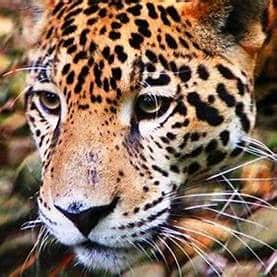
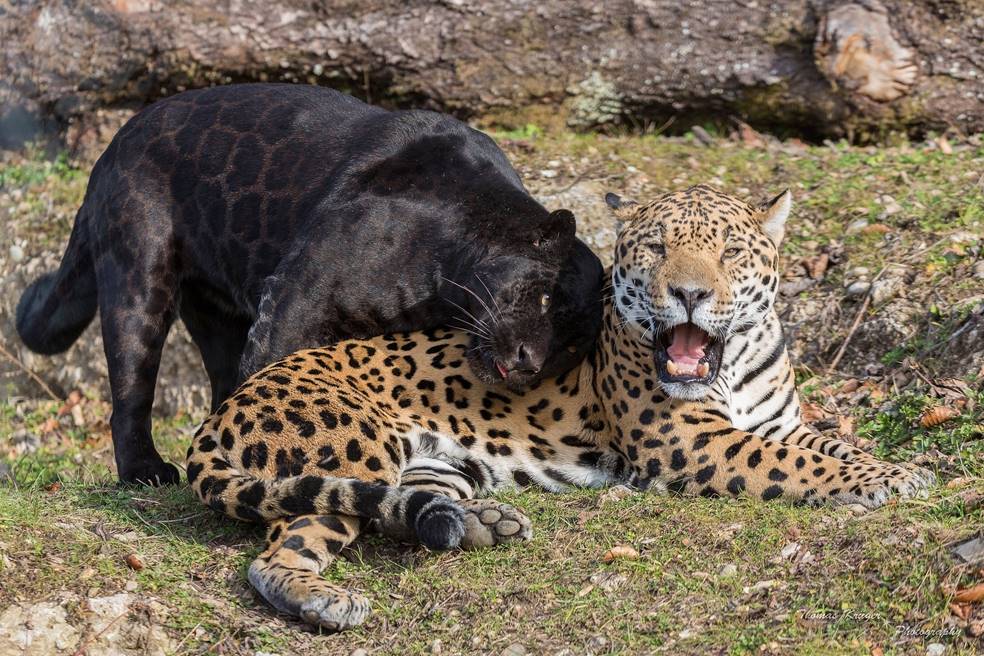
Male jaguars are typically larger than females, and size can vary by region, with animals farther south often growing heavier than those in Central America. Their coats are usually golden to tawny with black rosettes, but some jaguars are melanistic, appearing almost entirely black. Even then, the famous rosette pattern often still shows through in the right light, like a secret written into the fur. (worldwildlife.org)
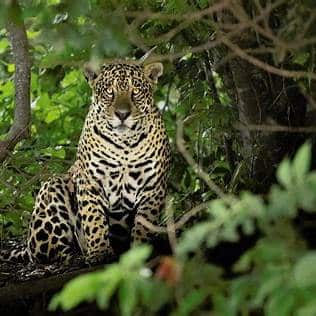
What makes the jaguar truly important is not only its beauty, but its role. This cat sits at the top of the food web as an apex predator, and its presence helps regulate prey populations and reflect the health of the broader landscape. Scientists and conservation groups also treat jaguars as a sign that a forest still has what it needs to function: space, cover, clean water, and enough prey to support a top hunter. (wcs.org)
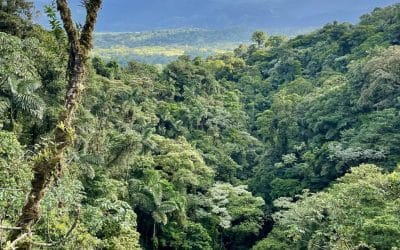
In Costa Rica, jaguars now survive mainly in protected forests, biological corridors, and remote landscapes where habitat still connects. Panthera’s work in the country highlights the Atlantic slope, the Talamanca Mountain Range, and biological corridors linking larger forest systems, while Costa Rica’s own conservation system notes that jaguars need extensive, intact habitat to persist. That is why this cat is no longer an animal of ordinary countryside folklore in most of the nation. It belongs, increasingly, to the last great stretches of wild country. (Panthera)
And what a hunter it is. Jaguars are opportunistic carnivores with a menu that includes more than 85 prey species across their range. They take peccaries, deer, reptiles, fish, turtles, monkeys, birds, and even caimans. Unlike many big cats, they are excellent swimmers and readily enter rivers, swamps, and wetlands in search of prey. In a country like Costa Rica, with mangroves, rainforest rivers, and wet lowlands, that gives them an advantage few predators can match. (U.S. Fish and Wildlife Service)
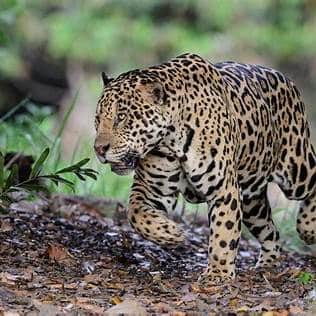
Their method is based on patience rather than spectacle. A jaguar does not rely on a long chase. It stalks, waits, and strikes from cover. Its bite is one of the most formidable in the cat world, powerful enough to pierce turtle shells and crocodilian hide, and famous for delivering a killing bite directly to the skull rather than the throat. There is nothing wasteful or theatrical about a jaguar. It is efficiency wrapped in shadow. (worldwildlife.org)
People often call jaguars nocturnal, but that only tells part of the story. They are more accurately described as crepuscular, meaning they are often most active around dawn and dusk, though they may also move at night or during the day depending on conditions. They are generally solitary animals, coming together mainly to mate, and the female raises the cubs alone for roughly two years while teaching them how to survive. (World Land Trust)
That solitary nature is one reason jaguars feel almost mythical in Costa Rica. They are there, but rarely seen. Even in places where they are known to occur, a sighting is a privilege rather than an expectation. Corcovado National Park on the Osa Peninsula remains one of the country’s most talked-about jaguar landscapes. Tortuguero, Braulio Carrillo, Caño Negro, and remote Atlantic and Talamanca corridors also form part of the wider story of jaguar presence in Costa Rica. These are places where forest, water, and prey still create a fighting chance for the species. (National Geographic)
That chance, however, is far from guaranteed. Jaguars have been eliminated from a large portion of their historic range, and the species is listed as Near Threatened on the IUCN Red List. Habitat loss, fragmentation, depleted prey, and conflict with ranchers remain serious pressures across the Americas. In Costa Rica, conservation efforts now focus not just on parks, but on keeping landscapes connected and reducing livestock conflict before retaliation happens. Saving jaguars is not simply about one magnificent cat. It is about keeping whole living systems intact. (iucnredlist.org)
A jaguar in Costa Rica is more than an animal on a checklist. It is a symbol of wilderness that has not yet given up. It is the soundless step in the understory, the ripple in a forest river, the proof that some parts of the country still belong first to nature. To glimpse one is extraordinary. To protect one is essential. (Panthera)
FAQ
Are jaguars found only in Costa Rica’s national parks?
No. Jaguars are associated with large protected areas, but they also depend on biological corridors and connected habitat beyond park boundaries. In Costa Rica, conservation work specifically emphasizes corridors on the Atlantic slope and in the Talamanca region because isolated parks alone are not enough for a wide-ranging predator. (Panthera)
Are black jaguars found in Costa Rica?
Yes. Melanistic jaguars, often called black jaguars, are real jaguars with a genetic trait that darkens the coat. Their underlying rosettes can still be present and sometimes visible in certain light. (Panthera)
Do jaguars swim?
They do, and they do it well. Jaguars are unusually comfortable in water compared with many other big cats, and they hunt prey in wet habitats including rivers, swamps, and marshy forest. (U.S. Fish and Wildlife Service)
Do jaguars hunt humans?
Wild jaguar attacks on humans are rare, but they are powerful wild predators and should always be treated with caution and respect. Across their range, the more common conflict involves livestock, which can trigger retaliatory killings by people. (PMC)
Why are jaguars so important to the ecosystem?
Because they are apex predators, jaguars help regulate prey populations and signal the health of the habitat around them. Protecting jaguars also helps protect forests, waterways, and many other species that share the same landscape. (wcs.org)
Where do visitors have the best chance of learning about jaguars in Costa Rica?
The best-known jaguar landscapes include Corcovado, Tortuguero, Braulio Carrillo, Caño Negro, and remote corridors connected to the Talamanca region. Even there, seeing one is uncommon, which is part of what makes the animal so legendary. (National Geographic)