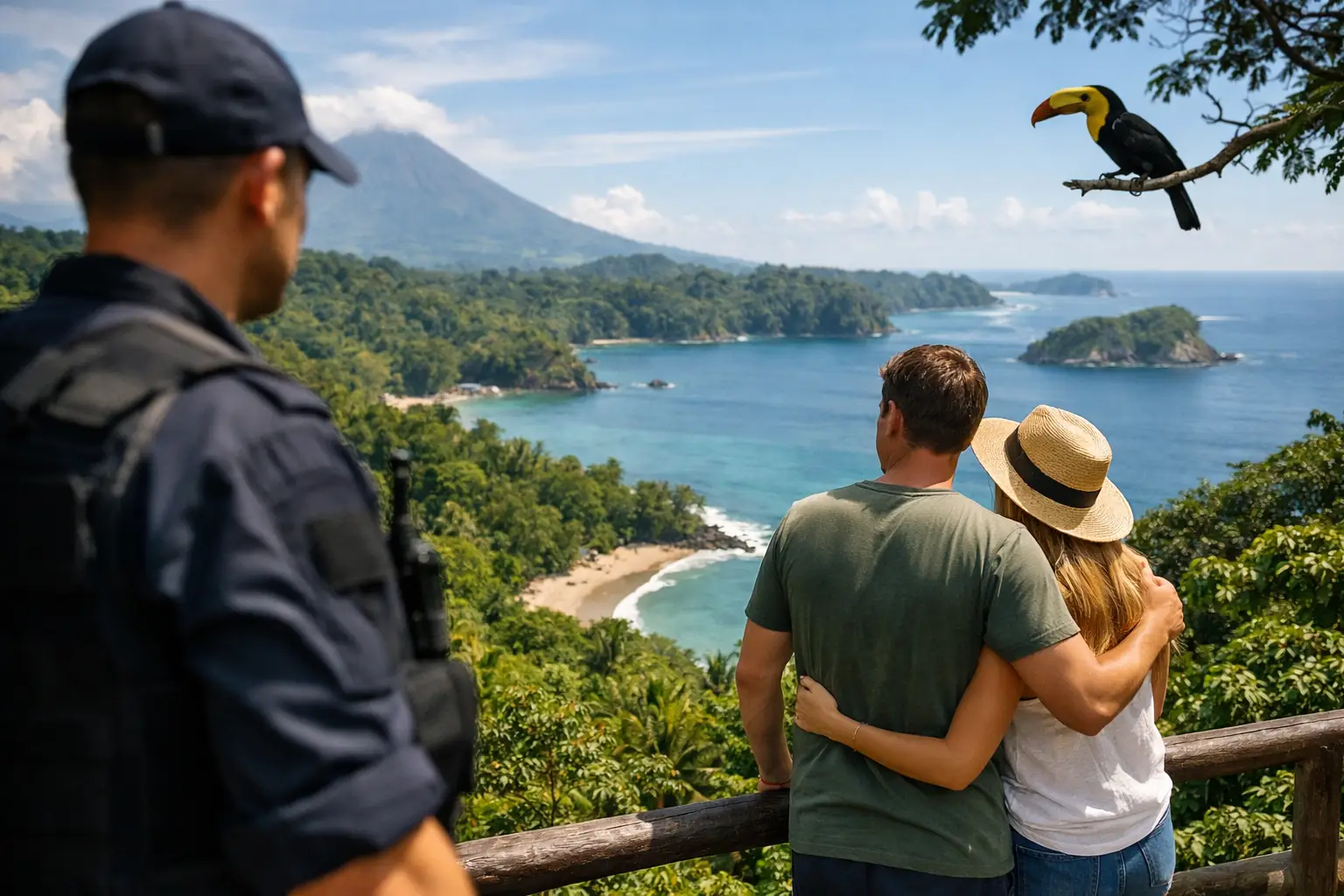
A family pulls off the highway for a waterfall stop, leaves bags on the back seat for “just five minutes,” and comes back to a smashed window. Later that same day, another traveler is sharing coffee with locals in a mountain town, wondering why anyone ever questioned the country’s reputation for warmth. Both stories can be true at once, which is exactly why the question “is Costa Rica safe for tourists” deserves a clear answer instead of a simple yes or no.
Costa Rica is widely considered one of the safest destinations in Latin America for visitors. Millions of travelers come each year for beaches, rainforests, surf breaks, wildlife, wellness retreats, and family vacations without major problems. But safe does not mean carefree. The risks here are usually less about dramatic danger and more about the kinds of preventable issues that can derail a trip anywhere – petty theft, poor decisions after dark, rough ocean conditions, unsafe driving habits, and choosing the wrong operator for an adventure activity.
Is Costa Rica safe for tourists? Yes, with context
For most visitors, Costa Rica feels welcoming, navigable, and relatively stable. The country has a long democratic tradition, no standing army, a strong tourism economy, and communities that are accustomed to international guests. In popular destinations such as Guanacaste, the Central Pacific coast, Arenal, Monteverde, and the Southern Zone, tourism infrastructure is well developed and many people working in hospitality speak English.
That said, safety depends heavily on how you travel. A couple staying at a reputable hotel, booking licensed tours, and using common-sense precautions will have a very different experience from someone driving unfamiliar roads at night, flashing expensive jewelry, or leaving valuables unattended at the beach. Costa Rica rewards awareness. It tends to be forgiving to prepared travelers and less forgiving to careless ones.
The most common safety issues visitors face
The biggest issue for tourists is usually theft of opportunity. Rental cars parked at trailheads, beach lots, and scenic pull-offs are common targets when bags, passports, laptops, or cameras are visible. This does not mean every parking area is risky, but it does mean you should assume a thief may be watching for easy mistakes.
Phone snatching and bag theft can also happen in bus terminals, crowded urban areas, and nightlife zones, especially in San José and some busy beach towns. Violent crime involving tourists is far less common than petty theft, but it can happen, particularly when alcohol, drugs, isolation, or late-night movement are part of the equation.
Nature is another real safety factor. Rip currents on both coasts can be powerful, even on beautiful, sunny days. Rivers rise quickly in rainy season. Hiking trails can turn slick and remote. Wildlife encounters are usually magical, but monkeys, snakes, crocodiles, jellyfish, and even curious raccoons require distance and respect. In Costa Rica, the landscape is part of the adventure and part of the risk profile.
Where travelers should use more caution
No country is uniformly safe or unsafe, and Costa Rica is no exception. Tourist areas are generally accustomed to visitors, but some settings require more attention than others.
Beach parking lots, remote viewpoints, and roadside stops are high on that list. So are nightlife districts where people are distracted, carrying cash, or heading home late. In cities, basic urban awareness matters. Know where you are going, use official transportation, and avoid wandering unfamiliar neighborhoods after dark just because they looked close on a map.
Even in resort regions, confidence can create carelessness. Travelers sometimes assume that a laid-back surf town equals zero crime. It does not. The atmosphere may be relaxed, but your habits still matter.
Is Costa Rica safe for tourists traveling alone?
Usually, yes. Solo travelers visit Costa Rica every day and often find it one of the easiest places in the region to navigate. Women traveling alone commonly choose destinations with strong tourism infrastructure and social lodging options, while retirees and remote workers often appreciate how quickly routines become comfortable.
Still, solo travelers should tighten the basics. Share your itinerary with someone. Avoid isolated beaches after sunset. Be careful with drinks in bars. Use licensed guides for remote hikes or water activities. If something feels off, trust that instinct early rather than explaining it away.
Transportation is where good judgment really counts
Road travel catches many first-time visitors by surprise. Distances can look short on a map and take much longer in reality due to mountain curves, rain, potholes, river crossings, construction, and slow-moving traffic. Night driving adds another layer, especially outside major routes where lighting can be limited and road markings inconsistent.
Rental cars are useful, but they come with responsibility. Do not leave belongings inside. Lock doors, even during quick stops. If you are arriving after a long international flight, consider spending the night near the airport rather than tackling a dark cross-country drive while tired.
Taxis and ride services are generally straightforward in larger areas, though it is best to use official or well-known options rather than accepting random offers. Public buses are an affordable and authentic way to move around the country, but they are not ideal if you are carrying valuables you cannot keep close.
Water, weather, and adventure safety matter as much as crime
Costa Rica’s beauty can distract people from its power. Strong surf, changing weather, and jungle terrain deserve respect. Every year, preventable accidents happen because travelers underestimate ocean conditions or overestimate their own comfort level.
If there is no lifeguard, be extra cautious. If locals are not swimming in a particular stretch, ask why. Rip currents are often invisible from shore. The prettiest beach in your photo gallery may not be the safest place to wade in.
Adventure tourism is one of Costa Rica’s great strengths, from zip-lining and rafting to ATV tours, canyoning, surfing, and volcano hikes. The key is choosing reputable operators who take equipment, weather, and group management seriously. Price alone should not decide who you trust with your safety. The same country that offers extraordinary access to nature also asks you to choose experienced professionals.
Health and practical safety on the ground
For most visitors, health concerns are manageable and routine. Drink plenty of water, use sunscreen aggressively, and expect heat and humidity to affect your energy faster than you think. Mosquito protection is smart, especially in coastal and lowland areas.
Travel insurance is worth considering not because Costa Rica is uniquely dangerous, but because adventure activities, weather disruptions, and medical transport can get expensive quickly. If you take prescription medication, bring enough for the trip and keep it in original packaging.
It is also wise to carry only what you need each day. A copy of your passport often makes more sense than the original when you are headed to the beach or out on a boat. Leave excess cash, jewelry, and backup cards secured at your accommodation.
How to lower your risk without traveling in fear
The smartest travelers in Costa Rica are not paranoid. They are present. They ask a hotel host whether a beach is safe for swimming that day. They park where attendants are visible. They do not set phones on café tables and walk away. They choose tours with strong reputations. They understand that a country can be friendly and still require boundaries.
A few habits make a disproportionate difference: keep valuables out of sight, avoid isolated areas at night, do not resist a robbery if one occurs, verify transportation, and pay attention to local advice. The people who know the day’s conditions best are often the ones already there – guides, innkeepers, surf instructors, park staff, and longtime residents.
This is also where Costa Rica’s character works in your favor. Across the country, many communities are deeply invested in tourism and in the well-being of guests. Ask for guidance and you will often get thoughtful, practical help.
So, should safety concerns stop you from visiting?
No. They should simply shape how you travel.
Costa Rica remains one of the most rewarding destinations in the hemisphere for nature, hospitality, family travel, romance, wellness, and adventure. The country’s appeal is not built on fantasy. It is built on real biodiversity, real cultural warmth, and a tourism sector that has spent decades learning how to welcome the world.
If you come expecting zero risk, you are setting yourself up for disappointment. If you come informed, alert, and willing to travel with good judgment, you are far more likely to experience what keeps people returning year after year: the ease of a sunset in Guanacaste, the hush of cloud forest trails, the thrill of seeing scarlet macaws overhead, and that unmistakable feeling that Costa Rica still knows how to make life feel vividly alive.
Travel smart, stay aware, and let the country meet you on those terms.