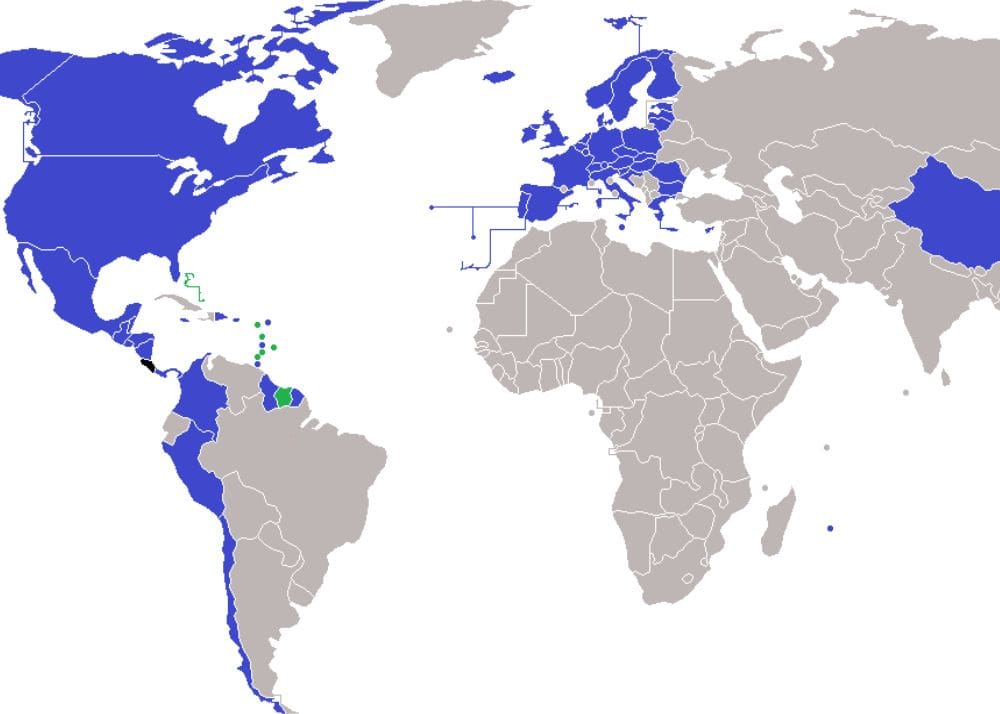
Costa Rica has strategically positioned itself as a hub for international business and investment through its comprehensive network of Free Trade Zones (FTZs). These zones, integral to the nation’s economic infrastructure, offer a plethora of incentives designed to attract foreign and local businesses alike. The success of these zones can be attributed to a combination of robust governmental support, strategic geographic location, and a forward-thinking approach to economic development.
Overview of Costa Rica’s Free Trade Zones
Costa Rica’s Free Trade Zones provide various fiscal and operational advantages to companies operating within these designated areas. Established primarily to stimulate economic growth and development, these zones are distributed across the country, with significant clusters around major cities and logistical hubs like San José and Limón. Companies in these zones benefit from a regime that exempts them from certain taxes and offers additional incentives based on investment size and employment generation.
Tax Incentives
One of the most compelling benefits of operating in a Costa Rican FTZ is the range of tax incentives offered. Businesses enjoy a 100% exemption from import and export duties, which is particularly advantageous for manufacturing firms that import raw materials and export finished products globally. Additionally, companies are exempt from capital and local taxes, and significantly, there is a full corporate tax exemption which can last up to 12 years, followed by a 50% exemption for the subsequent eight years.
These tax benefits make Costa Rica an attractive destination for foreign direct investment (FDI). For instance, multinational corporations like Intel and Procter & Gamble have established substantial operations in Costa Rica’s FTZs, leveraging tax exemptions to optimize their global tax strategies.
Employment and Economic Impact
Costa Rica’s FTZs are not only catalysts for foreign investment but also pivotal in generating employment opportunities. The zones are designed to encourage companies to hire locally, contributing to job creation and skill development within the community. This alignment of incentives underlines the government’s dual goals of attracting foreign investment and promoting local employment growth.
A testament to this success is the pharmaceutical giant Pfizer, which operates a manufacturing and packaging facility in a Costa Rican FTZ. This facility not only serves as a critical node in Pfizer’s global supply chain but also employs hundreds of local residents, providing them with valuable exposure to international business practices and advanced technology.
Strengthening Local Supply Chains
Beyond the direct benefits to companies and employees, FTZs also significantly impact local businesses and the broader economy. By establishing operations in these zones, multinational companies often require local suppliers, thereby fostering a network of local businesses that can meet these needs. This has led to the growth of local industries, from packaging and logistics to professional services like engineering and legal consultation, thereby strengthening the overall domestic supply chain.
For example, the presence of large electronics manufacturers in Costa Rican FTZs has spurred the development of a local electronics supply industry, capable of supporting not only the specific needs of these giants but also creating products and services that are competitive in global markets.
Challenges and Considerations
While the benefits are substantial, the operation within FTZs does not come without challenges. Companies must navigate complex regulatory requirements and maintain high standards of operations to comply with both local and international regulations. Moreover, the initial set-up in these zones requires significant investment in infrastructure and technology, which might be a barrier for smaller enterprises.
The Free Trade Zones of Costa Rica represent a significant pillar of the country’s economic strategy. They attract substantial foreign investment and contribute to job creation and local business development, underlining their role as a critical component in Costa Rica’s ongoing economic success story. As global economic dynamics continue to evolve, Costa Rica’s FTZs remain poised to adapt and thrive, offering a mutually beneficial environment for both foreign investors and local communities. Through a combination of strategic incentives and a conducive business environment, Costa Rica’s FTZs delineate a path toward sustainable economic growth and international competitiveness.
By embracing the advantages provided by these zones, both foreign and local businesses can leverage significant benefits, driving not only their growth but also contributing robustly to the broader economic fabric of Costa Rica.