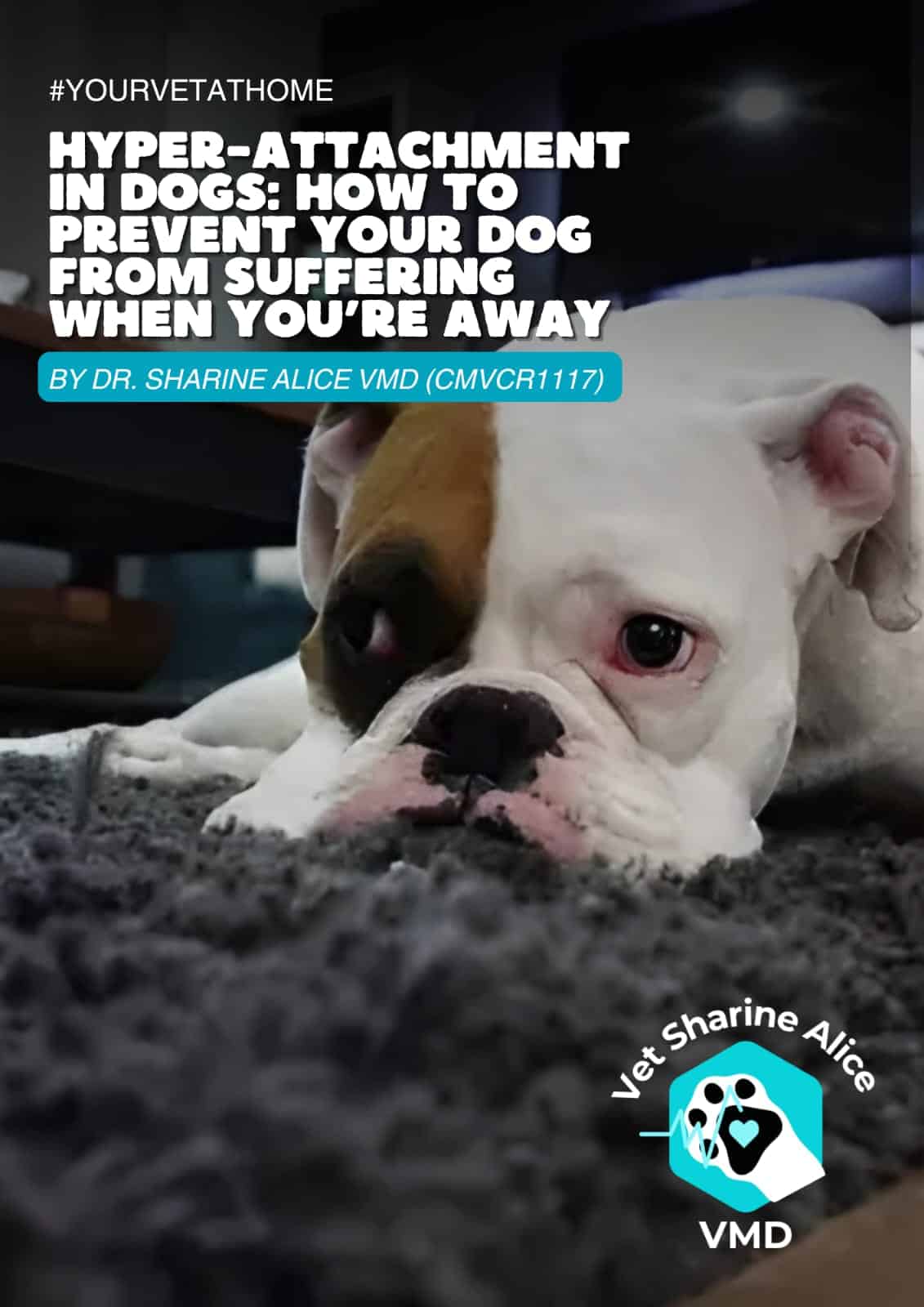
By Dr. Sharine Alice, VMD (CMVCR1117)
What Is Canine Hyper-Attachment?
Canine hyper-attachment, also known as Canine Separation Anxiety (CSA), is a behavioral condition in which a dog experiences anxiety, distress, and emotional discomfort when separated from their owner, even for very short periods of time.
This condition goes beyond normal attachment. Dogs with hyper-attachment struggle to cope with absence, which can negatively affect their emotional balance and overall well-being.
Why Does It Happen?
Scientific research indicates that separation anxiety often develops due to lack of independence training, sudden routine changes, early-life trauma, or insufficient socialization. Dogs that do not learn how to remain calm when alone are more likely to develop anxiety-related behaviors.
Common Signs
- Excessive barking or vocalization
- Destructive behavior when alone
- Indoor elimination
- Restlessness or loss of appetite
These behaviors are stress responses, not disobedience.
How to Prevent Emotional Distress
- Encourage short, calm periods of independence
- Avoid emotional goodbyes and greetings
- Keep daily routines consistent
- Provide mental stimulation during absences
Early guidance and professional support can prevent symptoms from becoming chronic.
✅ Final Note
Hyper-attachment reflects emotional vulnerability, not excessive affection. With understanding, structure, and science-based care, dogs can learn to feel secure—even when their owners are away.
Dr. Sharine Alice, VMD (CMVCR1117)
Contact: (506) 8307-8400
Playa Hermosa, Guanacaste, Costa Rica.