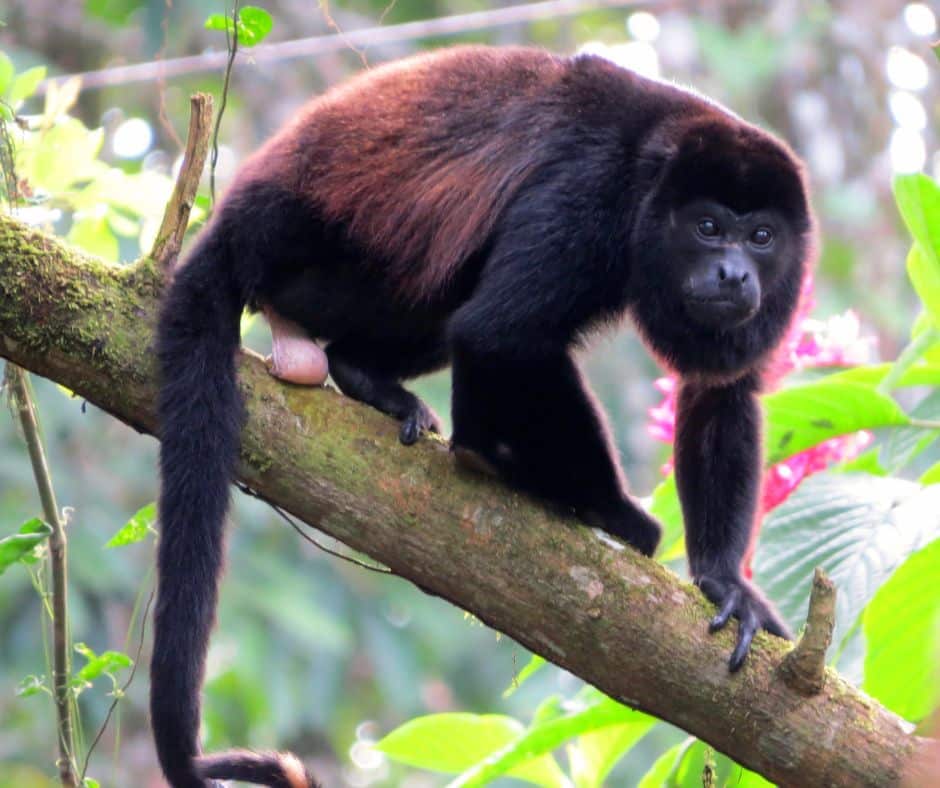
The Echoes of the Rainforest: Meet the Howler Monkey
If you’ve ever wandered through Costa Rica’s lush jungles, you’ve likely heard the deep, reverberating roar of a howler monkey before you’ve seen one. These vocal primates define the soundtrack of the rainforest, their calls cutting through the misty canopy at dawn and dusk. But beyond their eerie, echoing cries, howler monkeys are a crucial part of Costa Rica’s delicate ecosystem. While they’ve proven to be adaptable survivors, their existence is increasingly challenged by habitat loss and human-made threats. Understanding these fascinating creatures and ensuring their protection is key to maintaining the balance of the forests they call home.
Are Howler Monkeys Endangered?
Howler monkeys are not currently classified as endangered, but they face numerous threats that could impact their future survival. The International Union for Conservation of Nature (IUCN) lists most howler monkey species as Least Concern, though habitat destruction and human-related dangers are significant concerns.
Are Howler Monkeys a Resilient Species?
Yes, howler monkeys are highly resilient, adapting to different environments and even urban areas. They can survive in fragmented forests and secondary growth, but their long-term survival depends on conservation efforts to maintain their natural habitats.
How Do Developers and the Electric Company Impact Howler Monkeys?
Poorly planned development and unprotected electric lines pose a deadly threat to howler monkeys. As they move through the treetops, they often mistake power lines for vines, leading to electrocution.
Necessary Safety Measures for Howler Monkeys:
- Wildlife Bridges: Installing rope bridges over roads to provide safe crossings.
- Insulated Power Lines: Covering electric cables with protective coatings to prevent electrocution.
- Eco-Friendly Development: Encouraging builders to preserve tree canopies and natural pathways for wildlife.
- Reforestation Efforts: Planting native trees to reconnect fragmented habitats.
Why Do Young Male Howler Monkeys Leave Their Group?
Young male howler monkeys leave their birth group when they reach sexual maturity, typically between 3 to 5 years old. They then wander alone or form small bachelor groups before attempting to establish dominance in a new troop.
What Role Do Howler Monkeys Play in the Ecosystem?
Howler monkeys contribute to the environment by dispersing seeds through their diet, which primarily consists of leaves, fruits, and flowers. Their feeding habits help regenerate forests and maintain biodiversity.
Frequently Asked Questions (FAQ)
What Do Howler Monkeys Eat?
Howler monkeys primarily eat leaves, fruits, and flowers, making them essential seed dispersers in their ecosystems.
Where Can You See Howler Monkeys in Costa Rica?
You can spot them in national parks, rainforests, and even urban areas with green spaces, such as Guanacaste, Tortuguero, and the Osa Peninsula.
Why Do Howler Monkeys Make Loud Calls?
Their deep, booming calls serve to establish territory, communicate with the troop, and warn of predators. The sound can travel up to 5 kilometres.
Are Howler Monkeys Dangerous to Humans?
No, howler monkeys are not aggressive towards humans. However, they may throw objects or urinate when they feel threatened.
How Long Do Howler Monkeys Live?
In the wild, howler monkeys can live up to 20 years, while in captivity, they may survive even longer.
Can Howler Monkeys Be Kept as Pets?
No, howler monkeys are wild animals and illegal to own as pets in Costa Rica and many other countries.
Howler Monkeys in Costa Rica: Survival, Threats, and the Role of Conservation
The Echoes of the Rainforest: Meet the Howler Monkey
If you’ve ever wandered through Costa Rica’s lush jungles, you’ve likely heard the deep, reverberating roar of a howler monkey before you’ve seen one. These vocal primates define the soundtrack of the rainforest, their calls cutting through the misty canopy at dawn and dusk. But beyond their eerie, echoing cries, howler monkeys are a crucial part of Costa Rica’s delicate ecosystem. While they’ve proven to be adaptable survivors, their existence is increasingly challenged by habitat loss and human-made threats. Understanding these fascinating creatures and ensuring their protection is key to maintaining the balance of the forests they call home.
Are Howler Monkeys Endangered?
Howler monkeys are not currently classified as endangered, but they face numerous threats that could impact their future survival. The International Union for Conservation of Nature (IUCN) lists most howler monkey species as Least Concern, though habitat destruction and human-related dangers are significant concerns.
Are Howler Monkeys a Resilient Species?
Yes, howler monkeys are highly resilient, adapting to different environments and even urban areas. They can survive in fragmented forests and secondary growth, but their long-term survival depends on conservation efforts to maintain their natural habitats.
How Do Developers and the Electric Company Impact Howler Monkeys?
Poorly planned development and unprotected electric lines pose a deadly threat to howler monkeys. As they move through the treetops, they often mistake power lines for vines, leading to electrocution.
Necessary Safety Measures for Howler Monkeys:
- Wildlife Bridges: Installing rope bridges over roads to provide safe crossings.
- Insulated Power Lines: Covering electric cables with protective coatings to prevent electrocution.
- Eco-Friendly Development: Encouraging builders to preserve tree canopies and natural pathways for wildlife.
- Reforestation Efforts: Planting native trees to reconnect fragmented habitats.
Why Do Young Male Howler Monkeys Leave Their Group?
Young male howler monkeys leave their birth group when they reach sexual maturity, typically between 3 to 5 years old. They then wander alone or form small bachelor groups before attempting to establish dominance in a new troop.
What Role Do Howler Monkeys Play in the Ecosystem?
Howler monkeys contribute to the environment by dispersing seeds through their diet, which primarily consists of leaves, fruits, and flowers. Their feeding habits help regenerate forests and maintain biodiversity.
Frequently Asked Questions (FAQ)
What Do Howler Monkeys Eat?
Howler monkeys primarily eat leaves, fruits, and flowers, making them essential seed dispersers in their ecosystems.
Where Can You See Howler Monkeys in Costa Rica?
You can spot them in national parks, rainforests, and even urban areas with green spaces, such as Guanacaste, Tortuguero, and the Osa Peninsula.
Why Do Howler Monkeys Make Loud Calls?
Their deep, booming calls serve to establish territory, communicate with the troop, and warn of predators. The sound can travel up to 5 kilometres.
Are Howler Monkeys Dangerous to Humans?
No, howler monkeys are not aggressive towards humans. However, they may throw objects or urinate when they feel threatened.
How Long Do Howler Monkeys Live?
In the wild, howler monkeys can live up to 20 years, while in captivity, they may survive even longer.
Can Howler Monkeys Be Kept as Pets?
No, howler monkeys are wild animals and illegal to own as pets in Costa Rica and many other countries.
The Future of Howler Monkeys: A Shared Responsibility
The haunting calls of the howler monkey have echoed through Costa Rica’s forests for centuries. But as urban expansion, deforestation, and infrastructure projects continue to encroach upon their habitat, their survival depends on collective action. By implementing better conservation practices, supporting wildlife-friendly development, and ensuring that power companies take necessary precautions, we can help these magnificent primates thrive for generations to come. The next time you hear the unmistakable roar of a howler monkey in the treetops, remember that their survival is intertwined with the health of the forests they inhabit—and that we all have a role to play in protecting them.