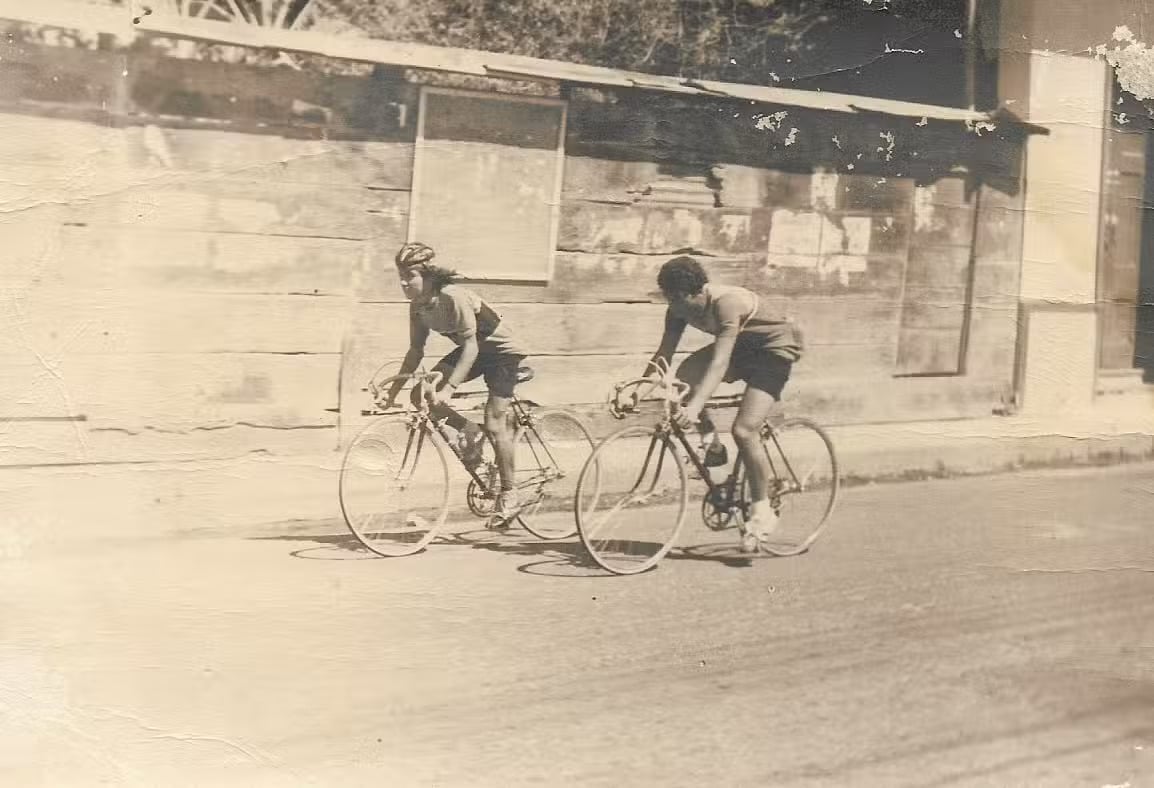
My beginnings in cycling were in 1973 when the Tour of Costa Rica arrived in Liberia. This caught my attention because there were cyclists from different countries. From that moment on, I became a fan of bicycle racing. At age 12, I saved up to buy my first bicycle. My brother Noe also had a bicycle, so we started riding together. In my town, they held a competition in which I decided to participate, and I did not place among the top positions, but that motivated me to keep training harder.
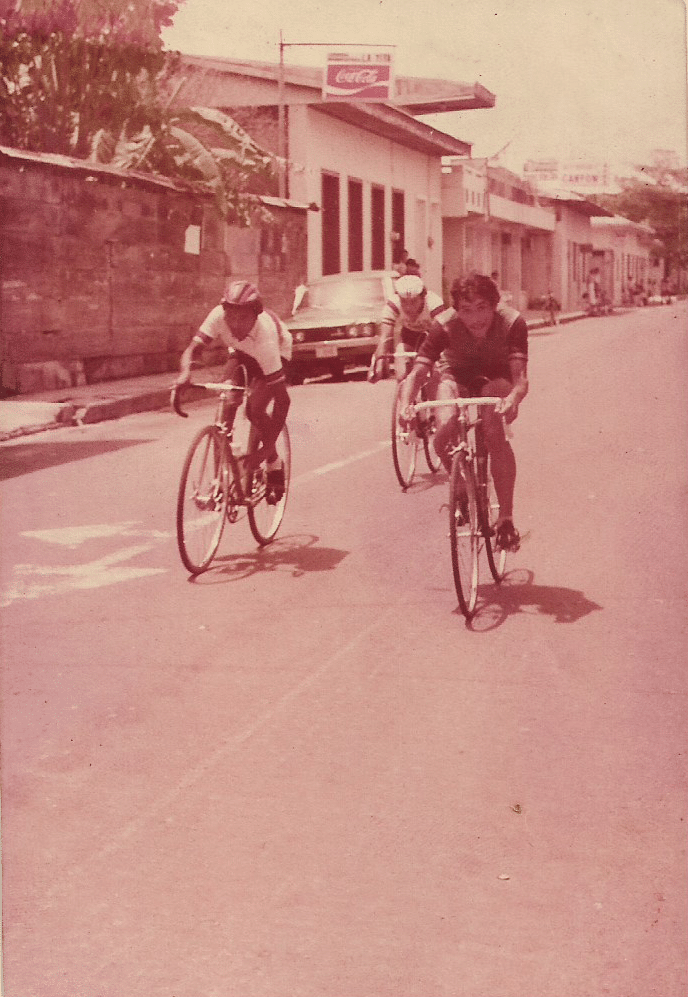
I worked very hard and participated in other local competitions until I started to improve and won my first competition, which was a circuit in Liberia in 1977. As the years went by, I continued training and met my first coach, Guido Blanco Bermúdez, a cyclist from Liberia with experience in the sport. He trained young people in Liberia and took them to compete in San José (the capital of Costa Rica) and in other competitions such as cups, tournaments, and cycling championships in different parts of the country, where I mostly achieved top podium positions. Later, I continued training and competing until in 1982 I qualified to race my first Tour of Costa Rica with the team Melcochería La Estrella, and in 1983 I qualified again to race my second Tour of Costa Rica with the team El Globo group C. These important achievements in my life motivated me to continue competing at national and international levels in both road and mountain cycling.
Little by little, I began exploring other disciplines such as athletics, swimming (open water competitions), and triathlon. In 1984 I raced the Tour of Guanacaste with the team Café Quetzal from Guatemala, where I won the intermediate sprints, as well as other competitions such as the triathlon World Cup in San Andrés, the Clásica El Colombiano in Medellín, Colombia, the Master Tour in San Andrés, and the Pan American Games in Cuba. In national competitions such as La Ruta de los Conquistadores (MTB), Clásica La Soledad (MTB) in Sámara, Guanacaste, which we won in the club and father-and-son categories. In 2006 I returned to cycling with Guanaride (MTB), then in triathlon TICOMAN, and open water swimming in Playa Hermosa, Guanacaste. And so on—consecutively—until in 2013 I took a break due to surgery for a spinal hernia, but later I returned to training and competing in 2015.
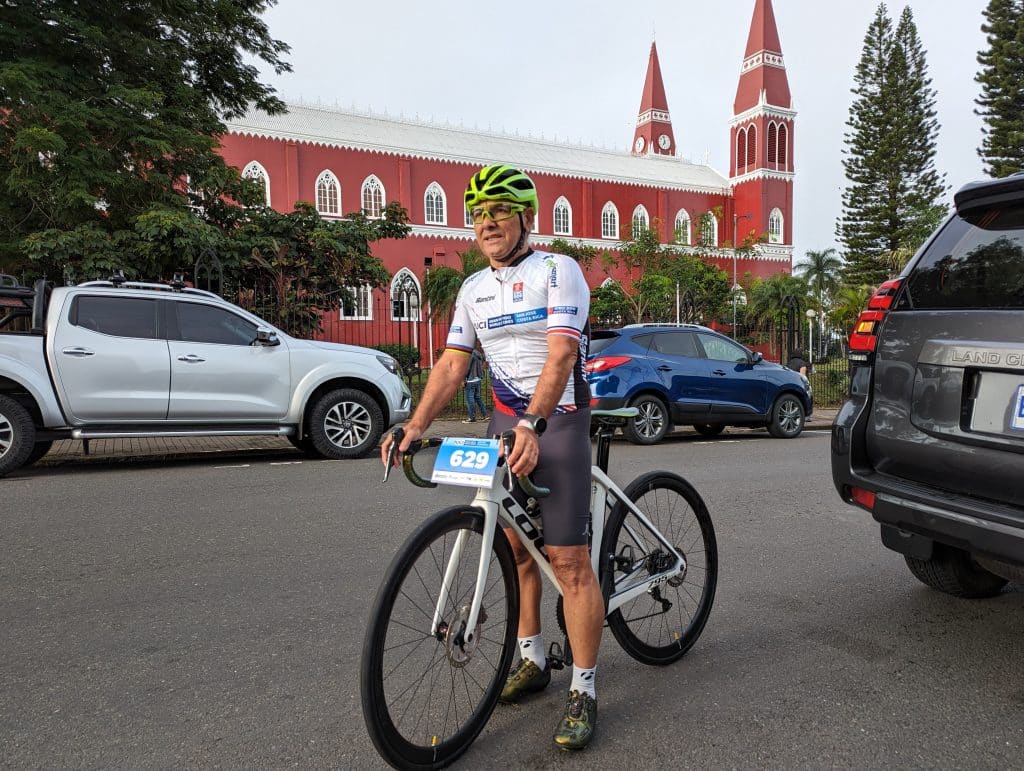
After my recovery, I resumed training more intensely following the pandemic in 2023, the year in which I won the Guanacaste Championship 2023 and also the Guanacaste Championship 2024. In 2025, after years of trying to win the El Coco triathlon, I achieved first place. In the Gran Fondo of Guanacaste 2025 cycling competition in the over-60 category, I took first place; in IRONMAN Panama 2025, I placed fifth; in the Gran Fondo New York in Sebring, Florida, United States 2025, I placed second. In 2026, I participated in IRONMAN Panama 2026 and achieved third place. Currently, I continue training and plan to keep participating in national and international competitions. My goal is to qualify for the IRONMAN World Championship to be held in France in September 2026 and to stay active in the sport I am passionate about—cycling and triathlon in its different categories.
Childhood and first steps
1. Where were you born, and how do you describe your childhood?
I was born on August 21, 1961, in Las Juntas de Abangares, Guanacaste, Costa Rica. In my first eight years of life, I lived in the countryside. I was born into a large family, and we used to help my father with farm work. Later, we moved to Liberia, Guanacaste, seeking better opportunities. I started working at age eight to help my family, who had limited financial resources. I earned a living cleaning shoes and selling lottery tickets around downtown Liberia. I completed my primary education at Escuela Asención Esquivel Ibarra. I studied secondary school up to ninth grade at the Liceo Nocturno de Liberia.
2. How was your relationship with sports when you were a child?
In my early years, I knew nothing about sports and had no interest in them. But in 1974, one of the stages of the Tour of Costa Rica arrived in Liberia, and I was very impressed to see so many teams with people from different countries. That’s when my interest in participating in cycling races began.
3. Do you remember the first time you used a bike?
The first bicycle I had, I bought from a shop owned by a woman named Argentina Trigo, who allowed me to pay for it little by little. That’s when I learned to ride a bike while working cleaning shoes and selling lottery tickets in the streets of Liberia to pay for the bicycle, which was a Benotto brand.
4. What did you feel the first time you rode a bike?
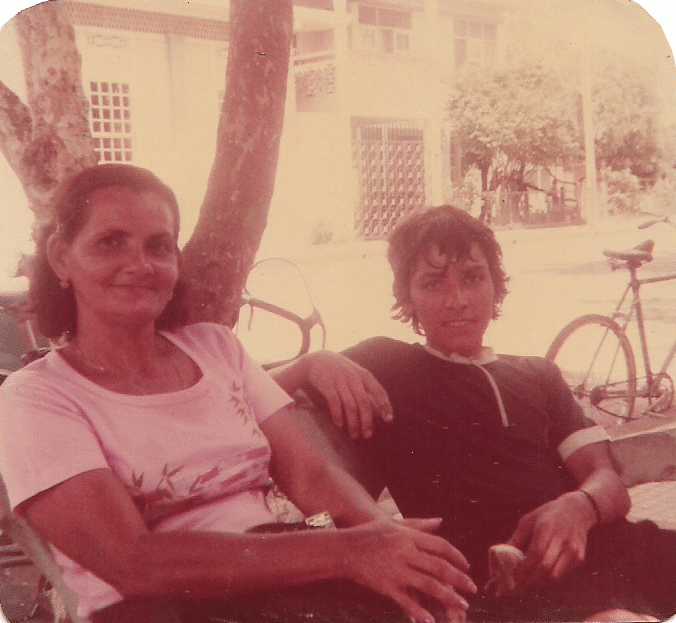
I started riding a bike recreationally because, unconsciously, I had the hope of one day becoming a cyclist. Until one day, there was a race held in downtown Liberia—a circuit—in which I finished last, but I won 25 colones. A funny anecdote is that for that race, since I didn’t have money to buy a cycling jersey, my mother made me one from a regular T-shirt and added pockets. And since she couldn’t find elastic, she used one from underwear, brand Olimpo. My friends noticed and laughed, but now I remember it fondly, because my mother, despite financial difficulties, always found a way to support me.
5. Did your family support your interest in cycling?
My mother was always a great emotional support for me because she would go watch me compete, and my father would wake me up at 2:00 a.m. so I could go train and would make me coffee.
6. Did you have economic or social challenges at the beginning?
Yes. When competing, I often couldn’t afford transportation, registration fees, food, or lodging for competitions, but there were always people who supported me. For example, in 1977 I met Guido Blanco, who had raced the Tour of Costa Rica and became my coach. He took us to compete in San José at the national level in competitions such as the Youth Tour and the Tour of Guanacaste.
7. When did cycling stop being a hobby and become something serious?
From my first race, because each race helped me prepare for the next. But a key moment was in 1976 when I stopped selling lottery tickets to dedicate myself to competing, and I survived on what I earned from prize money. Therefore, the pressure was greater because to have income I had to win competitions. At the same time, alongside cycling, I started working in Guido Blanco’s bike shop, helping repair bicycles, which gave me more flexibility for training and income. Then I began saving, and in 1981 I opened my own bicycle workshop, which gave me better income and allowed me to finance participation in more competitions.
First Steps in Competitive Cycling

8. What were your training sessions like?
At the beginning, I didn’t have a structured routine like when I started with my coach. With my coach, I used to ride 365 km per week. My routes were Liberia–Cañas–Liberia, Liberia–La Cruz, Liberia–Nicoya–Liberia, Liberia–Santa Cruz–Liberia.
9. What was your first big competition and achievement?
The Youth Tour in 1978, a four-stage race held in San José.
*The Tour of Costa Rica: I raced the Tour of Costa Rica in 1982 and 1983, but to qualify I had to compete throughout the entire year and be among the top 30 in the national ranking, which was very difficult. Some races I had to participate in to qualify included Clásica Metalco, Tour of Guanacaste, the pre-tour, and all regional competitions I could enter. My first Tour of Costa Rica was physically difficult because there were many stages, and I couldn’t afford proper nutrition, and I also had to stay within the time limit to avoid disqualification. However, I had the opportunity to join the Melcochería La Estrella team, and they provided assistance, mechanics, and everything needed for a team. At that time, I was paid 3000 colones. One of the difficulties I had in my first Tour of Costa Rica was that I developed 17 boils (infectious abscesses with pus accumulation) on my legs, which caused a lot of pain, but even so, I managed to finish all stages within the time limit. During my years as a cyclist, this was one of the greatest challenges I faced.

Challenges and obstacles
10. Have you ever doubted your talent?
No, I have always trusted my abilities, and difficulties motivate me to move forward because I know there is a better version of myself waiting on the other side once I overcome them.
11. How do you manage competitive pressure?
More than nerves before a competition, I feel excitement. I trust my physical and mental preparation before each event, which motivates me and makes me feel positive in every competition. I really enjoy the competition environment and also talking with other participants during the process, making new friendships.
12. Do you feel you’ve had to make sacrifices, and what are they?
No, I feel I have never had to make sacrifices; I feel I have made efforts, because when something feels like a sacrifice, it means what you’re doing doesn’t resonate with you or you’re not enjoying it. Some efforts I have made include waking up very early to train and defining my priorities.
Self-improvement
13. Is there any moment that changed your career?
Yes, when I got married and started my own family, because my priorities changed since I needed to be present for my children and my wife. Also, because my income was directed toward improving my family’s conditions, and my focus was on being a present, responsible father.
14. What factors were key to your development as an athlete?
Discipline, because there are days that become difficult or when motivation isn’t there, but discipline helps me achieve my goals even when I thought I couldn’t.

Achievements
15. What does it mean to represent Costa Rica?
For me, it is an honor to represent my country, since it has been the result of daily effort and discipline. I started at age 13 when I first got on a bicycle—52 years dedicated to sport have passed. I am currently 64 years old, and I would like to be a positive example of motivation for both young people and adults so they don’t give up and practice this beautiful sport like cycling or any other sport they are passionate about.

Present and future
16. What are your short- and long-term goals?
I would like to continue competing in Ironman and complete a full Ironman. Also, to keep participating in national and regional competitions such as the Master Tour, the Guanacaste Championship, and return to the Gran Fondo New York in the United States, and try to qualify for the Ironman World Championship in France.
17. Have you thought about retiring? If so, what would you like to accomplish before you do?
Currently, no, because sports have always been part of my life, and I will continue practicing as long as God and my health allow. But if I must retire at some point, I hope I will have been able to go to the Ironman World Championship. I never plan to give up.
Francisco’s store is located 250 meters north of the Ermita de la Agonía, in Liberia, Guanacaste
Philosophy and inspiration
18. What motivates you to keep training every day?
My family and my physical and mental health, because sports throughout my life have allowed me to create great memorable moments and have been like a form of therapy, both physically and mentally. Also, I have met many people throughout my life inside and outside my country with whom I share great friendship and affection.
19. What advice would you give to someone who wants to get into cycling?
To try it—that their effort, commitment, and discipline are the only limits to achieving their goals.
20. What message would you like to share with those reading this interview?
If your dream is to be a cyclist, try it. With effort and discipline, everything can be achieved, because the worst attempt is the one that is never made, and the greatest obstacle to success is excuses.
List of important competitions
1- 1978 Youth Tour
2- 1979 National Youth Championship
3- 1981 Clásica Metalco in Puntarenas and National Championship
4- 1982 National Championship, Pre-Tour of Costa Rica, Tour of Costa Rica, Tour of Guanacaste
5- 1983 Tour of Costa Rica and National Championship
6- 1984 International Triathlon El Coco and Tour of Guanacaste
7- 1985 International Triathlon El Coco and Tour of Limón
8- 1986 Guanacaste Championship, International Triathlon El Coco, San Carlos Triathlon
9- 1988 Tour of Guanacaste
10- 1990 Triathlon World Cup in San Andrés
11- 1994 National Mountain Bike Championship
12- 1998 Clásica Colombiano in Colombia
13- 1999 Master Tour in San Andrés
14- 2002 Pan American Master Championship in Cuba and Ruta de los Conquistadores (MTB)
15- 2006 Guanaride (MTB)
16- 2008 TICOMAN Triathlon in Lake Arenal
17- 2009 Open Water in Playa Hermosa, Guanacaste; 2009–2010–2011–2012 Master Tour
18- 2013 Triathlon 111 Pinilla
19- 2022–2023–2024 Guanacaste Championship
20- 2024 Gran Fondo of Guanacaste
21- 2025 Guanacaste Championship, Master Tour, Ironman in Panama, Gran Fondo of Guanacaste and Gran Fondo New York, El Coco Triathlon
22- 2026 Ironman in Panama