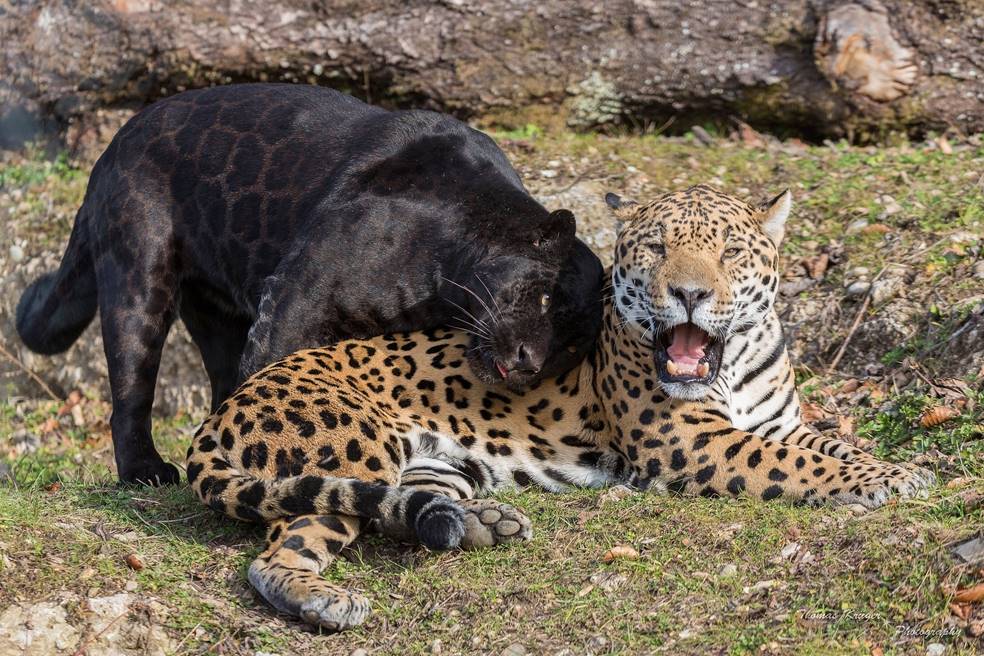
Jaguars are the largest feline species in Costa Rica and the third-largest on the planet, next to lions and tigers. Average size varies by geographic location, with larger jaguars tending to live in habitats further south. Male jaguars are generally about 20 percent larger than females, averaging 125 to 200 pounds. Some recorded weights have exceeded 300 pounds!
Jaguars are usually spotted, but melanism (black pigment) occurs commonly in varying degrees, from completely black to near black with some pattern showing through.
The type of jaguars native to Costa Rica may exist in locations ranging from the extreme southwest United States down to central South America. However, in Costa Rica this cat is found almost only in the forests of protected reserves. Jaguars are a keystone species, meaning they are the top of the food chain. This makes them crucial to stabilizing the ecosystem by regulating prey populations.
It is said that jaguars won’t hunt humans, yet human deaths have been recorded. Due to farmers’ concerns about jaguars hunting cattle, jaguars have been extirpated from areas of human habitation.
As predators of many semi-aquatic creatures, jaguars will often swim and hunt in the water. Their diet encompasses at least 87 species, including adult caimans, deer, capybaras, tapirs, peccaries, dogs and even anacondas on the large side. These kitties will also eat small prey such as birds, frogs, mice, fish, sloths, monkeys and turtles.
Jaguars have an extremely powerful bite that can pierce the shells of armored prey, and puncture the heads of their prey to cause brain damage. Their stalk-and-ambush method of hunting involves staying under cover rather than chasing down prey. They eat all their food before hunting for more.
Jaguars are considered nocturnal but are actually crepuscular (peak activity around dawn and dusk). They are active. They are vocal, but solitary, coming together only to mate. The male does not participate in the care of offspring.
Their tendency to stay under cover makes jaguars hard to view and observe. However, it is possible to do so in Costa Rica, where the majority of wild jaguars live in various national parks and preserves. Places to research for jaguar sightings include Tortuguero National Park, Santa Rosa National Park, Corcovado National Park, Rio Macho Forest Preserve and the lower Cordillera Talamanca, La Selva and Monteverde Cloud Forest Reserve. Jaguars may also be found in the vicinity of San José, San Vito and Cerro de la Muerte.