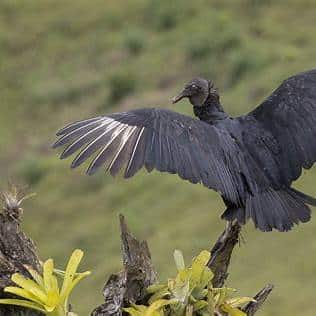
If you’ve spent any time on a Costa Rican highway, beach road, or farm track, you’ve seen them—big dark shapes riding invisible elevators of warm air, barely flapping, as if the rules of effort don’t apply. Then you spot the truly iconic moment: one perched on a fence post with wings stretched wide, like it’s either conducting an orchestra or trying to dry a very large laundry load.
That wing-spread “sunbathing” isn’t spooky, and it isn’t a threat. It’s smart. And it’s one of the best clues that vultures are doing exactly what nature built them to do: keep the tropics clean, fast.
Costa Rica has four species of vultures you can realistically run into: Turkey Vulture, Black Vulture, King Vulture, and Lesser Yellow-headed Vulture. (Facebook)
Meet the four vultures you’ll see in Costa Rica
Turkey Vulture (Cathartes aura) – The classic “tilting” soarer. From below, you’ll often notice the long wings held in a slight V and a gentle wobble as it glides. In good light, the adult’s head is reddish. (All About Birds)
Black Vulture (Coragyps atratus) – Chunkier, snappier, and often in groups. It’s the one you’ll see swaggering around parking lots, rooftops, and roadside trees like it owns the schedule. (All About Birds)
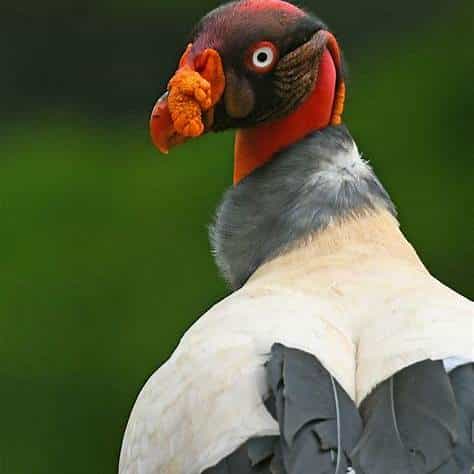
King Vulture (Sarcoramphus papa) – The showstopper: pale body, dark wings, and a wildly coloured bare head. In Costa Rica it’s a prized sighting, most associated with big, wilder lowland forests (the Osa Peninsula is famous for it). (BirdLife DataZone)
Lesser Yellow-headed Vulture (Cathartes burrovianus) – The specialist. More tied to open lowlands, wetlands, and agricultural edges, and considered fairly restricted in Costa Rica compared with the two everyday species. (Field Guides)
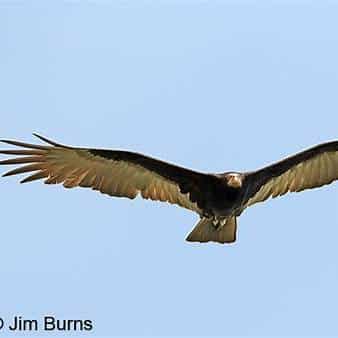
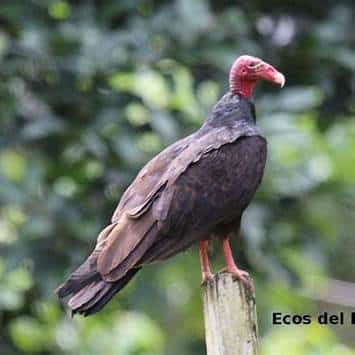
The “wings out” pose: vulture sunbathing is real science
When you see a vulture perched with wings spread wide, you’re watching the horaltic pose—basically vulture solar charging. Early mornings can be surprisingly cool after a damp night, especially in rain-forest edges and cloudier zones, and these birds need warm muscles to fly well. By opening the wings like giant dark panels, they increase surface area, warming up faster. (Wildlife Center of Virginia)
That pose also helps them:
- Dry feathers after rain or dew (wet feathers are heavy and lousy for flight). (Wildlife Center of Virginia)
- Reduce feather parasites (sun exposure plus time spent preening helps keep things under control). (Wildlife Center of Virginia)
So yes—when you see a Black Vulture perched with wings wide open in the sun, it’s not waiting for drama. It’s warming up, drying off, and getting its kit sorted for the day. (Wildlife Center of Virginia)
Smell vs sight: why Turkey Vultures are the “scouts” and Black Vultures are the “followers”
Turkey Vultures are famous for something most birds barely have: a serious sense of smell. They can locate food by odour—even under forest canopy—because the brain area tied to smell is unusually developed for a bird. (All About Birds)
Black Vultures, on the other hand, are much more “eyes-first.” A classic strategy is simple: watch Turkey Vultures. If a Turkey Vulture drops lower with purpose, Black Vultures often appear like they’ve been watching the whole time (because they have). (All About Birds)
That partnership is part of why vultures are so effective in a place like Costa Rica, where heat and humidity can turn “leftovers” into a health problem quickly.
Where you’ll spot vultures in Costa Rica (and why those places make sense)
Turkey and Black Vultures are widespread—coasts, valleys, towns, farmland, and roadsides. They’re generalists, and Costa Rica is basically a buffet of habitats for generalists. (Birds for Beer)
The other two are more “special mission” birds:
- King Vulture: Think big, intact lowland forest where it can soar above the canopy and stay mostly out of human bustle. Costa Rican birding sources often point to the Osa Peninsula as a key area for sightings. (Bird Watching Costa Rica)
- Lesser Yellow-headed Vulture: Look toward wetlands and open lowlands—places like rice fields and the northern lowlands show up again and again in trip reports and birding itineraries. (Field Guides)
A fun local trick: if you see a tight “kettle” of soaring birds over a warming road mid-morning, you’re probably watching vultures using thermals—rising columns of warm air—like a free lift to altitude. Circling isn’t ominous; it’s physics. (Live Science)
Why Costa Rica should be proud of its vultures
Vultures don’t get the cuddly PR treatment. They should. In tropical climates, they’re an essential public health service with feathers. Their job—eating what would otherwise rot—helps reduce disease risk in ecosystems and around human settlements. Their digestive systems are famously tough, which is part of why they can do this job safely. (Live Science)
They also do something quietly beautiful: they turn endings into beginnings. In ecological terms, they’re recyclers—moving nutrients back into the system so forests, insects, and soil life keep humming.
How to watch (and photograph) vultures like a local
If you want better vulture encounters (and better photos), timing and light matter:
- Early morning: best chance to catch the horaltic pose on fence posts, dead snags, rooftops, and lookout trees—especially after rain. (Wildlife Center of Virginia)
- Late morning to mid-afternoon: best soaring action as thermals strengthen—look for the “no-flap glide” and the circling lift. (Live Science)
- Respect distance: perched vultures tolerate humans—until they don’t. Give them space and let them choose the moment.
And if you want a quick ID cue while they’re flying: Turkey Vultures tend to look longer-winged and slightly wobbly; Black Vultures often look more compact, with a bolder, punchier silhouette. (All About Birds)