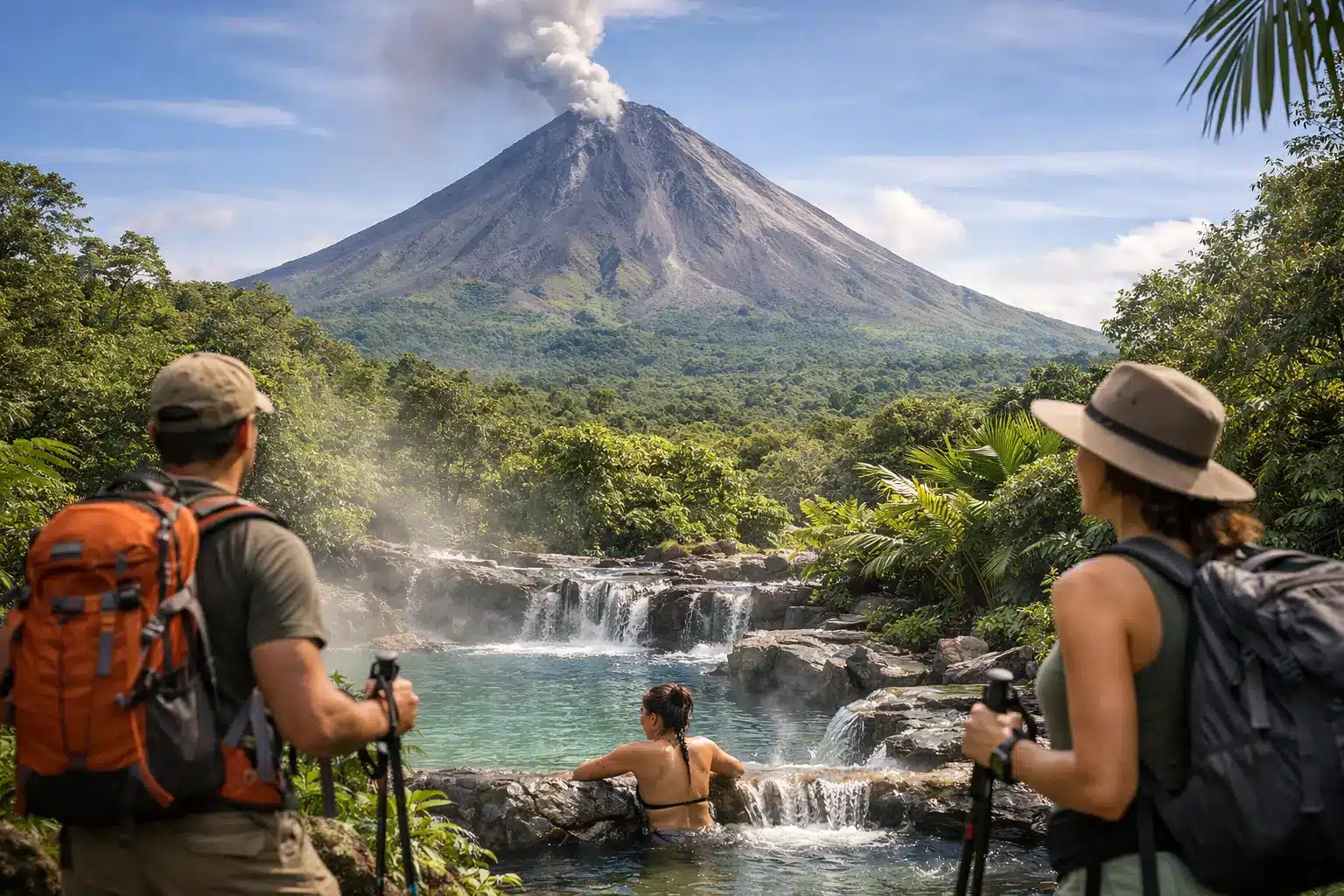
Few places let you soak in mineral-rich thermal waters in the morning, ride beneath a volcano by midday, and fly through the canopy by afternoon. That is the appeal behind thermals, volcanoes, ziplines, horseback riding, Adventures in Costa Rica – not as separate attractions, but as a full-sensory way to experience the country’s volcanic heart, mountain air, and wild terrain.
For travelers deciding where to go and how to spend their limited days, this mix of soft adventure and dramatic scenery is one of Costa Rica’s strongest combinations. It works for honeymooners, active families, friend groups, and even relocation-minded visitors who want to understand the interior beyond the beaches. The key is knowing that not every destination offers the same version of the experience. Costa Rica is compact, but each region shapes adventure differently.
Where thermals, volcanos, zipline’s, horseback riding, Adventures in Costa Rica come together
The obvious starting point is the Arenal region. La Fortuna has become one of the country’s best-known inland adventure hubs for good reason. The volcano creates a striking backdrop, the area is packed with thermal spring properties and day spas, and the surrounding forest supports everything from canopy tours to river adventures and ranch-style horseback excursions.
What makes Arenal especially attractive is its range. You can choose refined wellness with landscaped hot spring pools and cocktails under the stars, or go more rustic with simpler thermal experiences closer to the land. The same is true for adventure. Some zipline courses are smooth and scenic, designed for first-timers. Others are faster, higher, and built for travelers who want their pulse to rise a little more.
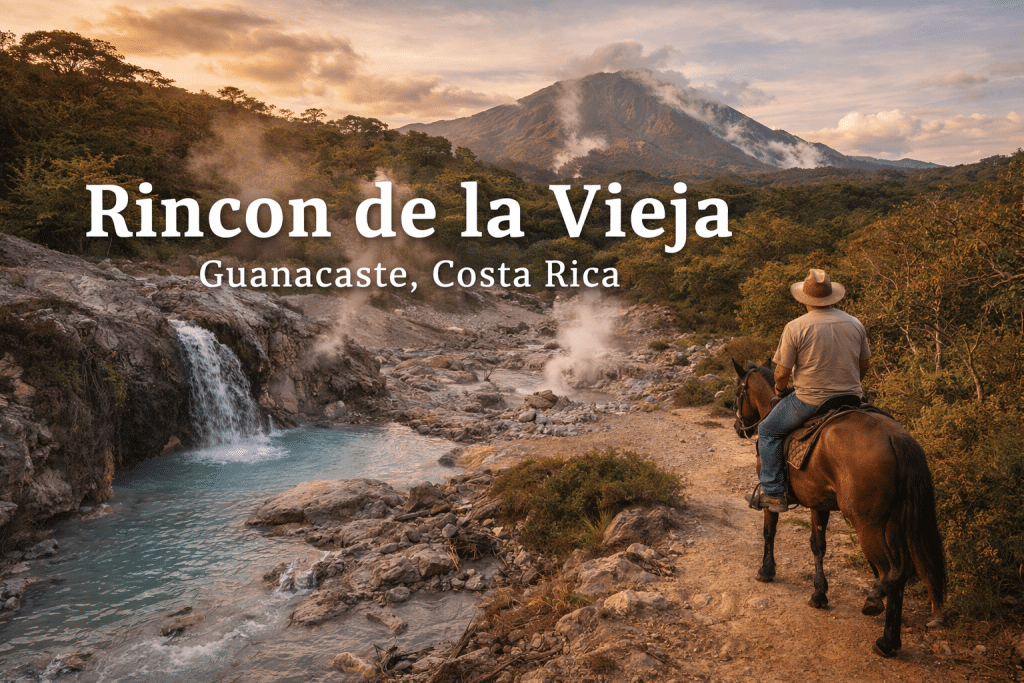
Rincon de la Vieja offers a different personality. In Guanacaste’s dry tropical forest, the volcanic landscape feels rougher, dustier, and more elemental. Here, horseback riding often feels less like a scenic add-on and more like the right way to move through the terrain. You pass ranchlands, forest edges, volcanic mud pots, waterfalls, and open stretches with a strong sense of the province’s sabanero culture. Thermal waters in this region can feel earthier and less polished than those around Arenal, which many travelers find appealing.
The Poas and Irazu areas, closer to the Central Valley, are worth mentioning for visitors with limited time. You can see volcanic landscapes and cool mountain scenery on a shorter itinerary, but these regions generally lend themselves more to day trips and scenic drives than to the all-in-one adventure package found around Arenal or Rincon de la Vieja.https://rinconthermals.com/
The appeal of Costa Rica’s thermals and volcanoes
Thermal bathing in Costa Rica is not just about luxury. It is tied directly to the country’s geology. Rainwater filters deep into the earth, is heated by geothermal activity, and resurfaces enriched with minerals. For many visitors, that creates a rare travel rhythm – active mornings followed by long, restorative soaks.
Arenal is the best-known thermal destination, but expectations matter. You are not bathing in the volcano itself or in untouched wilderness pools at every property. Many thermal venues are carefully developed resorts or day facilities that channel natural hot spring water into designed pool systems. That can be a positive if comfort matters to you. Clean changing areas, food service, lockers, and varying pool temperatures make the experience more accessible, especially for multigenerational groups.
If your idea of thermal springs is silence and raw nature, research matters. Some properties feel social and resort-like. Others are more intimate. Evening visits are especially rewarding because cooler air makes the contrast more dramatic, and the surrounding forest often grows louder after dark.
As for volcanoes, Costa Rica offers grandeur but not always the postcard moment travelers imagine. Cloud cover can hide a crater entirely. National parks sometimes limit access based on conditions, weather, or volcanic activity. That does not make the visit disappointing – it simply means a volcano experience here is part geology, part landscape, part patience. The mountain forests, lava-shaped terrain, hanging bridges, and panoramic viewpoints are often just as memorable as a clear summit.
Ziplining through the forest canopy
Ziplining remains one of Costa Rica’s signature adventure activities because it gives visitors something the country does exceptionally well – a layered view of the forest. From the ground, tropical ecosystems can feel dense and mysterious. From a zipline, you start to understand their architecture. You see the canopy as a living roof, the folds of valleys, the rivers cutting through forest, and, in some locations, distant volcanic slopes.
Not all zipline tours are equal. Some are designed as family-friendly introductions with short platforms, moderate speeds, and reassuring guides. Others combine rappels, Tarzan swings, suspension bridges, and longer cables that can feel genuinely intense. If you are traveling with children, older adults, or anyone managing a fear of heights, look closely at the tour profile before booking.
The best operators take safety seriously and clearly explain braking systems, equipment use, and body position. Costa Rica’s mature tourism sector means many adventure companies are well practiced, but that should never lead to complacency. Ask questions. Check weight and age requirements. Make sure everyone in your group understands the physical demands, especially on tours that require hiking between platforms.
Horseback riding with a stronger sense of place
Horseback riding in Costa Rica can be underrated because travelers sometimes treat it as a secondary activity. In the right setting, it is one of the best ways to connect with the country’s inland character. You move more slowly, notice more, and experience the landscape at a human pace.
Around Arenal, horseback tours often lead to viewpoints, rivers, waterfalls, or lava fields with the volcano looming in the distance. In and around Rincon de la Vieja and other ranching regions, the ride can feel more culturally grounded. The route may pass through working lands, forest corridors, and volcanic foothills where the traditions of Guanacaste are still visible. That distinction matters. One ride is more about scenery; another may also offer insight into the region’s identity. https://rinconthermals.com/
This is also an activity where honesty helps. Some tours are suitable for absolute beginners and use calm horses on gentle terrain. Others involve steeper climbs, muddy trails, river crossings, or longer distances in the saddle. A good operator will match horse and route to experience level rather than trying to impress guests with difficulty.
Building a smart adventure itinerary
One of the biggest mistakes visitors make is overpacking for the day. It sounds efficient to combine thermals, a volcano hike, ziplining, horseback riding, and waterfall stops into a single itinerary. In reality, Costa Rica’s roads, weather, and terrain often make that approach exhausting.
The better strategy is to pair one high-energy activity with one restorative experience. Zipline in the morning, then spend the afternoon in thermal waters. Take a horseback ride early before the heat builds, then enjoy a long lunch and a scenic volcano viewpoint. If you are traveling during the rainy season, morning scheduling becomes even more valuable because storms and cloud cover tend to increase later in the day.
Allow room for travel time, too. Distances on the map can look short, but mountain roads and weather conditions slow everything down. That is one reason inland adventure hubs reward longer stays. Two or three nights lets the region breathe. You are not just checking activities off a list; you are actually settling into the landscape.
What to know before you go
Costa Rica’s adventure infrastructure is strong, but conditions still change. Trails close. Rivers rise. Volcanic parks adjust access. A flexible mindset will serve you better than a rigid checklist. Good footwear matters more than people expect, especially if your day includes mud, uneven trails, or mounting a horse after rain.
It is also worth remembering that these landscapes are environmentally sensitive. Stay on marked paths, follow guide instructions, and choose operators that respect carrying capacity and habitat protection. Adventure and conservation are closely linked here. If the forest is healthy, the experience is better for everyone. Travelers interested in that bigger picture may want to read more about Costa Rica Wildlife Conservation Now, especially as tourism continues to grow.
Packing is straightforward but should be intentional. Bring a swimsuit, quick-dry clothing, sun protection, insect repellent, and a waterproof layer. For thermal visits, many travelers appreciate water shoes and a dry bag. For ziplining and horseback riding, avoid loose items you do not want to lose and wear clothing that can handle friction, moisture, and a little dirt.
Why this mix defines inland Costa Rica
Beach towns may dominate the first draft of many Costa Rica itineraries, but the country’s inland adventure regions often leave the deepest impression. Thermals slow you down. Volcanoes remind you that the land is still alive. Ziplining changes your perspective. Horseback riding restores a sense of scale and tradition.
That is why this combination keeps drawing people back. It is not just adrenaline, and it is not just relaxation. It is a fuller encounter with the forces that shape Costa Rica – heat below the earth, forests overhead, mountain weather, rural culture, and the quiet confidence of a country that knows how to welcome people into nature without entirely taming it.
If you have time for only one inland experience, choose the one that lets you do two things well rather than four things quickly. Costa Rica rewards travelers who leave room for the mist to lift, the trail to curve, and the day to unfold a little slower. https://rinconthermals.com/