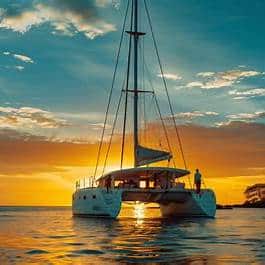
A Costa Rica sunset cruise is the kind of “vacation staple” that somehow feels both effortless and legendary. You show up in flip-flops, step onto a boat that’s already in a good mood, and a few hours later, you’re watching the horizon melt into oranges, pinks, and gold while the coastline turns into a dark, tropical silhouette. The best part? You don’t have to be an athlete, a sailor, or even particularly coordinated. You just need to be willing to float, snack, and let Costa Rica do what it does best: put on a show.
This isn’t just a Guanacaste thing, either. Sunset cruises are a whole-country phenomenon—North Pacific bays, Central Pacific jungle-backed coves, the South Pacific’s wildlife-rich waters, the Nicoya Peninsula’s beach towns, the Caribbean’s coral-and-culture vibe, and even inland on Lake Arenal with the volcano posing dramatically in the background.
The quick version: what happens on most sunset cruises
Most cruises run about 3–5 hours. The flow is usually some variation of:
You’ll check in at a marina or beach meeting point, get a safety briefing, and meet the crew. Depending on the location, you might board directly from a dock (easy) or take a short dinghy ride from shore (still easy—just a little splashy). Once you’re on the main boat, the captain heads toward a calm bay or protected cove for swimming and snorkelling. After the water time, the crew serves snacks or a light meal, and the boat turns back toward the coast to time the return with sunset—aka the moment everyone suddenly becomes a photographer.
Many operators include snorkel masks, fins, flotation devices, and crew in the water guiding anyone who wants to snorkel. A lot of boats also bring water “toys” like paddleboards or kayaks, especially on calmer days.
Snorkelling, paddling, and “I’ll be right here doing nothing.”
Let’s be honest: there are two types of people on a sunset cruise.
Type A: Immediately straps on fins and goes searching for fish like they’re on a mission.
Type B: Finds the perfect lounging spot, declares it “home,” and becomes part of the furniture.
Both are correct choices.
Snorkelling conditions depend on the coast and the day. The Pacific often features rocky reefs, volcanic outcrops, and fish-filled coves; the Caribbean side (especially around Cahuita) is known for coral reef snorkelling when conditions cooperate. If visibility isn’t great, the cruise still wins because the experience is bigger than the snorkel: warm water, jungle-lined coast, sea breezes, and that slow drift into sunset.
Drinks and snacks: what “all-inclusive” usually means
Most sunset catamaran cruises include a mix of alcoholic and nonalcoholic drinks, plus snacks and sometimes a light meal. “Open bar” generally means beer, rum-based cocktails, and basic mixed drinks for adults, with juices and sodas for everyone else. Food ranges from fruit and chips to a casual plated meal, depending on the operator and whether the cruise leans “party” or “chill.”
If you have dietary needs, many boats can adapt—but it’s worth confirming when you book.
What to wear (and what you’ll be glad you brought)
Think sun + sea spray + wind + salt, sometimes all within five minutes.
A swimsuit is the foundation. Over it, wear light, breezy clothing that dries quickly—rash guards and quick-dry shirts are gold because sun exposure on the water is intense (and reflective). Public-health guidance consistently emphasises hats, UV-protective eyewear, and sunscreen as key protection. (cdc.gov)
A smart packing combo:
- Swimsuit + quick-dry cover-up
- A hat that actually shades your face and neck (not just a baseball cap) (cdc.gov)
- Sunglasses with UV protection (cdc.gov)
- Reef-safe habits (don’t touch coral, don’t stand on rocks in shallow reef zones, don’t feed wildlife)
- Towel + dry bag for phone
- Light layer for the ride back (it can get breezy after you’re wet)
How “fit” do you need to be?
Physical condition required: low. Most of the time you can sit, stretch out, and relax.
The only moments that may feel mildly athletic:
- Boarding (especially if it’s via dinghy from the beach)
- Climbing a ladder after swimming
- Moving around a rocking deck (which is more about balance than fitness)
If you tend to get motion sickness, a calm bay helps, but the open water ride can still trigger it. If you use motion-sickness remedies, follow the label and consider asking a clinician/guardian what’s appropriate for you. (No hero points are awarded for feeling miserable.)
Party boat vs. relaxed cruise: how to tell before you book
The easiest way to choose your vibe is to check three things:
1) Photos and reviews.
If every photo shows a crowd holding plastic cups with loud music in the background, expect a party atmosphere. If you see lots of lounging space, small groups, and food photos that look like real food, it’s usually calmer.
2) Capacity and layout.
A boat that packs in 40–50 people can still be fun, but it won’t feel “spacious.” If you want elbow room, look for smaller group sizes or premium/semi-private options.
3) Sustainability signals.
Costa Rica has a well-known sustainability certification program for tourism businesses (CST) through the Costa Rican Tourism Board (ICT). If an operator highlights CST participation or similar credentials, it’s a good sign they take environmental practices seriously. (Instituto Costarricense de Turismo)
Where sunset cruises happen across Costa Rica
You’ll find sunset cruises wherever Costa Rica meets the water—and each region has its own flavour.
North Pacific (Guanacaste & Papagayo):
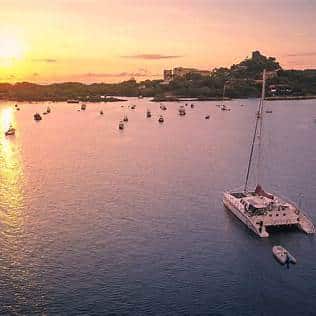
Classic catamaran country—big skies, long coastlines, and calm bays in the right conditions. Departures commonly come from marina towns and beach hubs like Flamingo, Tamarindo, Playas del Coco, and the Papagayo area.
Nicoya Peninsula (Santa Teresa, Montezuma, Sámara, Nosara area):
More “barefoot cool.” Some tours skew smaller and more local, with routes that favour hidden coves and beach landings. In parts of Nicoya, you’ll see trips tied to Tortuga Island and Gulf of Nicoya crossings.
Central Pacific (Jacó/Herradura/Quepos–Manuel Antonio):
Jungle-backed coastline and a higher chance of seeing dolphins on certain routes. Manuel Antonio/Quepos tours are famous for combining snorkelling with wildlife spotting, then rolling straight into a sunset finale.
South Pacific (Uvita, Dominical, Drake Bay, Golfito/Golfo Dulce):
This is where sunset cruises start feeling like nature documentaries. Depending on season and location, you may spot dolphins and, in the broader Costa Rican waters, humpback whales during migration periods. Costa Rica is notable because whales arrive from both hemispheres, extending the viewing season. (Visit Costa Rica)
Caribbean (Cahuita & Puerto Viejo region):
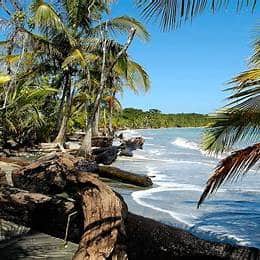
The Caribbean side is less about big catamarans and more about reef-and-wildlife excursions. Cahuita is especially known for boat-supported snorkelling around coral reef areas when conditions allow, often paired with coastal forest wildlife viewing.
Inland wildcard: Lake Arenal sunset cruises
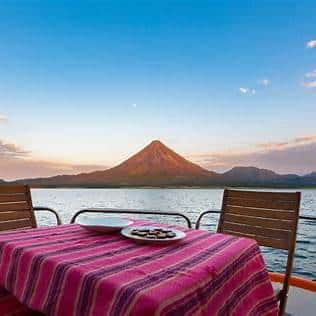
Yes, you can do “sunset cruise energy” with a volcano in the background. Lake Arenal trips often include snacks and drinks while you glide through calmer freshwater scenery—different vibe, still wildly photogenic. (Two Weeks in Costa Rica)
Best time of year (and what “good conditions” really means)
Costa Rica’s seasons matter because they influence sea state, cloud cover, and the overall feel of the trip. Broadly, the country has a dry season and a rainy/green season, but microclimates mean conditions can vary by coast. (Go Visit Costa Rica)
- Dry season (roughly Dec–Apr): typically clearer skies and more predictable planning, often peak travel months. (Go Visit Costa Rica)
- Green season (roughly May–Nov): lusher landscapes and often dramatic sunsets—clouds can make the sky go full cinema mode. (Go Visit Costa Rica)
If whales are on your wish list, Costa Rica’s humpback seasons stretch across much of the year because populations arrive from the north (generally around Dec–Mar/Apr) and the south (around Jul–mid-Nov). (Whale Watching Handbook)
A few pro tips that make the whole thing better
Arrive early so boarding feels unhurried. Eat lightly before you go if you’re prone to seasickness. Put sunscreen on before you’re already on the boat (wind and spray make reapplying chaotic). And when the crew tells you where to sit during docking or dinghy transfers, listen—boats have physics, and physics is undefeated.
Most importantly: when the sunset starts, don’t stare at your phone the entire time. Take a few shots, then actually watch it. Costa Rica sunsets are fast, dramatic, and a little theatrical—like the sky has a deadline.