

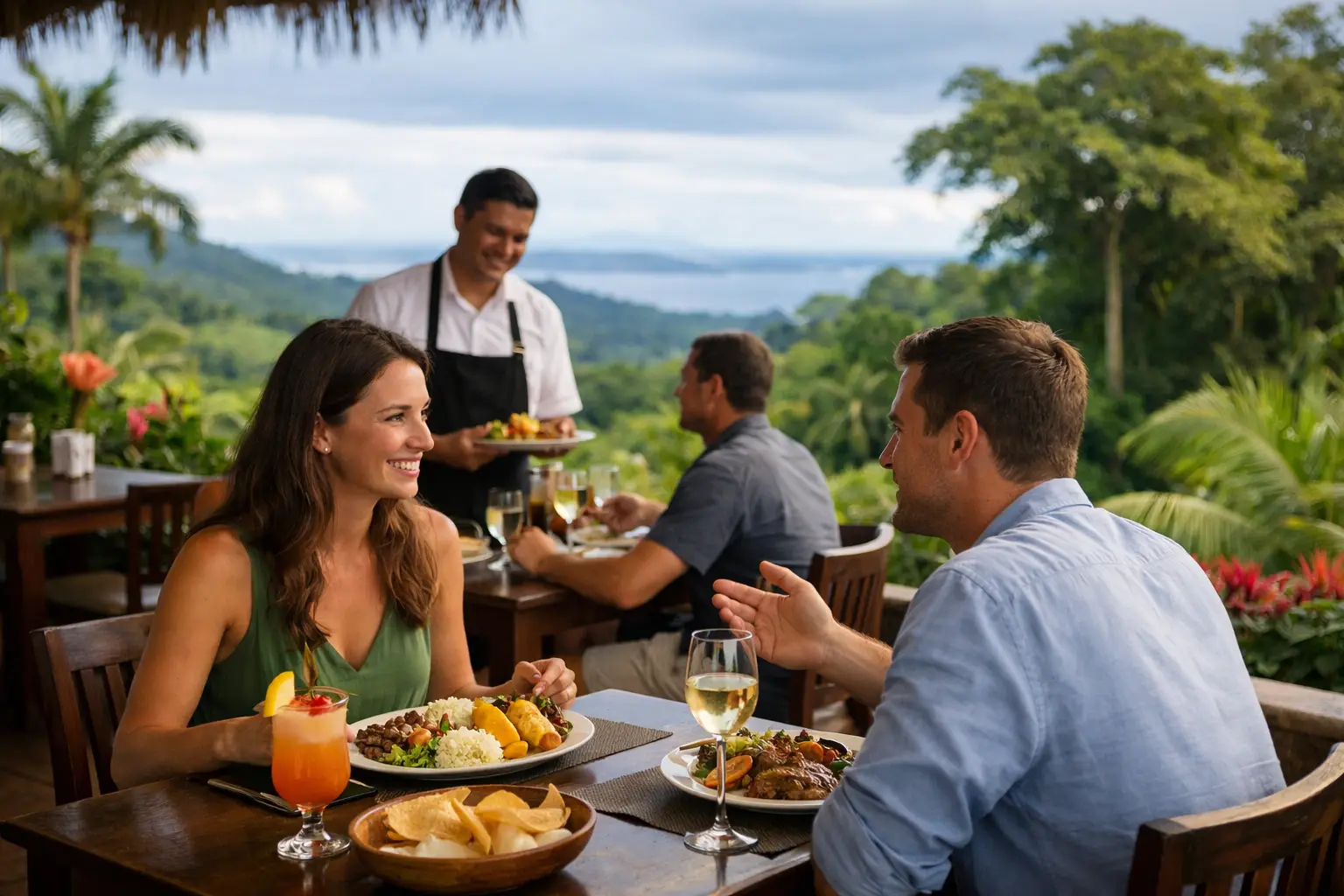
You can spot the first-time visitor at dinner in Costa Rica almost immediately. They finish the last bite, set down the fork, and start looking around for a server with the urgency of someone trying to catch a departing train. Meanwhile, the local family at the next table is deep into conversation, unhurried, relaxed, and nowhere near ready to ask for the check. That small moment says a lot about Costa Rica restaurant etiquette.
Eating out here is rarely treated as a transaction alone. It is social time, family time, lingering time. Whether you are at a beachside soda after a surf session, a candlelit fine dining room in the hills, or a busy urban lunch spot packed with office workers, the basic rhythm tends to be gentler than many visitors expect. Once you understand that pace, along with a few practical customs, restaurant culture in Costa Rica becomes much easier to enjoy.
Why Costa Rica restaurant etiquette feels different
In Costa Rica, restaurant service is often attentive without being intrusive. That distinction matters. In the United States, many diners are used to frequent check-ins, quick refills, and a meal structure built around speed. In Costa Rica, the experience usually unfolds more slowly. Servers may give you space because that is considered polite, not because they have forgotten you.
This can feel luxurious if you are in vacation mode. It can also feel confusing if you are hungry, in a hurry, or expecting the check to appear automatically. It helps to adjust expectations early. Meals here often invite you to settle in, look around, and enjoy where you are. In a country that takes pride in quality of life, that slower rhythm makes cultural sense.
The setting also shapes the etiquette. A soda, the beloved local small restaurant, is typically casual and straightforward. A hotel restaurant may feel more international. A chef-driven dining room in a destination town may resemble upscale restaurants anywhere, but still retain the Costa Rican instinct not to rush the guest. The rule is not that every place works the same way. The rule is that patience and courtesy travel well almost everywhere.
The small courtesies that matter most
A simple greeting goes a long way. When you enter, saying hola, buenas, or buenas tardes is more than good manners. It sets the tone. Costa Rica is friendly, but friendliness is usually reciprocal. People appreciate being acknowledged before jumping straight into requests.
The same goes for getting a server’s attention. In many restaurants, waving dramatically or calling out across the room feels abrasive. A smile, eye contact, or a polite disculpe is usually enough. If service seems slow, ask kindly. You will nearly always get a better response with warmth than with impatience.
Table manners themselves are familiar to most international visitors. Nothing about dining in Costa Rica requires a crash course in formal etiquette. Still, respectful behavior stands out. Keep your voice moderate, especially in smaller dining rooms. Dress appropriately for the place. Beach towns are casual, yes, but walking in shirtless, dripping from the ocean, or barefoot is not always welcomed, particularly outside ultra-casual beachfront spots.
If you are invited to dine with Costa Rican friends or family, expect a more communal feel. Conversation matters. Meals are often about connection as much as food. Rushing through the experience or acting annoyed by delays can come across as dismissive.
Understanding service, timing, and the check
One of the biggest surprises for newcomers is that the check usually does not land on the table the moment plates are cleared. In Costa Rica, bringing the bill before the guest asks can be interpreted as pushing them out. So if you are ready to leave, simply ask for la cuenta.
That one phrase can transform your whole dining experience. Instead of wondering why no one has noticed you are done, you are participating in the local script. The same principle applies to ordering. Some places move quickly, others do not. If the server has not returned after you have had time to review the menu, it is perfectly acceptable to make polite eye contact and indicate that you are ready.
There is also an art to reading the room. In a packed lunch spot, service may be brisk because everyone is eating on a schedule. In a mountain-view restaurant at sunset, nobody is trying to turn tables fast. Neither approach is wrong. Context matters.
Tipping in Costa Rica without awkward math
This is where many travelers overthink things. In most restaurants in Costa Rica, a 10 percent service charge is already included by law. You will usually see it listed on the bill as servicio. Because of that, extra tipping is not mandatory in the way many US diners are used to.
That said, many people do leave a little more for especially good service. Rounding up, leaving a few extra colones, or adding a modest additional tip is appreciated, particularly in tourist areas or higher-end restaurants. But there is no need to double-tip heavily out of uncertainty. Check the bill first.
Costa Rica restaurant etiquette is less about the size of the tip and more about understanding what is already included. A generous gesture is always kind, but informed generosity is better than confused generosity.
How to handle the bill, split checks, and payment
In group settings, it is smart to clarify early if you want separate checks. Some restaurants can do it easily, some prefer one bill per table, and some small local spots may not split checks at all. Asking at the end of a long meal can create stress for everyone.
Card payments are widely accepted, but cash is still useful, especially in smaller towns, roadside eateries, or family-run sodas. If the card machine is brought to the table, that is normal. If you need to pay at a counter, that is normal too. Costa Rica often blends modern convenience with old-school practicality.
Review your bill, but do it discreetly. Taxes and service charges may make the total look higher than expected if you are mentally calculating menu prices alone. That does not automatically mean something is wrong.
Dining with kids, groups, and local families
Costa Rica is notably family-friendly. Children are welcome in most restaurants, and meals often include multiple generations at one table. You are likely to see toddlers, grandparents, and teenagers all sharing the same space without anyone acting like kids are an inconvenience.
For visitors, that means a more relaxed atmosphere around family dining. It does not mean anything goes. Parents are still expected to supervise children and keep things respectful, but the overall mood is generally more accommodating than in some more formal dining cultures.
Large groups should be especially mindful of timing and communication. If you arrive with a big party during peak hours, patience is part of good manners. Let the restaurant guide the seating flow. In popular destinations, reservations help, but even with a reservation, things can move a little flexibly.
What to know at sodas versus upscale restaurants
A soda is one of the best windows into everyday Costa Rican life. The etiquette here is simple: be polite, be patient, and do not mistake informality for lower standards. These places are often beloved because the food is honest, portions are generous, and regulars are treated like neighbors.
Menus may be straightforward, with casados, fresh juice, coffee, and daily specials. Ask questions if you are unsure. Most people are happy to explain. Just do it with curiosity, not condescension.
At upscale restaurants, the expectations rise slightly around dress, reservations, and pacing, but the Costa Rican warmth remains. You may encounter more polished service and a more ambitious menu, yet the emotional temperature is still often less stiff than in major US or European fine dining capitals. Elegance here usually breathes.
Common mistakes visitors make
The most common misstep is reading relaxed service as bad service. Sometimes it is slow, yes. But often it is simply non-rushed. Another frequent mistake is leaving an oversized tip because the diner did not notice the included service charge.
Some visitors also forget how much basic courtesy matters. A greeting, a thank you, and a little patience can open doors anywhere, but especially in a country where interpersonal warmth is part of daily life. If your Spanish is limited, that is fine. Effort counts.
And then there is the issue of hurry. Costa Rica can absolutely deliver world-class meals, sharp service, and beautifully run restaurants. But if you carry a constant sense of urgency to the table, you may miss the best part of dining here, which is not just what arrives on the plate, but how the evening unfolds around it.
FAQ’s
Do you have to tip at restaurants in Costa Rica?
Usually a 10 percent service charge is already included in the bill. Extra tipping is optional and appreciated for excellent service, but not required.
How do you ask for the check in Costa Rica?
Ask for la cuenta. In many restaurants, the server will not bring the bill until you request it.
Is restaurant service slow in Costa Rica?
Sometimes it is, especially during busy times or in more relaxed destinations. But often the pace is intentionally unhurried rather than neglectful.
Are kids welcome in Costa Rica restaurants?
Yes, very much so. Costa Rica is generally family-friendly, and children are commonly included in restaurant outings.
Can restaurants split the bill?
Some can and some cannot. It is best to ask early, especially with larger groups.
What should you wear to dinner in Costa Rica?
It depends on the restaurant. Casual attire works in many places, but upscale restaurants may expect polished resort wear. Avoid arriving overly wet, sandy, or shirtless unless you are at a very casual beach spot.
A good meal in Costa Rica is rarely just about eating. It is a small lesson in pace, courtesy, and the country’s easy confidence. Once you stop chasing the check and start enjoying the table, everything feels more natural.
What restaurant custom surprised you most in Costa Rica? Do you prefer a slower, more social dining experience or quick service when you travel? Share your thoughts and join the conversation with Howler Media for more insider stories on life, travel, and culture in Costa Rica.

Howler Staff are John, Terry and whomever else we can get to write great articles.