

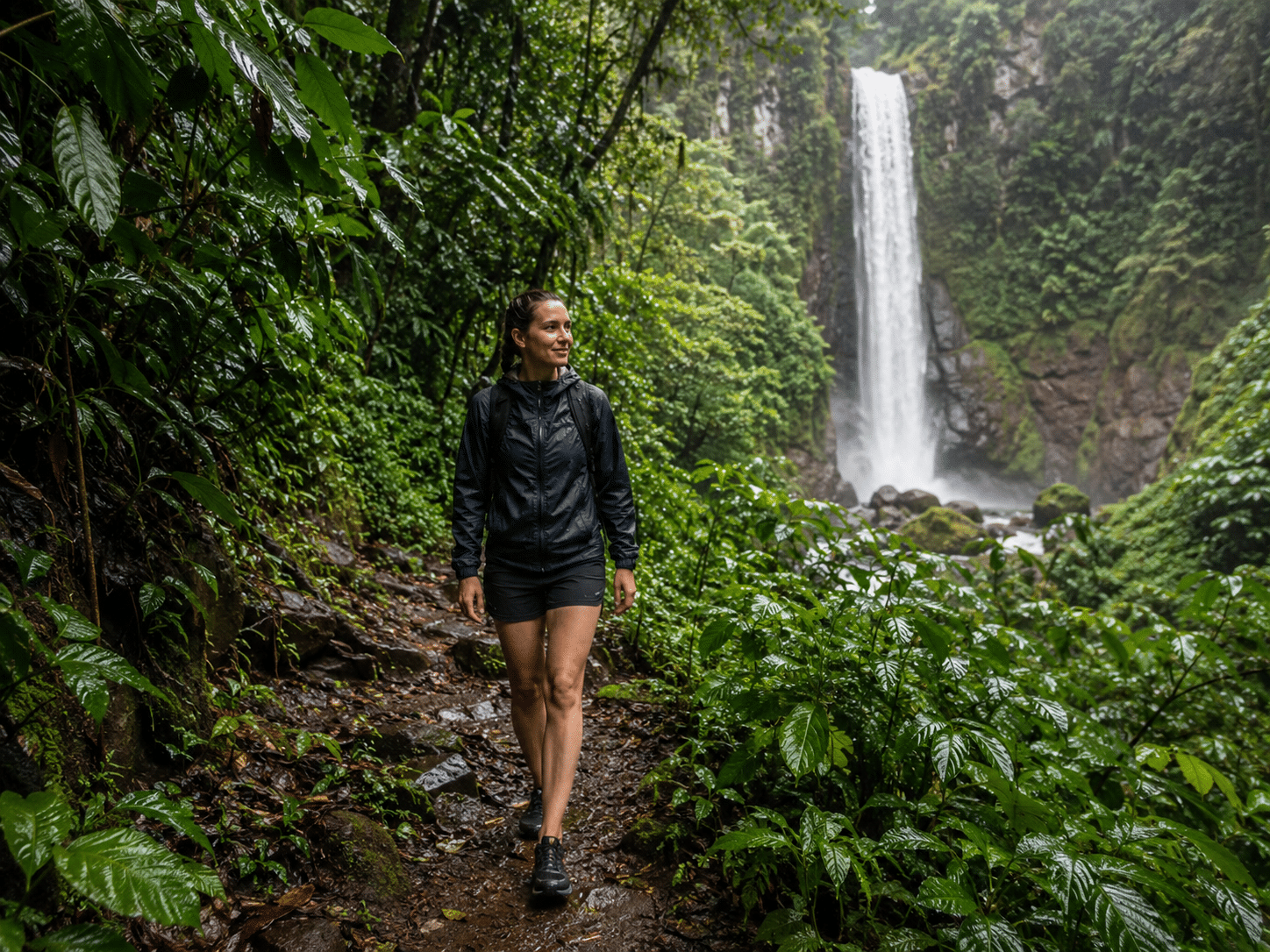
Costa Rica’s rainy season is not a reason to cancel your trip; it is one of the most beautiful times to experience the country. Usually running from May through November, the green season brings warm mornings, dramatic afternoon showers, lush forests, fuller waterfalls, active wildlife and fewer crowds. The secret is simple: plan your days around the weather, dress for quick changes and stop expecting every raincloud to ruin the adventure.
When is the rainy season in Costa Rica?
Costa Rica’s rainy season usually runs from May through November. Locals and travel insiders often call it the green season because the country turns lush, bright and intensely alive during these months.
The weather varies by region, but many areas follow a familiar rhythm:
- Sunny or bright mornings
- Warm temperatures
- High humidity
- Afternoon rain showers
- Occasional thunderstorms
- Greener landscapes
- Fuller rivers and waterfalls
This does not mean it rains all day, every day. Many travellers are surprised by how beautiful the mornings can be. The rain often arrives later, sometimes quickly and dramatically, as if the sky suddenly remembered it had an appointment.
What is the weather like during Costa Rica’s rainy season?
Rainy season weather is usually warm, humid and changeable. In many regions, mornings can be sunny enough for beach time, hiking, tours or wildlife watching, while afternoons are better for relaxing, driving shorter distances or settling into a café with a view.
A typical rainy season day may include:
- Clear skies at breakfast
- Hot, humid late mornings
- Clouds building after lunch
- Sudden downpours in the afternoon
- Thunderstorms in the evening
- Cooler air after the rain
Some days bring only a brief shower. Others may deliver several hours of steady rain. That unpredictability is part of travelling in the tropics, and it is why flexibility matters more than a perfectly packed itinerary.
Is Costa Rica still worth visiting in the rainy season?
Yes, Costa Rica is absolutely worth visiting in the rainy season, especially if you enjoy greener landscapes, fewer tourists and better travel value. Many experienced visitors actually prefer this time of year because the country feels softer, fresher and less crowded.
The green season can be especially rewarding for:
- Nature lovers
- Photographers
- Budget-conscious travellers
- Wildlife watchers
- Waterfall seekers
- Couples wanting quieter hotels
- Families avoiding peak-season crowds
- Adventurers who do not mind a little mud
The scenery is one of the biggest rewards. Forests become richer, rivers fill, waterfalls roar and the whole country seems to breathe a little deeper.
How should you dress for rainy season in Costa Rica?
You should dress in lightweight, breathable and quick-drying clothing during Costa Rica’s rainy season. The goal is not to stay perfectly dry every second; it is to stay comfortable when the weather changes.
Recommended clothing includes:
- Moisture-wicking T-shirts
- Lightweight athletic shirts
- Quick-dry shorts
- Quick-dry hiking pants
- Thin rain jacket
- Poncho
- Waterproof sandals
- Breathable trainers
- Lightweight hiking shoes
- Extra socks
- Hat for sunny mornings
- Sunglasses
The best rainy season outfit should handle sunshine, sweat, humidity, mud and a surprise downpour without making you miserable.
What clothing should you avoid in Costa Rica’s rainy season?
You should avoid heavy cotton, thick jackets and expensive leather shoes because they stay wet, feel uncomfortable and take too long to dry. Tropical rain is not gentle mist. When it arrives properly, it means business.
Avoid packing:
- Heavy jeans for outdoor activities
- Thick cotton hoodies
- Bulky jackets
- Expensive leather sandals
- Leather trainers
- Suede shoes
- Clothes that need careful washing
- Anything that becomes heavy when wet
Cotton may feel comfortable when dry, but once soaked, it clings, chills and refuses to dry quickly. Quick-dry clothing is your friend.
What shoes are best for rainy season travel in Costa Rica?
The best shoes depend on where you are going, but waterproof sandals and lightweight hiking shoes are the most useful choices. Footwear matters because roads, trails and beach paths can become muddy, slippery or flooded.
For towns and beach areas, choose:
- Waterproof sandals
- Breathable trainers
- Durable flip-flops for short walks
- Shoes you can rinse easily
For waterfalls, mountains and nature trails, choose:
- Lightweight hiking shoes
- Trail shoes with good grip
- Closed-toe shoes for muddy terrain
- Extra socks for wet days
High-fashion shoes may look lovely in a suitcase, but Costa Rica’s rainy season has a way of humbling footwear. Bring shoes that can survive real life.
What should you pack for Costa Rica’s rainy season?
You should pack light, practical items that protect your clothes, electronics and documents from sudden rain and humidity. The right small extras can make the difference between a minor shower and a soggy travel disaster.
Helpful rainy season items include:
- Small backpack rain cover
- Dry bag
- Zip-lock bags for electronics
- Zip-lock bags for passports and documents
- Bug spray
- Small umbrella
- Light sweater for mountain evenings
- Light sweater for air-conditioned buses
- Microfibre towel
- Reusable water bottle
- Waterproof phone pouch
Humidity can be just as sneaky as rain. Keep electronics, passports and spare cash protected even when the sky looks innocent.
How should you plan activities during the rainy season?
You should plan outdoor activities early in the day during Costa Rica’s rainy season. Mornings are often the most reliable time for hiking, wildlife tours, beach walks, ziplining, surfing lessons and driving between destinations.
A smart daily plan looks like this:
- Schedule tours in the morning
- Keep afternoons flexible
- Avoid long rural drives after dark
- Leave extra time for road delays
- Ask locals about current trail and river conditions
- Save spa visits, hot springs or long lunches for rainy afternoons
Rainy season travel works best when you stop fighting the rhythm. Let the morning be for movement. Let the afternoon be for slowing down.
Are roads difficult during Costa Rica’s rainy season?
Some roads can become muddy, slippery or flooded during rainy season, especially in rural areas. Main highways are usually manageable, but remote routes, river crossings and unpaved roads can change quickly after heavy rain.
Important driving tips include:
- Allow extra travel time
- Avoid risky river crossings
- Check conditions before remote drives
- Use a suitable vehicle for rural areas
- Drive slowly on muddy or wet roads
- Avoid driving unfamiliar routes at night
- Ask your hotel or local host for road advice
Distances in Costa Rica can look short on a map but feel much longer on the ground. Rain, curves, potholes and mountain roads all add time.
Do mosquitoes get worse in rainy season?
Yes, mosquitoes often increase during rainy season because there is more standing water and humidity. This does not mean you need to panic, but it does mean bug spray should be part of your daily routine.
To reduce bites:
- Use insect repellent
- Wear light long sleeves in buggy areas
- Avoid leaving doors and windows open without screens
- Use fans when available
- Choose accommodation with screens or air conditioning
- Be extra prepared near wetlands, forests and rivers
Mosquito protection is not glamorous, but neither is scratching your ankles through dinner.
Does rainy season affect every region the same way?
No, Costa Rica’s rainy season varies greatly by region. Guanacaste, Monteverde, the Caribbean Coast and the Osa Peninsula can all have different rainfall patterns, road conditions and travel rhythms.
Regional differences matter:
- Guanacaste may stay drier than many other regions, especially earlier in the season
- Monteverde can be misty, cool and wet because of elevation
- The Osa Peninsula can feel intensely tropical and remote
- The Caribbean Coast does not always follow the same rainy-season pattern as the Pacific
- Mountain areas can be cooler in the evenings
- Rural roads may be more affected than popular town centres
This is why local advice is so valuable. A forecast for “Costa Rica” is rarely enough. The country may be small, but its microclimates have a lively sense of independence.
Why do many travellers prefer the green season?
Many travellers prefer the green season because Costa Rica feels more lush, affordable and peaceful. The rain brings its own kind of beauty, especially if you stop treating it like an inconvenience.
Green season advantages include:
- Fewer tourists
- Lower hotel rates
- Greener forests
- Dramatic waterfalls
- Fuller rivers
- More atmospheric photography
- Cooler afternoons in some areas
- A quieter, more local feeling
- Better availability at popular hotels and tours
There is something special about watching a storm roll across the mountains, then stepping outside afterwards into air that smells like wet leaves, warm earth and flowers.
What is the biggest mistake travellers make in rainy season?
The biggest mistake is packing and planning as if the weather will behave exactly like the dry season. Rainy season travel requires a little more flexibility, but it often gives back far more than it takes.
Common mistakes include:
- Booking all major outdoor activities in the afternoon
- Bringing only cotton clothing
- Wearing poor footwear on trails
- Driving rural roads too late in the day
- Leaving electronics unprotected
- Ignoring local weather advice
- Assuming rain means the whole day is ruined
Costa Rica’s rainy season is not a problem to survive. It is a season to understand.
FAQ
What months are rainy season in Costa Rica?
Costa Rica’s rainy season usually runs from May through November, although exact timing and intensity vary by region.
Does it rain all day in Costa Rica’s rainy season?
No, it often does not rain all day. Many areas have sunny mornings followed by afternoon or evening showers.
What should I wear in Costa Rica during rainy season?
Wear lightweight, breathable and quick-drying clothing, including moisture-wicking shirts, shorts, hiking pants, sandals and a thin rain jacket.
Are jeans good for Costa Rica’s rainy season?
Jeans are not ideal for outdoor activities because they become heavy when wet and take a long time to dry.
What shoes should I bring for rainy season?
Bring waterproof sandals for towns and beaches, plus lightweight hiking shoes with good grip for trails, waterfalls and mountain areas.
Is rainy season cheaper in Costa Rica?
Yes, rainy season often brings lower hotel prices and fewer tourists, making it a good option for travellers looking for value.
Are waterfalls better in rainy season?
Yes, waterfalls are often more dramatic during rainy season because rivers and streams fill with more water.
Can I still go to the beach during rainy season?
Yes, beach mornings can be beautiful during rainy season. It is best to plan beach time earlier in the day.
Should I rent a car during rainy season?
You can rent a car during rainy season, but choose carefully based on your route. Rural roads, mud, flooding and river crossings may require extra caution.
Is the Caribbean Coast rainy at the same time as the Pacific Coast?
Not always. The Caribbean Coast has different weather patterns, so it is important to check regional conditions before planning.
Do I need a rain jacket or poncho?
Yes, a thin rain jacket or poncho is very useful, especially for afternoon showers, hikes and tours.
Is rainy season a bad time to visit Costa Rica?
No, rainy season can be a fantastic time to visit if you pack well, plan morning activities and stay flexible.




Former Navy Journalist, published author and international speaker. Howler executive since 2019.