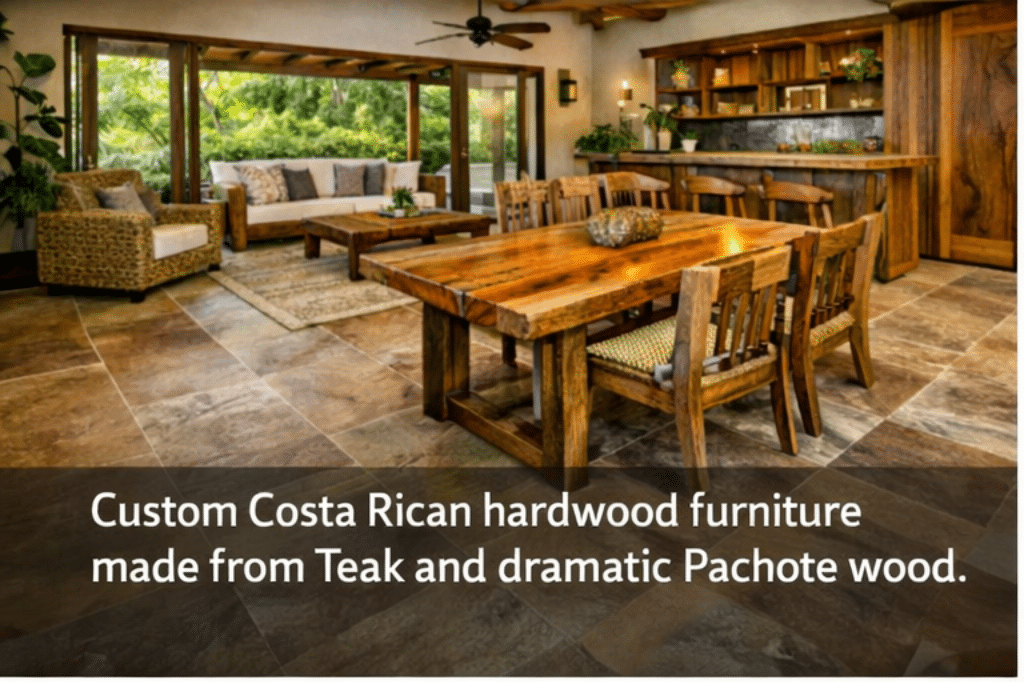
In Costa Rica, wood is never just wood.
It is shade in the heat of Guanacaste. It is the front door that makes a home feel rooted in place. It is the dining table where stories get told long after sunset. And when it is chosen well, cut properly, dried correctly, and sourced legally, Costa Rican hardwood can transform an ordinary house into something unforgettable.
Guanacaste, in particular, has long had a love affair with timber. The region’s dry climate, ranchland traditions, and unmistakable tropical style have made hardwood one of the most desired materials for custom homes, furniture, cabinetry, ceilings, doors, and windows. But not all woods are equal, and not every tree can be touched. In Costa Rica, beauty comes with responsibility.
That matters now more than ever.
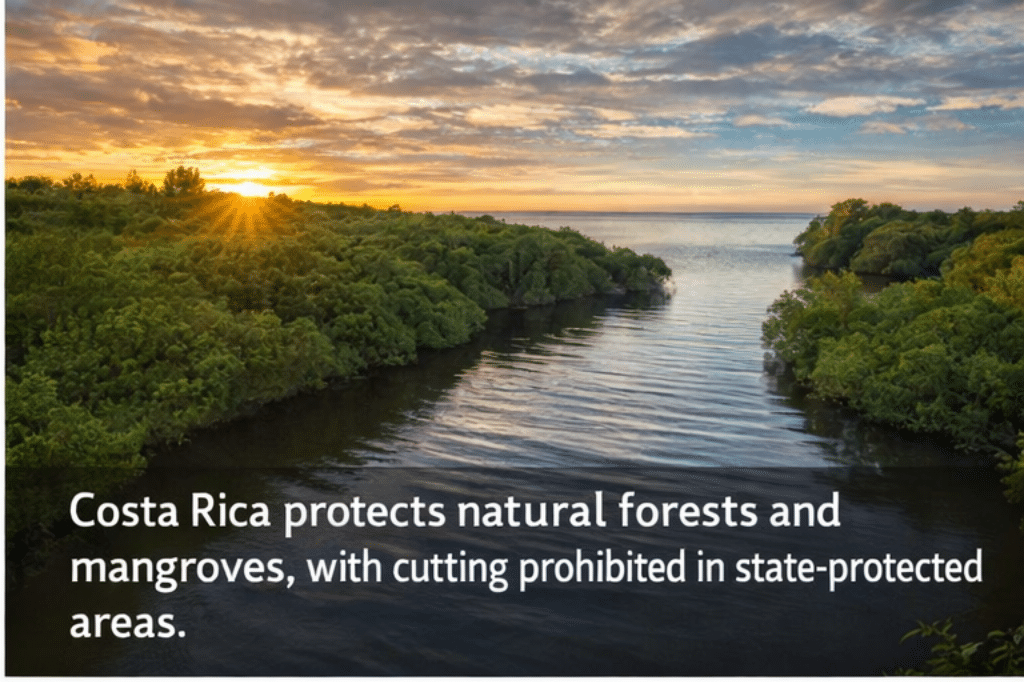
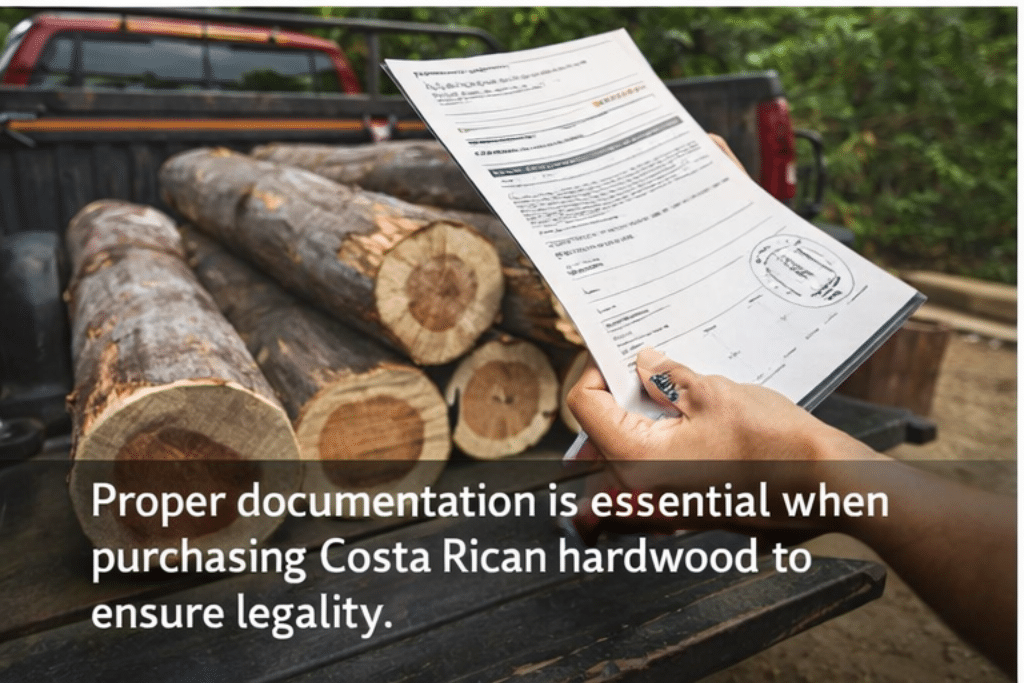
Costa Rica’s Forest Law protects natural forests and restricts cutting in protected areas. It also establishes protected buffer zones around springs, rivers, streams, lakes, and certain recharge areas, where cutting trees is generally prohibited. Plantation-grown timber and individually planted trees follow different rules, but even then, transport and origin documentation still matter. In other words, buying wood in Costa Rica is not only about colour, grain, and price. It is also about legality, sustainability, and respecting protected vegetation.
That legal piece is important because many newcomers assume that if a tree is standing on private land, it is fair game. That is not how Costa Rica works. Protected vegetation may include trees in riparian protection zones, near permanent springs, and in ecosystems such as mangroves or state-protected forest areas. Costa Rica also broadly prohibits cutting or harvesting forest resources in state-owned national parks, biological reserves, mangroves, wildlife refuges, and forest reserves.
So once you know the rules, what woods deserve your attention?
One of the most eye-catching is pachote. Known for its dramatic bark with chunky thorns and its striking red, pink, and pale tones, pachote brings warmth and character to furniture, cabinets, doors, and windows. It has real personality, which is another way of saying it demands respect. Builders know it must be dried properly, often with kiln support, because moisture left inside can cause problems later. Used correctly, pachote is bold, tropical, and memorable.
Teak, by contrast, is the polished professional in the room. Plantation-grown and widely available, teak is loved for its golden-brown colour, durability, and natural resistance to moisture. In Costa Rica, that makes it a favourite for floors, beams, ceilings, decks, doors, cabinetry, and furniture. It is one of those rare woods that looks expensive even when it is being practical. And compared with prices in many international markets, teak in Costa Rica can still offer remarkable value. Costa Rica’s law specifically recognises plantation forests and planted trees under a different regime from natural forest cutting, which helps explain why legal teak remains one of the most accessible timber choices in the country.
Spanish cedar brings another kind of appeal. It has a soft reddish tone, a distinctive elegance, and a reputation for working beautifully in cabinetry, doors, trim, and fine interior finishes. It feels classic rather than flashy. In the right setting, it can make a room feel cooler, calmer, and more refined. In Guanacaste, where design often balances rustic texture with tropical sophistication, Spanish cedar fits naturally.
Then there is gmelina, sometimes called white teak or beechwood in trade conversation. It is often chosen because it is fast-growing, affordable, versatile, and comparatively easy to work with. It may not have the dramatic colour range of teak or pachote, but it takes stains and finishes well, which gives designers flexibility. For construction, built-ins, furniture, and projects where budget matters, gmelina often earns its place by being dependable rather than showy.
And then there is guanacaste wood itself — the one that turns heads.
The Guanacaste tree, Enterolobium cyclocarpum, is Costa Rica’s national tree and one of the country’s most recognisable natural symbols. Its wood is rich, dark, and visually dramatic, often used in statement furniture, trim, and specialty interior pieces. It has the kind of grain that makes people stop mid-sentence and run a hand across the surface. But this is exactly where caution is needed. Because of its symbolic and ecological importance, guanacaste should never be treated like casual lumber. If it is available, buyers should make sure it has been obtained through proper legal channels and with the required documentation.
There is another layer to good timber in Costa Rica that old-school builders still talk about with absolute confidence: timing.
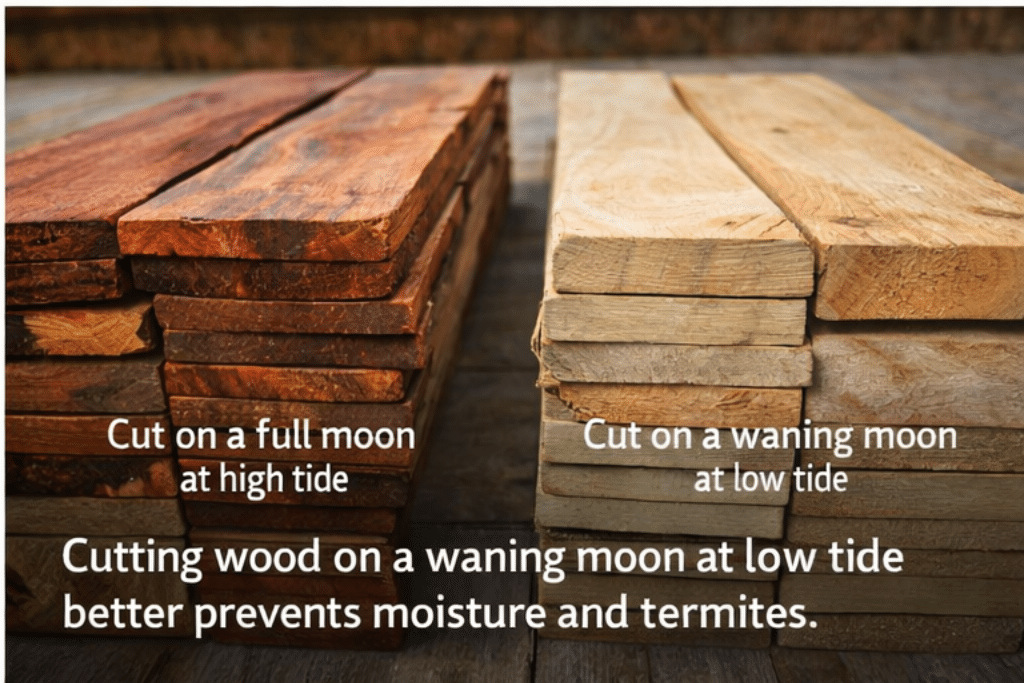
Across rural Costa Rica, many woodworkers believe the moon phase and even the tide influence how much sap is in a tree when it is cut. The practical takeaway is simple: wood cut at the wrong time may hold more moisture and become more vulnerable to pests, movement, and durability issues. Whether one sees that as tradition, craft wisdom, or field-tested experience, the larger point is undeniable: cutting is only the beginning. The success of hardwood depends on when it is harvested, how it is dried, how it is cured, and whether the right species is being used for the right job.
That is where many projects go wrong. A beautiful species chosen for the wrong application can become termite food, warp under pressure, or crack under changing conditions. A cheaper wood properly selected and treated can outperform a more glamorous one used carelessly. Tropical hardwood is not forgiving of shortcuts.
The smartest homes in Costa Rica do not rely on one timber alone. They mix species with purpose. Teak for structure and exposure. Spanish cedar for elegance. Pachote for warmth and colour. Gmelina where flexibility and budget matter. Guanacaste for carefully chosen visual drama. That blend creates homes that feel local, grounded, and deeply connected to place.
Used well, Costa Rican hardwood does more than decorate a house.
It tells you exactly where you are.
FAQs
What is the best hardwood for home building in Costa Rica?
Teak is often considered one of the best all-around options because it is durable, attractive, moisture-resistant, and widely available from plantations.
Is it legal to cut any tree on private property in Costa Rica?
No. Costa Rica protects many trees and vegetation zones by law, including areas around springs, rivers, streams, lakes, and certain recharge areas. Natural forest and protected ecosystems are subject to stricter rules.
What counts as protected vegetation in Costa Rica?
Protected vegetation can include trees in riparian protection zones, around permanent springs, in mangroves, and within state-protected natural areas such as national parks, reserves, and wildlife refuges.
Do plantation-grown trees follow the same rules as natural forest trees?
Not always. Costa Rica’s Forest Law provides different treatment for plantation forests, agroforestry systems, and individually planted trees, though transport and origin paperwork may still be required.
Why do people talk about moon phases when cutting wood?
Many local builders believe cutting wood during a waning moon and lower tide reduces sap content, which may help with drying and pest resistance.
Which wood is best for furniture?
Guanacaste, pachote, teak, and Spanish cedar are all popular, depending on the look you want and where the furniture will be used.
Is guanacaste wood legal to buy?
It can be, but buyers should verify that it was sourced legally and comes with proper documentation. Because the Guanacaste tree is Costa Rica’s national tree and natural forests are regulated, caution is essential.