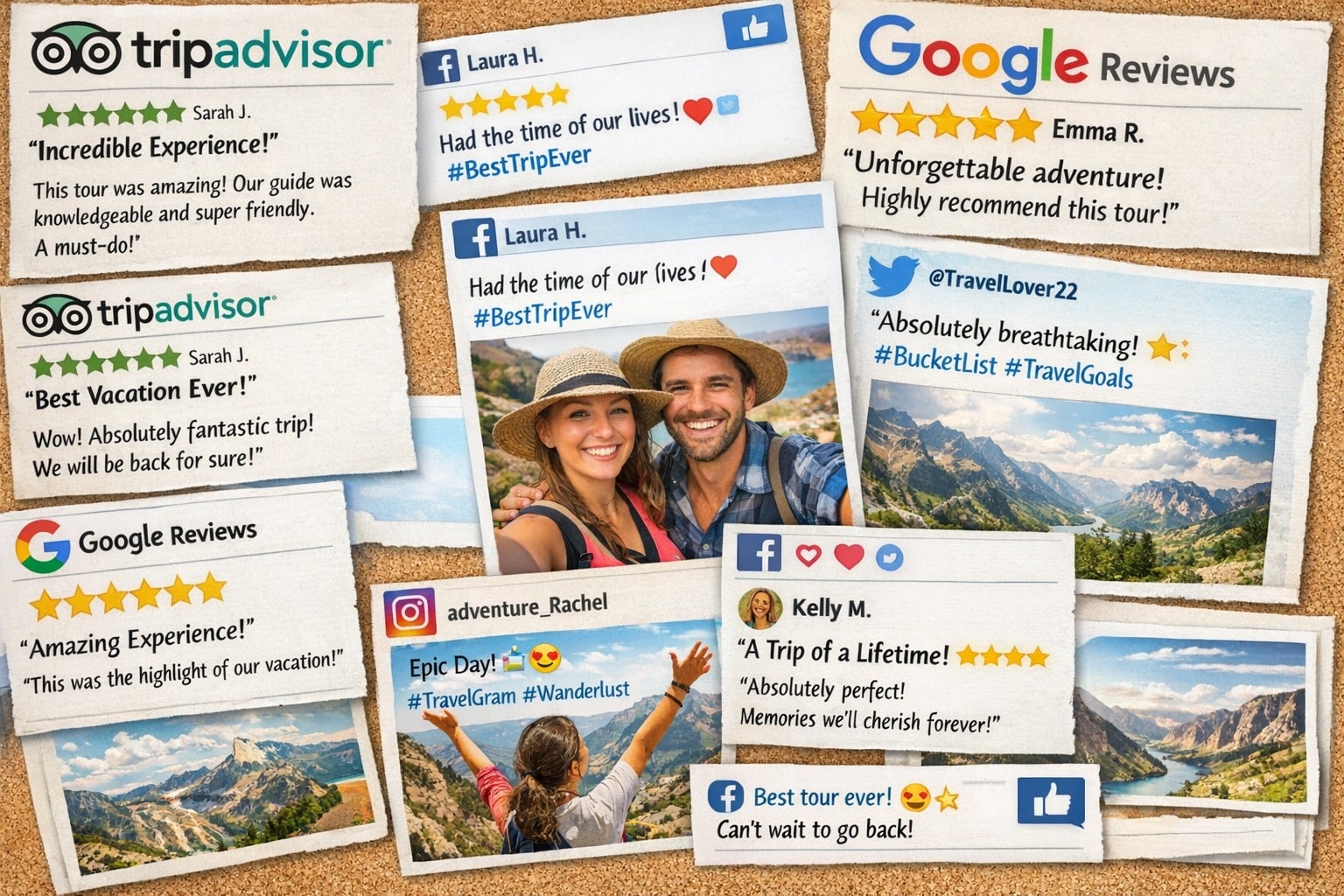
Costa Rica is one of those places where a five-star sunset can feel guaranteed—but a five-star rating absolutely is not. For hotels, tours, restaurants, shuttles, and experiences, online reviews aren’t a “nice extra”. They’re often the deciding factor between a full calendar and an empty one, especially when your customers are arriving from the US, Canada, and Europe with a phone in their hand and a shortlist already made.
What makes online reviews so critical for a business in Costa Rica?
Online reviews are critical because they function as your main trust signal for travellers who don’t know your brand and won’t take a gamble on an unknown option.
In tourism-heavy markets, the customer journey usually starts online, not on the street. People compare options fast, side-by-side, and ratings are the easiest shortcut for the brain: “4.7 feels safe… 4.1 feels risky.” Research consistently shows reviews strongly influence whether people choose a business, with large majorities saying positive reviews make them more likely to buy and negative reviews push them away. (BrightLocal)
How do reviews translate into bookings and revenue?
Reviews translate into bookings because they reduce uncertainty—and when uncertainty drops, conversions rise.
A well-known Harvard Business School study on Yelp found that a one-star increase in rating was associated with a 5–9% revenue increase for independent restaurants. (Harvard Business School)
Even if your business isn’t a restaurant, the behaviour is similar: travellers use rating averages and recent comments as a quick “should I trust this?” filter.
In Costa Rica, that effect gets amplified because:
- Many purchases are experience-based (you can’t “test” a tour first).
- Visitors are time-limited (they’ll pick the most trusted option quickly).
- You often compete with many similar listings in the same area.
Why do TripAdvisor and Google matter more than most platforms?
TripAdvisor and Google matter most because they sit at the top of travel planning and local discovery.
TripAdvisor has published survey data showing that many travellers read reviews frequently before booking. (ir.tripadvisor.com)
Google, meanwhile, is where people search when they’re already nearby (or building a map-based itinerary), and Google’s own guidance emphasises keeping your Business Profile accurate and complete to show up in local results. (Google Help)
For a traveller, the pattern looks like this:
- TripAdvisor: shortlist and confidence-building
- Google Maps: “closest + best rated right now” decisions
- Booking platforms: final comparison and purchase
How do reviews affect search visibility and rankings?
Reviews affect visibility because platforms reward businesses that look trustworthy, current, and active.
While exact algorithms are not fully public, the practical reality is:
- More (recent) reviews = more signals of relevance
- Higher average rating = better click-through and conversion
- Owner responses = stronger impression of care and professionalism
Even Google’s public advice on local ranking focuses on accuracy and completeness—because Google wants to show results users will trust. (Google Help)
And on TripAdvisor, review quality/quantity and recency strongly influence how listings compete within the same area (especially for tours and hotels).
What do travellers actually look for in “good” reviews?
Travellers look for reassurance that the experience will match the promise.
Common “winning” themes in Costa Rica reviews:
- Friendly, proactive service (especially when something goes wrong)
- Clear communication (directions, pickup points, WhatsApp responsiveness)
- Cleanliness and maintenance (rooms, vehicles, bathrooms, gear)
- Safety and organisation (guides, equipment, timing, group management)
- Authentic moments (wildlife sightings, local stories, thoughtful touches)
The highest-performing businesses tend to deliver a few “review-trigger moments” on purpose, like:
- A welcome drink that feels personal, not scripted
- A guide who remembers names
- A quick message confirming pickup details the night before
- A sincere fix offered immediately when something is off
What are the most common review mistakes that quietly cost money?
The most expensive review mistakes are usually boring operational ones—not dramatic disasters.
Here are the repeat offenders:
- Silence after a complaint (travellers assume you don’t care)
- Slow replies (“If they’re slow online, they’ll be slow in real life.”)
- Defensive responses (you may feel justified, but you look risky)
- Mismatched expectations (photos too flattering, inclusions unclear)
- Same issue repeated (Wi-Fi, hot water, late pickups, confusing meeting point)
How can AI help with reviews without making your business feel robotic?
AI can help by making review management faster, more consistent, and more strategic—while you keep the human voice.
Think of AI as your behind-the-scenes assistant, not your public personality.
Where AI is genuinely useful
AI is most effective when it supports a simple workflow:
- Monitoring: Collect new reviews from Google/TripAdvisor in one place
- Sentiment + categorisation: Tag feedback as cleanliness, punctuality, staff, value, food, etc.
- Drafting responses: Generate a first draft reply in your tone
- Trend detection: Spot patterns early (e.g., “late pickup” spikes this month)
- Training prompts: Turn real feedback into staff coaching points
If you do only one thing with AI, make it this: reduce response time while improving the quality of replies.
What does a practical AI review workflow look like for a small Costa Rica business?
A practical workflow is one that takes less than 15 minutes a day.
Here’s a simple system that works well:
- Step 1: Collect all new reviews daily (or instant alerts)
- Step 2: Classify each review into 1–2 categories (service, cleanliness, timing, communication, value)
- Step 3: Draft a response with AI, then add one human detail (name, specific moment, or corrective action)
- Step 4: Log recurring issues weekly and assign one fix
- Step 5: Request reviews from happy guests using a short, friendly script and a QR code
AI makes Steps 2–4 much easier at scale, even when you’re busy running tours, flipping tables, or managing check-ins.
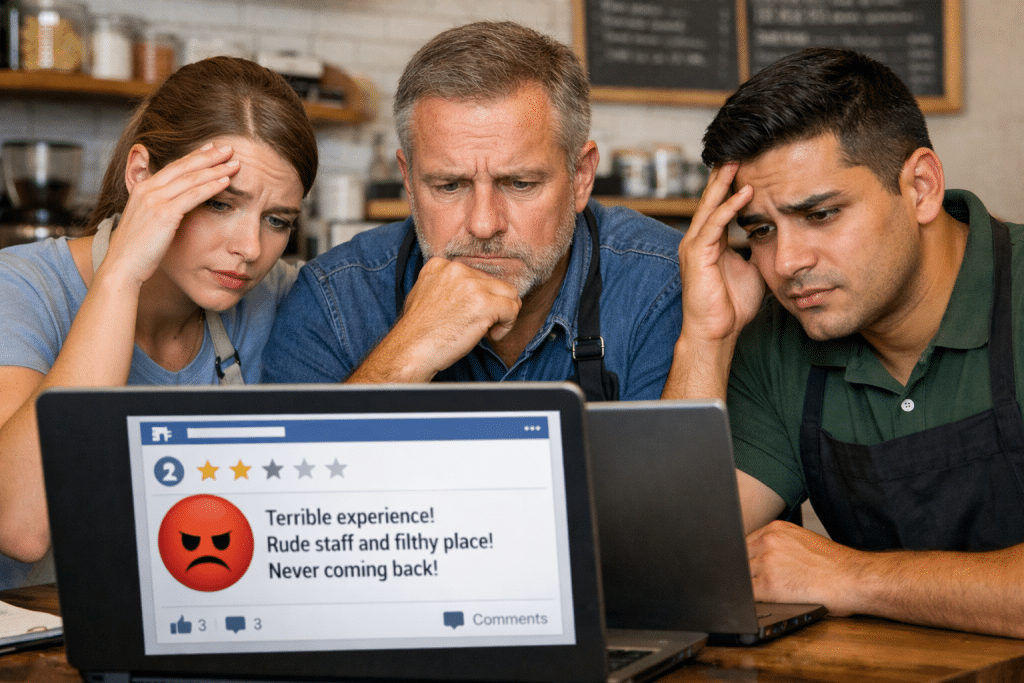
How should you respond to negative reviews so future customers trust you?
You should respond to negative reviews with calm accountability and a clear next step.
A strong reply usually follows this structure:
- Thank them for the feedback
- Apologise for the specific disappointment
- Acknowledge the impact (“That’s not the experience we want for guests.”)
- Share the corrective action (even if small)
- Invite them to reconnect privately (email/WhatsApp)
What you’re really doing is speaking to the next 1,000 readers, not just the one reviewer.
How do you get more positive reviews without being pushy?
You get more positive reviews by asking at the right moment and making it effortless.
Best times to ask:
- Right after the “wow moment” (wildlife sighting, perfect meal, smooth arrival)
- At checkout with a QR code
- In a follow-up message within 24 hours
Keep the ask short:
- “If you enjoyed today, a quick Google review really helps a local business like ours.”
One key point: asking is fine—incentivising reviews is where businesses get burned.
What are the risks of using AI the wrong way?
The biggest risk is using AI to create fake trust instead of real trust.
Google has increased enforcement actions against fake engagement and can apply visible warnings and restrictions to profiles that manipulate reviews. (The Verge)
Beyond penalties, the deeper issue is reputation: once travellers feel misled, they don’t just leave—they warn others.
Safe rules for AI + reviews:
- Don’t generate fake reviews
- Don’t “stuff” keywords into replies
- Don’t copy-paste the same template repeatedly
- Do keep responses specific, brief, and human
What happens when a business ignores reviews in Costa Rica?
Ignoring reviews causes a compounding decline in bookings, visibility, and trust—usually faster than owners expect.
Common outcomes:
- Lower conversion rates as ratings slip and complaints go unanswered
- Reduced Google Maps visibility as competitors stay more active
- A public story forms: “They don’t care”
- Operational problems repeat because nobody turns feedback into fixes
- Price pressure rises (“We have to discount to compete”)
- Recovery becomes slow because negative history stays visible for years
In a tourism market, reputation doesn’t sit still. If you don’t manage it, the internet manages it for you.
Quick action plan for the next 30 days
This week
- Claim and complete your Google Business Profile and TripAdvisor listing details
- Turn on review alerts
- Create 5 response templates (praise, minor issue, major issue, wrong business, mixed review)
This month
- Reply to every review (yes, the good ones too)
- Track the top 3 recurring issues and fix at least 1
- Add a QR code review card at point-of-sale or checkout
- Use AI to draft replies, then add one real detail before posting
Suggested lead photo
A candid shot of a traveller in Costa Rica holding a phone with Google Maps or TripAdvisor open, with a vibrant soda or beach town street scene blurred in the background (golden hour light).
FAQ
Do review responses really matter if my rating is already high?
Yes—because responses reassure future customers that your business is actively managed and cares about guest experience.
Should I respond to every single review?
Yes—because consistency signals professionalism, and it only takes one ignored complaint to shape the narrative.
What if the review is unfair or exaggerated?
Stay calm, acknowledge the feeling, clarify a fact briefly (if needed), and invite offline resolution—future customers judge your tone more than the dispute.
Is TripAdvisor still worth focusing on in Costa Rica?
Yes—because many travellers still use it heavily during research, especially for hotels, tours, and attractions. (ir.tripadvisor.com)
Can AI write my review replies automatically?
AI can draft them fast, but you should add a human detail before posting so your replies don’t feel generic.
What’s the fastest way to improve my rating?
Fix the top recurring operational complaint first, then actively request reviews from happy guests to build fresh positive momentum.
Former Navy Journalist, published author and international speaker. Howler executive since 2019.