

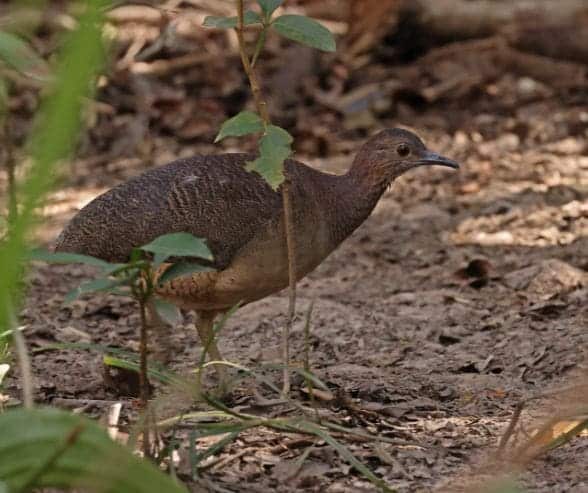
Costa Rica’s reputation as a birdwatcher’s haven is bolstered by the presence of diverse bird species, among which the Little Tinamou (Crypturellus soui) occupies a special niche due to its elusive nature and distinct vocalizations. This article offers an insight into the Tinamou family, highlights the distinctive features of the Little Tinamou, and addresses their residential patterns, including where to spot these secretive birds in Costa Rica.
Understanding the Tinamou Family
Tinamous are part of the ancient infraclass Paleognathae, which includes flight-capable and flightless birds like ostriches and emus. Unlike their larger, often flightless relatives, tinamous can fly, though they generally prefer short, swift flights to evade predators. These birds are predominantly found across Latin America, thriving in habitats ranging from dense tropical forests to open grasslands. Their ability to blend into their surroundings with their earth-toned plumage makes them particularly hard to spot.
The Little Tinamou: A Study in Camouflage and Song
Among its kin, the Little Tinamou is notable for its compact size, ranging from 21 to 28 centimeters in length, with a color palette that integrates olive-brown, gray, and barred patterns across its underparts. Its mastery of camouflage is such that even seasoned birdwatchers may only catch a fleeting glimpse.
However, it is the male Little Tinamou’s vocalizations that truly enchant. Characterized by a clear, melodious whistle, these calls resonate through the forests at dawn and dusk, facilitating mating and territorial defense. The species is also known for its vibrant, almost metallic-looking eggs, which contrast sharply with the bird’s otherwise understated appearance.
Habitat and Viewing Locations in Costa Rica
Little Tinamous are sedentary birds, meaning they do not migrate but rather inhabit a consistent locale throughout their lives. In Costa Rica, they are primarily found in lowland rainforests, where their preferred dense undergrowth and abundant food supply are available. Prime locations for observing Little Tinamous include Corcovado National Park, known for its preserved primary forest, and Tortuguero National Park, where the dense canopies provide ideal cover for these birds.
The Little Tinamou is a jewel in the crown of Costa Rican avifauna, offering a rare glimpse into the secretive dynamics of tropical forest ecosystems. For birdwatchers, the challenge of spotting a Little Tinamou is matched only by the reward of observing one of nature’s most discreet yet melodious creatures.