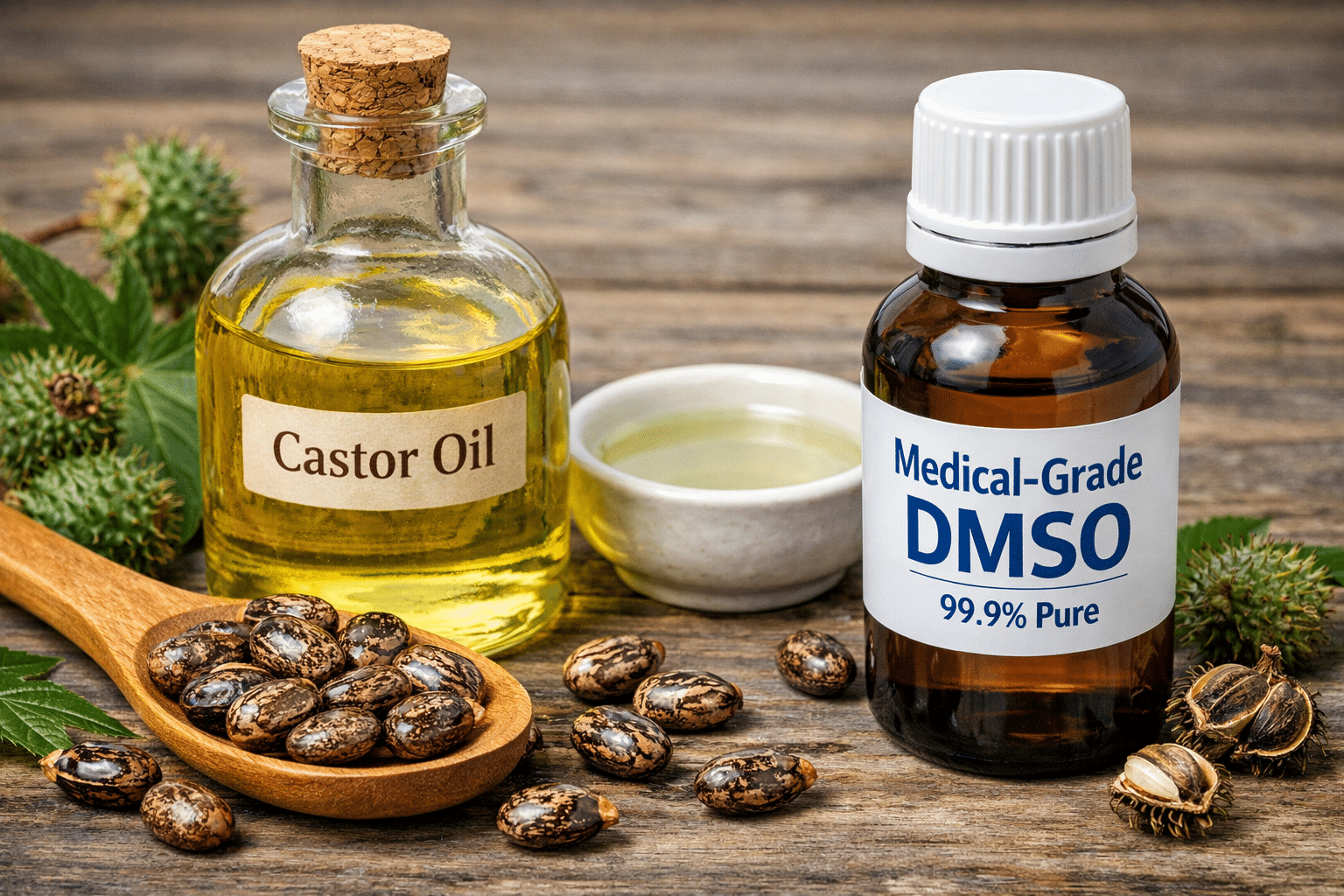
Castor oil and medical-grade DMSO are often discussed together as a topical combination for easing pain and calming inflammation. While both have a long history of use in different health and wellness settings, it is important to understand what each one does, why quality matters, and how they are commonly used. This is especially true with DMSO, because it is not an ordinary skin product. It moves through the skin quickly and may carry other substances with it.
Castor oil is a thick plant oil made from the seeds of the castor bean plant. It has been used for generations in skin care, massage, compresses, and home wellness treatments. It is rich in ricinoleic acid, a fatty acid often associated with soothing and softening the skin. People who use castor oil topically usually value it for the way it coats the skin, keeps moisture in place, and provides a comforting base for massage or warm packs.
DMSO, or dimethyl sulfoxide, is very different. It is known for its ability to penetrate the skin and enter tissues quickly. Because of this, it has attracted attention for helping reduce pain, swelling, and inflammation in certain situations. It has also been studied for use in medicine and has been used in some clinical settings. However, when people use DMSO on the skin, it must be medical grade. That point cannot be overstated. Medical-grade DMSO is purified for human use. Industrial or non-medical grades may contain impurities, and because DMSO is such a powerful carrier, those unwanted substances may also be absorbed into the body.
When castor oil and medical-grade DMSO are combined, the purpose is usually to create a topical preparation that may help support relief in sore or inflamed areas. Castor oil provides a rich, soothing surface layer, while DMSO is often considered the more active ingredient for deeper action. People commonly apply the mixture to areas such as knees, shoulders, hands, elbows, lower back muscles, or other localised places where discomfort is present.
For example, someone with a stiff knee after overuse may rub a small amount onto the joint area to try to ease the tight, achy feeling. A person with shoulder soreness from repetitive lifting may apply it after rest or gentle stretching. Another example might be mild wrist discomfort from typing or gardening, where the blend is used topically to target tenderness in one specific spot. Some also use it after exercise on tired muscles that feel inflamed or overworked.
The reason this combination gets so much attention is because inflammation is often at the root of pain. When tissues become irritated, fluid can build up, blood flow changes, and the area may feel hot, swollen, tight, or tender. DMSO is often used with the goal of calming that inflammatory process. Castor oil, while milder, is often included because it helps the skin feel nourished and may make the application more comfortable. Together, the blend is often described as useful for minor joint discomfort, muscle soreness, soft tissue irritation, and stiffness.
That said, this is not something to use carelessly. Because DMSO can carry substances through the skin, the skin must be very clean before application. No perfume, lotion, sunscreen, essential oils, dirt, makeup, or other products should be on the area. If those substances are present, DMSO may help draw them into the body as well. That is one of the main reasons experienced users stress clean skin, clean hands, and clean application materials.
People also need to be aware that DMSO can have a distinctive side effect. Some users notice a garlic-like or sulphur-like taste or odour on the breath or skin shortly after applying it. This can happen even though it was only used on the skin, because the body absorbs and metabolises it. Mild skin irritation, redness, dryness, or itching can also happen, especially in people with sensitive skin.
Castor oil and medical-grade DMSO
are often used for local pain and inflammation.
But purity, clean skin, and careful use are essential.
A few practical examples help show how people approach it. Someone with an old, sore ankle may apply a small amount to intact skin and allow it to absorb before resting the joint. A person with mild hand stiffness may use it after a warm soak to try to improve comfort and movement. Someone with a sore lower back after physical work may gently rub it into one limited area rather than using it broadly. In each case, the goal is local support for pain and inflammation, not a cure for the underlying condition.
There are also situations where this combination should be avoided or only used with medical guidance. It should not be applied to broken skin, infected skin, or near the eyes and mucous membranes. People who are pregnant, breastfeeding, taking several medications, or dealing with serious medical conditions should be especially cautious. Since DMSO may affect absorption, it is not wise to guess or experiment with poor-quality products.
The most balanced way to look at castor oil and medical-grade DMSO is this: many people use the combination in hopes of reducing local inflammation and pain, especially in muscles and joints, and some report meaningful relief. Castor oil adds a soothing, traditional element, while DMSO is valued for its deeper penetration and possible anti-inflammatory action. Still, quality, cleanliness, and careful use matter enormously. This is not a casual beauty treatment. It is a topical approach that deserves respect and good judgment.
Used properly, the blend may be part of a broader comfort routine that includes rest, hydration, stretching, proper diagnosis, and attention to the cause of pain. For persistent, severe, or unexplained symptoms, professional medical advice is always the safer route.
FAQ: Castor Oil and Medical-Grade DMSO
What is DMSO?
DMSO stands for dimethyl sulfoxide. It is a compound known for its ability to pass through the skin quickly and carry other substances with it. It is often discussed for topical use in pain and inflammation support.
Why must DMSO be medical grade?
Medical-grade DMSO is purified for human use. Lower-grade or industrial versions may contain impurities, and because DMSO penetrates the skin so easily, those impurities could also be absorbed into the body.
What is castor oil used for in this combination?
Castor oil is usually included because it is soothing, thick, and easy to apply to the skin. It is often used as a comforting base and may help the skin stay soft while the DMSO is applied to a specific area.
Can castor oil and medical-grade DMSO help with inflammation?
Many people use this combination in the hope of easing local inflammation, especially around muscles and joints. It is commonly applied to sore knees, shoulders, wrists, elbows, and the lower back.
Can this blend help reduce pain?
It is often used for temporary relief of localised pain, stiffness, and soreness. Examples include post-exercise muscle discomfort, overworked joints, and mild soft tissue irritation.
How is castor oil and medical-grade DMSO usually applied?
It is generally used topically on a small, localised area of clean, intact skin. The skin should be free from lotions, perfumes, oils, dirt, or other products before application.
Why does clean skin matter so much when using DMSO?
DMSO can carry substances through the skin. If the area has perfume, lotion, sunscreen, or other residues on it, those substances may also be absorbed.
Can it be used on broken or irritated skin?
No. It should not be used on broken skin, infected skin, or near sensitive areas such as the eyes, mouth, or other mucous membranes.
Does DMSO have side effects?
Some people notice skin irritation, redness, dryness, or itching. A garlic-like or sulphur-like taste or body odour is also commonly reported after topical use.
Can this combination be used for joint pain?
People often use it for mild joint discomfort in areas such as knees, hands, shoulders, or elbows. It is usually part of a broader comfort routine rather than a stand-alone answer for chronic pain.
Can athletes or active people use it for muscle soreness?
Some do use it after exercise or physical labour for tired, inflamed, or stiff muscles. Common examples include sore calves, tight shoulders, or lower back strain after repetitive activity.
Is this a cure for arthritis or chronic inflammation?
No. It may be used as a supportive topical option for comfort, but it is not a cure for arthritis, injury, or chronic inflammatory conditions.
Can anyone use castor oil and medical-grade DMSO?
Not everyone should. People who are pregnant, breastfeeding, taking multiple medications, or dealing with serious health conditions should speak with a qualified medical professional before using DMSO.
Can it be used with other creams or essential oils?
That is generally not advised unless directed by a knowledgeable professional. Because DMSO enhances skin absorption, combining it with other products may increase the absorption of ingredients you did not intend to introduce into the body.
When should someone seek medical advice instead of self-treating?
If pain is severe, persistent, unexplained, or linked with major swelling, redness, heat, numbness, weakness, or loss of movement, a medical evaluation is the better step.