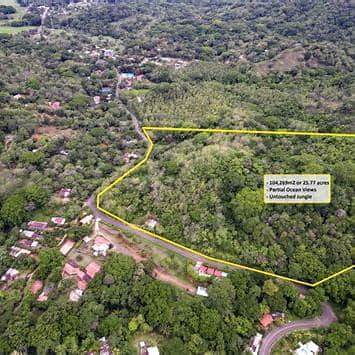
Costa Rica has a way of making property ownership feel beautifully simple. You see a mountain view, a stretch of jungle, a farm with old trees, or a lot close enough to the beach to hear the surf, and your imagination gets to work fast. But before you buy, there is one subject that deserves your full attention: squatters’ rights, or more accurately, the legal difference between ownership and possession in Costa Rica. (Tico Times)
A lot of buyers arrive assuming that a registered deed settles everything. It does not. Under Costa Rica’s Civil Code, possession can exist independently from ownership. Article 279 makes that point directly, while also saying that acts of mere tolerance do not create possession rights. That distinction matters because many land disputes are not really about who has a title in hand, but about who has been using, occupying, controlling, or improving the property and under what circumstances. (PGR Web)
This is where the phrase “squatters’ rights” starts to cause confusion. It makes the situation sound lawless, as if anyone can wander onto land and instantly build a legal claim. That is not how it works. Costa Rican law does recognise usucapión, or acquisitive prescription, but ownership is not created overnight. Official legal references tied to the Civil Code state that acquiring ownership of real estate by prescription requires ten years of possession, and legal commentary also points to the need for possession to be public, peaceful, continuous, and supported by the broader legal conditions surrounding title and good faith. (PGR Web)
The “90-day” idea is one of the most repeated and least understood parts of this topic. It does not mean a squatter becomes the owner after three months. What it usually means is that a property owner needs to move quickly when an illegal occupation begins. Current Costa Rica property guidance says owners should immediately take legal action and, within three months of the problem starting, pursue either a civil interdicto or a criminal usurpación complaint. Once that window is missed, removal can become slower, more expensive, and more complicated. So the three-month issue is really about urgency and legal strategy, not automatic ownership. (Costa Rica Guide)
There is another layer that matters even more now. Costa Rica’s Code of Agrarian Procedures took effect on February 28, 2025, and it changed the terrain for certain property disputes. According to current reporting on the law, administrative eviction is not available in some situations, including where the occupant has been on the property for more than one year, where there is already a court case over recovery of the property, or where occupation arose through a written or verbal contract or even mere tolerance for more than one year. In those cases, the owner may need to recover the property through judicial proceedings that can last two years or longer. (Tico Times)
That is why informal arrangements can become surprisingly dangerous. A caretaker allowed to remain on the land without a clear written agreement, someone planting crops with verbal permission, or an occupant staying “just temporarily” may later argue that their occupation was tolerated long enough to create a more difficult legal battle. The law does not reward sloppy ownership. It rewards clarity, records, supervision, and swift action. (Tico Times)
Registered title still matters enormously. Article 861 of the Civil Code states that possession of immovable property or real rights over it does not count for prescription against a third party until the title is registered in the Public Registry, with limited exceptions. In practical terms, Costa Rica’s registry system gives strong protection to properly recorded ownership, which is one reason buyers should never skip title review, survey review, registry checks, and a serious look at what is actually happening on the ground. A clean title is vital, but so is confirming whether anyone is living on, farming, maintaining, fencing, accessing, or informally using the property. (PGR Web)
The smartest buyers in Costa Rica do not just ask, “Is this property beautiful?” They ask, “Who has been here?” “What permissions have been given?” “Is the land vacant in theory but occupied in practice?” “Does agrarian law apply?” “Are there neighbours, workers, caretakers, grazing animals, planted crops, utility connections, or improvements that suggest long-term use?” Those questions may feel less romantic than picturing a future terrace and plunge pool, but they are the questions that protect your investment. (Tico Times)
Costa Rica remains a remarkable place to buy property. But paradise is not a substitute for due diligence. The real lesson is simple: do not rely on myths, do not confuse the 90-day rule with ownership, do not leave land unmanaged, and do not allow vague arrangements to develop around your property. Buy carefully, document everything, and stay involved. That is how you keep a dream property from turning into a courtroom story. (Costa Rica Guide)
FAQs
What are squatters’ rights in Costa Rica?
In everyday language, people use the phrase to describe possession claims by people occupying land they do not formally own. In legal terms, the discussion usually involves possession, usucapión, and prescription under the Civil Code. (PGR Web)
Can someone get ownership of property in Costa Rica by occupying it?
Yes, but not quickly and not easily. Costa Rica’s Civil Code states that acquiring ownership of immovable property by prescription requires ten years of possession, and the possession must meet strict legal standards. (PGR Web)
Does 90 days mean a squatter owns the land?
No. The three-month period is better understood as a critical response window for the owner to take legal action before the case becomes much harder to resolve. (Costa Rica Guide)
Why are caretakers and verbal agreements risky?
Because an occupation that begins through contract, verbal permission, or prolonged tolerance can later complicate eviction, especially under the agrarian procedures now in force. (Tico Times)
What changed in 2025?
The Code of Agrarian Procedures came into effect on February 28, 2025. It limits the use of administrative eviction in certain cases, including some occupations lasting more than a year, pushing owners toward longer judicial procedures. (Tico Times)
Does a registered title still protect buyers?
Yes, strongly. Article 861 reinforces the importance of registration, which is why proper title due diligence remains one of the most important protections for buyers. (PGR Web)