

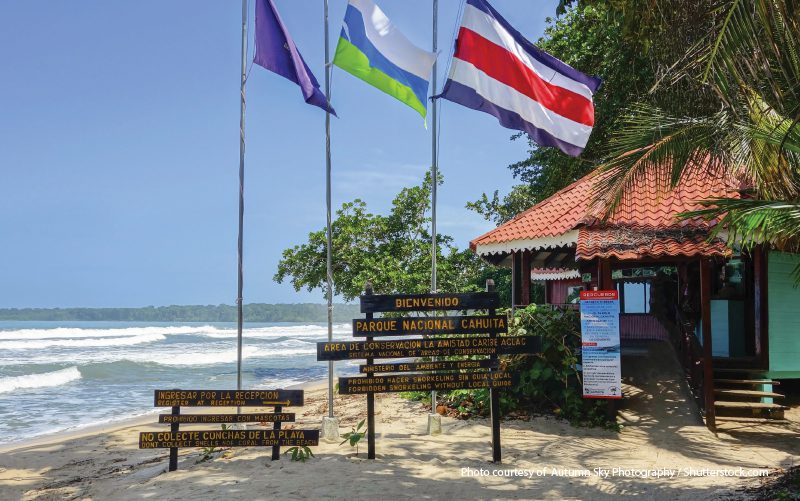
Blue Flag Beaches: A Five-Star Ecological Guide. Whether you are vacationing or living in Costa Rica, it’s useful to understand and appreciate the Blue Flags seen on many beaches and coastal community sites. For more than two decades, the Blue Flag Ecological Program (Bandera Azul Ecológica) has been instrumental in protecting Costa Rica’s coastal ecosystems through cleanup and pollution prevention initiatives while safeguarding the country’s reputation as a world-class ecotourism destination.
Inception in the late 1990s was the outcome of inter-institutional cooperation between the Costa Rican Tourism Institute (ICT), National Chamber of Tourism (CANATUR), Costa Rican Water and Sewage Institute (AyA), Ministry of Environment (MINAE), Ministry of Public Health (MINSA) and Ministry of Education (MEP).
The Blue Flag program has since grown in scope and popularity, receiving national and international recognition along the way. Today, the Blue Flag program is a source of year-round community effort and pride, attaining the current record of 118 beaches receiving certification.

Earning the Blue Flag
The Blue Flag is an annual certification, granted every year to beaches or coastal communities scoring 90% or higher in meeting all ecological requirements. Each is rated according to criteria primarily based on water quality for swimming and beach trash collection:
Ocean water quality (35%)
Quality of potable water (15%)
Quality of coastal sanitation:
- Coastal garbage and garbage containers (10%)
- Treated industrial waste in coastal areas (5%)
- Treated run-off water in coastal areas (15%)
• Environmental education (10%)
• Security and administration (10%)
Whether you are vacationing or living in Costa Rica, it’s useful to understand and appreciate the Blue Flags seen on many beaches and coastal community sites. For more than two decades, the Blue Flag Ecological Program (Bandera Azul Ecológica) has been instrumental in protecting Costa Rica’s coastal ecosystems through cleanup and pollution prevention initiatives while safeguarding the country’s reputation as a world-class ecotourism destination.
Inception in the late 1990s was the outcome of inter-institutional cooperation between the Costa Rican Tourism Institute (ICT), National Chamber of Tourism (CANATUR), Costa Rican Water and Sewage Institute (AyA), Ministry of Environment (MINAE), Ministry of Public Health (MINSA) and Ministry of Education (MEP).
The Blue Flag program has since grown in scope and popularity, receiving national and international recognition along the way. Today, the Blue Flag program is a source of year-round community effort and pride, attaining the current record of 118 beaches receiving certification.
Earning the Blue Flag
The Blue Flag is an annual certification, granted every year to beaches or coastal communities scoring 90% or higher in meeting all ecological requirements. Each is rated according to criteria primarily based on water quality for swimming and beach trash collection:
Ocean water quality (35%)
Quality of potable water (15%)
Quality of coastal sanitation:
• Coastal garbage and garbage containers (10%)
• Treated industrial waste in coastal areas (5%)
• Treated run-off water in coastal areas (15%)
Environmental education (10%)
Security and administration (10%)
If a beach or community achieves 90% or more in these areas, it is awarded a Blue Flag.
Better than Blue: the five-star rating
The Blue Flag awarded on the basis outlined above comes with one star. Beaches or communities offering enhancements to facilities, safety, security and accessibility can earn additional stars as follows.
Two stars — all one-star criteria plus:
Signage, in good condition and clearly displayed, to indicate strong waves and/or rip tides and undertows
Presence of lifeguards and first-responders (usually coordinated with the local Red Cross) on the beach during weekends, especially in high season
Three stars — all two-star criteria plus:
Public showers and bathrooms
Signage with beach maps showing service locations
Four stars — all three-star criteria plus:
Permanent lifeguards on duty
Recyclables sorting and collectors
Permanent committee working with the National Emergency Center for crisis preparedness (e.g., tsunami)
Five stars — all four-star criteria plus:
Accessible parking spaces
Ramps and other features for accessibility of beach and services
Tourist Police patrol
Five beaches this year have achieved the highest ranking of Blue Flag plus five stars: Playa Matapalo and Punta el Madero (northern Guanacaste); Playa Carrillo (southern Guanacaste); and Playa Blanca and Playitas (central Pacific).
So when you are heading to the coast, look up your beach destination. A Blue Flag gives you assurance about water quality and condition of the beach. If you want more amenities — from showers and bathrooms to lifeguards and police protection — or greater accessibility, narrow your search to the Blue Flag beaches with multiple-star ratings.
Blue Flag beaches are listed on the ICT website at
www.ict.go.cr