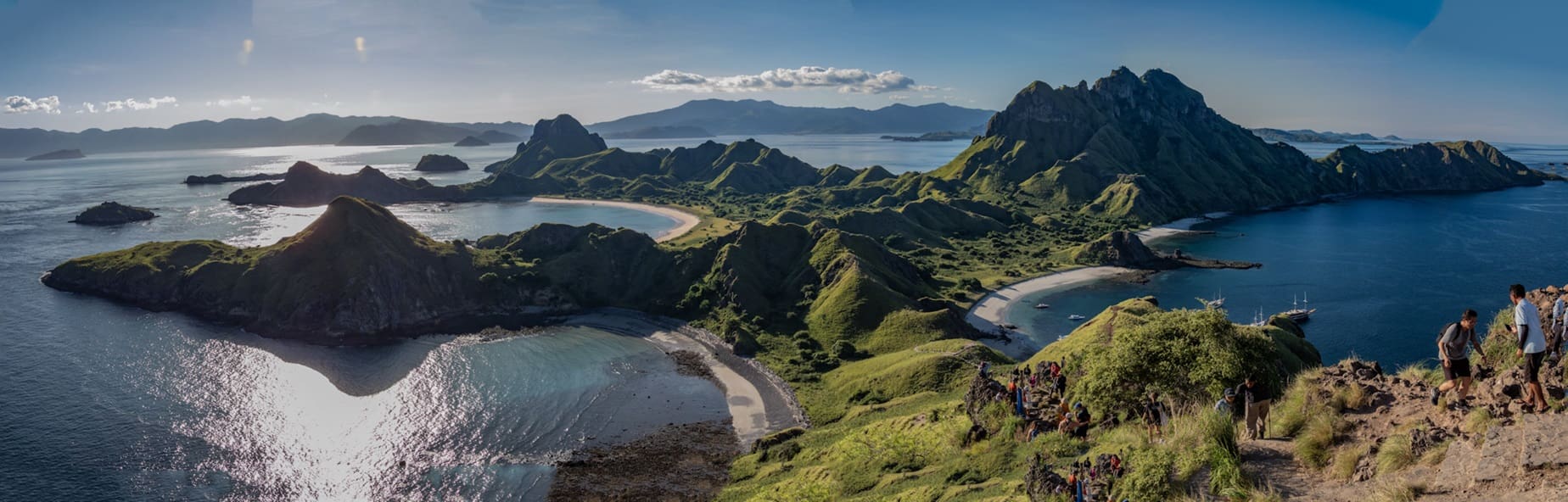
With thousands of islands stretching thousands of miles, Indonesia is so large that to say you visited it is too vague: you visit Java, Borneo, Sumatra, Bali, Sulawesi, etc. On this part of our around-the-world trip, we visited the Lesser Sunda Islands. The Lesser Sundas are the southernmost chain of Indonesian islands stretching from Bali to Timor.
From the hike up to take the ultimate tourist photo on Padar Island, to the Dragons and Pink Sand beaches of Komodo, to the triple, different colored, volcanic lakes of Flores, this is a land of great beauty and wonder. They are also an interesting area culturally, where Muslims and Christians have lived together without conflict for hundreds of years, and aboriginal cultures are still practiced. Enjoy the sights and sounds of Indonesia in these videos from our Around the World in 40 Days Trip.
Culture and Conflict: The Whalers of Lembata Island
Our penultimate island to visit was the most fascinating and colorful, Lembata Island.
On this small volcanic island in the Savu Sea so remote that other Indonesians call it “The Land Left Behind” live the Lamalerans: a tribe of 1,500 hunter-gatherers who are the world’s last aboriginal subsistence whalers. They have survived for half a millennium by hunting whales with bamboo harpoons and handmade wooden boats powered by sails of woven palm fronds. They are the subject of the book “ The Last Whalers “, by Doug Bock Clark.
The boats are housed in thatched huts on the beach, each brightly painted with traditional symbols for protection. Some of the boats have been passed down for generations, many being hundreds of years old.
The entire town was present to greet us, being the first foreigners to visit since the start of the pandemic in 2020. We were taken to the center of town and treated to local dances representing their subsistence culture, and demonstrations of cooking, weaving, and blacksmiths making harpoons for their whaling boats.
We then headed out to sea for a demonstration of their ancient whaling practices, the harpooners throwing themselves off the bow with the force of their throw. It was an interesting visit, since their way of life teeters on the brink of collapse, under assault from the rapacious forces of the modern era, environmental change, and pressure from anti-whaling sentiment. The day left us intrigued but confused, with cell phones and satellite dishes a seeming contradiction to the tradition and idea of subsistence whaling.