

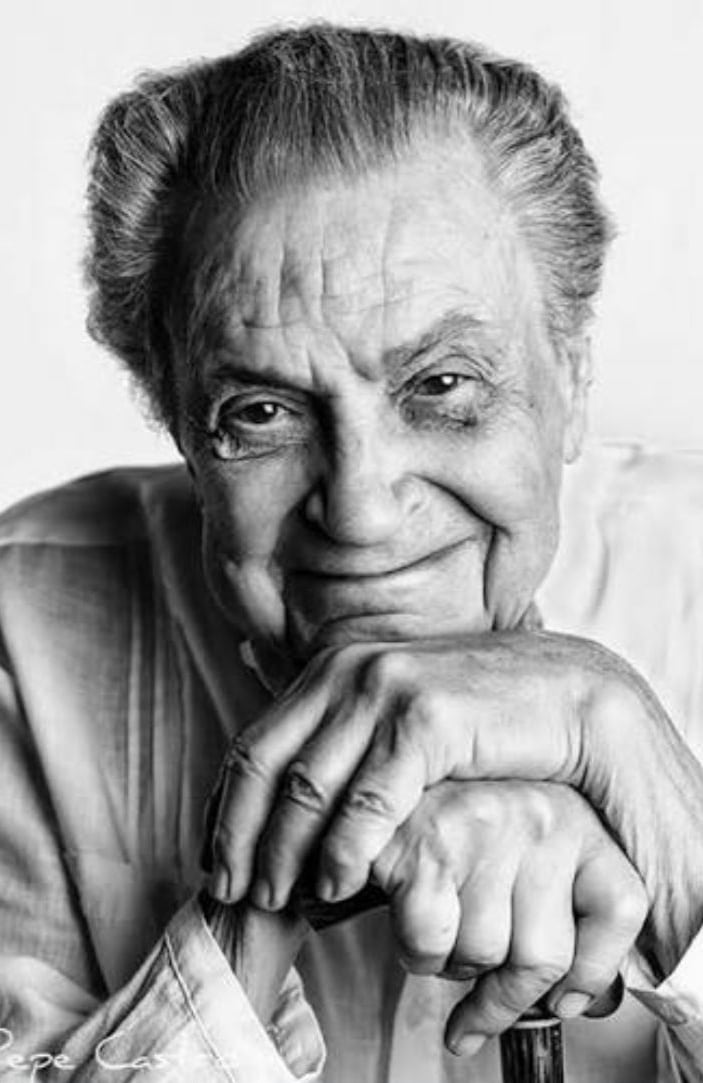
On May 8, 2002, Dr. Abel Pacheco de la Espriella became President of Costa Rica, but his public life had already made him something far rarer than a politician: a familiar Costa Rican voice. He was a psychiatrist, writer, television commentator, shopkeeper, public servant and, above all, a man whose personality never seemed to disappear behind the title of “President.” Costa Rica’s official presidential record lists Abel Pacheco as the leader of the 2002–2006 administration, elected in the second round on April 7, 2002.
Who was Abel Pacheco de la Espriella?
Abel Pacheco was a Costa Rican psychiatrist, businessman, writer, television personality and president who served from 2002 to 2006. His life story matters because it does not fit neatly into the polished mould of modern politics.
Before Casa Presidencial, there was the doctor. Before the doctor, there was the student. Before the statesman, there was the man who could sell trousers with the same directness he brought to a national conversation. The Legislative Assembly’s list of former presidents records his presidential period as 2002–2006, placing him among Costa Rica’s democratic leaders after Miguel Ángel Rodríguez and before Óscar Arias Sánchez.
What made Abel memorable was not only his résumé, but his manner:
- He spoke plainly.
- He carried humour into public life.
- He connected with ordinary people.
- He understood mental health before it became a fashionable subject.
- He remained recognisably himself, even in power.
Why does May 8, 2002 still matter?
May 8, 2002 matters because it marked the beginning of a presidency remembered by many Costa Ricans as personal, direct and deeply human. In a country that often measures leadership through institutional stability, Abel Pacheco stood out because he also offered character.
His inauguration did not simply place a politician in office. It placed a familiar public figure in the country’s highest seat. To many Costa Ricans, he was not some distant technocrat or unreachable party machine. He was “Abel,” the man from television, the doctor, the writer, the person who had lived several lives before becoming president.
That is why looking back at photos from that day can stir more than nostalgia. It can raise a national question: what kind of leadership does Costa Rica need when people feel anxious, disappointed or powerless?
What made Abel Pacheco different from other presidents?
Abel Pacheco was different because he brought informality, candour and personal warmth into the presidency without seeming to manufacture it. His public identity was not built by consultants. It came from years of direct contact with Costa Ricans.
One of the most revealing stories comes not from a cabinet meeting, but from a shop floor. In the late 1970s and early 1980s, Pacheco ran El Palacio del Pantalón, a clothing shop in San José, where he sold his own “Furris” fashion line. A young customer remembers arriving to buy bell-bottom trousers and being greeted with something like: “Hey, skinny guy — try on this size 28.”
There was no filter. No ceremony. No presidential distance. Just Abel.
That same story ends with a small act of generosity: accepting 10 colones for trousers priced at 12.50 because the customer needed the remaining money for the bus home to Grecia. It is a tiny scene, but those are often the ones that explain a person better than official portraits ever can.
How did Abel Pacheco change the conversation around mental health?
Abel Pacheco helped challenge the stigma surrounding psychiatric patients by treating mental health as a human issue rather than a source of shame. As a psychiatrist and former director of the Psychiatric Hospital, he belonged to a generation that had to confront cruel assumptions about people living with mental illness.
The old prejudice was brutal: psychiatric patients were too often dismissed as “crazy,” hidden away, restrained, sedated or spoken about as if their humanity had disappeared. Pacheco’s work and public voice helped move the country toward a more compassionate understanding.
His legacy in mental health can be remembered through three ideas:
- Patients are people before they are diagnoses.
- Treatment should not erase dignity.
- A civilised country must care for minds as well as bodies.
That message feels especially relevant today, when anxiety, fear, grief and social exhaustion are affecting so many Costa Rican families.
Why is Abel Pacheco remembered as a symbol of peace and stability?
Abel Pacheco is remembered by many as a symbol of peace and stability because his presidency belongs to a period that feels, in hindsight, less dominated by the fear of organised violence. Costa Rica has changed sharply since then, and public concern over homicide and drug-related crime has become a defining national issue.
Recent figures show why that contrast feels so painful. The U.S. Overseas Security Advisory Council reported that Costa Rica recorded 907 homicides in 2023, a record year, with much of the increase linked to narcotrafficking activity; the homicide rate rose from 11.5 per 100,000 residents in 2021 to 17.2 in 2023. Local reporting based on OIJ figures later stated that Costa Rica closed 2025 with 873 homicides, making it one of the most violent years in the country’s history, after 2023 and 2024.
Those numbers are more than statistics. They are a wound in the national mood. They help explain why some Costa Ricans look back at leaders like Abel Pacheco not only with nostalgia, but with hunger for a different civic atmosphere.
What can Costa Rica learn from Abel Pacheco today?
Costa Rica can learn from Abel Pacheco that leadership is not only about authority; it is also about moral presence. A president does not have to be perfect to remind a country of its better instincts.
The lesson is not that the past was flawless. No administration is. The lesson is that public life needs leaders who can speak clearly, recognise pain and remain close enough to the people to understand what daily life actually feels like.
At a time when many Costa Ricans feel caught between insecurity, political noise and frustration, Abel’s example suggests that national recovery also needs:
- Plain speech without cruelty
- Security without losing humanity
- Mental health awareness without stigma
- Public service without arrogance
- Courage without theatrical anger
- Peace as a practical national goal, not a slogan
Why does this personal memory of Abel Pacheco matter?
This personal memory matters because countries are not held together by laws alone; they are also held together by shared stories. A former president selling trousers, joking with a customer, accepting less money because a young man needed bus fare — these details may seem small, but they humanise history.
They remind readers that leadership is not born only in speeches. It is revealed in ordinary moments.
That is why a warm embrace sent from afar to “Mr. President” carries emotional weight. It is not just praise for a politician. It is gratitude for a Costa Rican who remained consistent, frank and willing to face adversity without surrendering his humour or his humanity.
For a country searching for steadiness in a difficult hour, remembering Abel Pacheco is not an escape from the present. It is a way of asking what kind of national soul Costa Rica wants to recover.
FAQ
Who was Abel Pacheco de la Espriella?
Abel Pacheco de la Espriella was a Costa Rican psychiatrist, writer, businessman, television personality and politician who served as President of Costa Rica from 2002 to 2006.
When did Abel Pacheco become president?
Abel Pacheco became President of Costa Rica on May 8, 2002, after being elected in the second round on April 7, 2002.
What political party did Abel Pacheco represent?
Abel Pacheco represented the Social Christian Unity Party, known as PUSC.
Why do many Costa Ricans remember Abel Pacheco fondly?
Many Costa Ricans remember Abel Pacheco fondly because of his direct personality, humour, public warmth and reputation as a leader who remained close to ordinary people.
Was Abel Pacheco a doctor?
Yes, Abel Pacheco was a doctor and psychiatrist before becoming president.
What was El Palacio del Pantalón?
El Palacio del Pantalón was Abel Pacheco’s clothing shop in San José, remembered by some Costa Ricans as part of his colourful life before the presidency.
Why is Abel Pacheco linked to mental health in Costa Rica?
Abel Pacheco is linked to mental health because he worked as a psychiatrist and helped challenge stigma around psychiatric patients.
Why is his presidency being remembered now?
His presidency is being remembered now because many Costa Ricans are reflecting on earlier periods of public life amid current concerns about violence, insecurity and national morale.
Is Costa Rica facing a serious homicide problem?
Yes, Costa Rica has faced historically high homicide numbers in recent years, including 907 homicides in 2023 and 873 in 2025, according to reporting based on official and security data.
What is Abel Pacheco’s broader legacy?
Abel Pacheco’s broader legacy is that of an unconventional public figure who combined medicine, media, business, literature and politics while remaining unusually direct and human.
Former Navy Journalist, published author and international speaker. Howler executive since 2019.