
Costa Rica’s coastal wildlife is extraordinary because its shores are not just beaches — they are nurseries, feeding grounds, migration routes and hidden cities of marine life. Along the Pacific and Caribbean coasts, estuaries and mangroves shelter fish, crabs, molluscs, crocodiles, birds, turtles and countless young sea creatures before they move into deeper water.
Why are Costa Rica’s shores so rich in marine life?
Costa Rica’s shores are rich in marine life because two coastlines, tropical currents, reefs, river mouths and mangrove forests create many different habitats in a small country. The Pacific side brings rocky reefs, surf zones, wide estuaries and seasonal upwelling, while the Caribbean side adds coral reefs, seagrass beds and warm, calmer coastal ecosystems.
This variety supports marine life such as:
- Sea turtles
- Rays
- Reef fish
- Crabs
- Snappers and juvenile fish
- Crocodiles in estuaries
- Molluscs
- Sharks offshore
- Dolphins and whales seasonally
- Mangrove birds and shorebirds
Costa Rica’s marine environments are often described as highly diverse, with mangroves, coral reefs and coastal ecosystems all playing important roles in ocean health.
What makes mangroves so important?
Mangroves are important because they act as nurseries for young fish, crustaceans and molluscs. Their tangled roots create shelter from predators, calm water for feeding and a safe place for juvenile marine species to grow before entering larger coastal waters.
Mangroves also help protect the coast by:
- Reducing erosion
- Buffering storm surge
- Storing carbon
- Filtering sediment
- Supporting birds, reptiles and mammals
- Protecting nearby reefs and seagrass from runoff
Costa Rica’s mangroves are recognised for their environmental and economic importance, and SINAC’s National Wetlands Programme has mapped the country’s mangrove ecosystems to support management and restoration efforts.
What animals live in Costa Rica’s estuaries?
Costa Rica’s estuaries are home to fish, crabs, crocodiles, birds, molluscs and young marine species. These brackish waters, where rivers meet the sea, are some of the busiest natural crossroads in the country.
In an estuary, you may find:
- Juvenile fish hiding in roots
- Fiddler crabs on mudflats
- Mangrove tree crabs in branches
- Herons and egrets hunting in shallows
- Crocodiles resting near muddy banks
- Snails and shellfish in the sediment
- Rays moving through channels
- Migratory birds feeding during seasonal journeys
The magic is that much of the action is quiet. A ripple, a claw, a flash of silver, a bird stepping carefully through the mud — this is Costa Rica’s marine life before it becomes dramatic enough for a postcard.
Why are sea turtles part of Costa Rica’s coastal story?
Sea turtles are central to Costa Rica’s coastal story because both Pacific and Caribbean beaches provide important nesting habitat. Tortuguero, Ostional and Playa Grande are among the best-known turtle areas, each linked to conservation, tourism and careful beach management.
Costa Rica’s sea turtle species include:
- Green turtles
- Olive ridley turtles
- Leatherback turtles
- Hawksbill turtles
- Loggerhead turtles in some waters
Tortuguero is especially important, as the Sea Turtle Conservancy describes it as the largest green turtle rookery in the Western Hemisphere, with important nesting populations of leatherback and hawksbill turtles as well.
What sea life can visitors see near the shore?
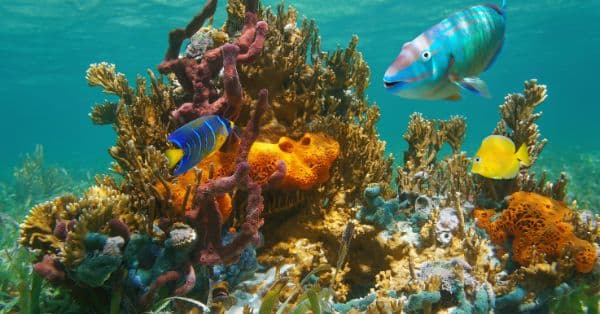
Visitors may see rays, reef fish, sea turtles, crabs, pufferfish, starfish, octopus, eels and colourful juvenile fish near Costa Rica’s shores. What you see depends heavily on the coast, season, tide and habitat.
Common near-shore experiences include:
- Snorkelling over reef fish on the Caribbean coast
- Watching crabs patrol rocky tide pools
- Seeing rays glide through shallow water
- Spotting turtle tracks on protected nesting beaches
- Finding small fish in mangrove channels
- Observing pelicans and frigatebirds hunting offshore
- Watching dolphins from a boat tour
The best wildlife moments often happen when you slow down. A tide pool can be as fascinating as a boat tour if you give it time.
How do mangroves protect ocean life?
Mangroves protect ocean life by giving young species shelter, food and calmer water during vulnerable life stages. Without mangroves, many fish and crustaceans would have fewer safe places to develop.
Mangrove roots work like a living maze. Small creatures can hide where larger predators cannot easily follow. Fallen leaves feed tiny organisms, which then feed small fish, crabs and other animals. That food chain eventually supports larger marine life offshore.
Mangroves help support:
- Fisheries
- Bird populations
- Coastal food webs
- Water quality
- Carbon storage
- Shoreline stability
- Tourism and local livelihoods
They may look muddy and tangled from the outside, but mangroves are among the most valuable coastal ecosystems Costa Rica has.
Where are the best places to experience estuary and mangrove wildlife?
Some of the best places to experience Costa Rica’s estuary and mangrove wildlife are river mouths, protected wetlands and guided boat tour areas. These places offer a slower, quieter kind of wildlife watching than open-ocean tours.
Notable areas include:
- Térraba-Sierpe mangroves
- Tamarindo Estuary
- Palo Verde wetland region
- Tortuguero canals
- Damas Island mangroves
- Gandoca-Manzanillo area
- Gulf of Nicoya estuaries
- Osa Peninsula coastal wetlands
Guided tours are often worth it because local naturalists know how to read the water, tides, bird calls and muddy banks.
How can travellers enjoy Costa Rica’s sealife responsibly?
Travellers can enjoy Costa Rica’s sealife responsibly by keeping distance, choosing ethical tours and never disturbing nesting, feeding or resting animals. Marine wildlife is easily stressed, especially turtles, dolphins, rays and animals in shallow nursery habitats.
Responsible habits include:
- Never touching sea turtles, rays, coral or starfish
- Using reef-safe sunscreen
- Keeping plastic out of beaches and waterways
- Booking licensed guides for turtle nesting tours
- Avoiding flash photography around nesting turtles
- Staying out of restricted mangrove zones
- Not feeding wildlife
- Choosing operators who respect distance rules
- Taking rubbish back from beaches and boat tours
Costa Rica’s coastal wildlife is generous, but it is not entertainment on demand. The best visitors understand that watching without interfering is part of the privilege.
Why do these ecosystems matter beyond tourism?
Costa Rica’s shores, estuaries and mangroves matter beyond tourism because they support food chains, fisheries, storm protection, biodiversity and climate resilience. They are not scenic extras; they are working ecosystems.
When mangroves are cut, estuaries polluted or beaches poorly managed, the damage spreads. Fish lose nursery grounds. Turtles lose nesting space. Birds lose feeding areas. Communities lose natural protection from storms and erosion.
To understand Costa Rica’s sealife properly, you have to look beyond the blue water. The muddy estuary, the mangrove root, the tide pool and the turtle beach are all part of the same living coastline.
FAQ
What sea animals live around Costa Rica?
Costa Rica’s coastal waters support sea turtles, rays, reef fish, dolphins, whales, crabs, molluscs, sharks, octopus, eels and many juvenile fish species.
Why are mangroves important in Costa Rica?
Mangroves are important because they shelter young fish, crustaceans and molluscs, protect shorelines, store carbon and support coastal wildlife.
Can you see crocodiles in Costa Rica’s estuaries?
Yes, crocodiles live in some Costa Rican estuaries and river mouths, especially in brackish or muddy coastal waters.
Are Costa Rica’s sea turtles protected?
Yes, sea turtles are protected, and important nesting beaches have conservation rules. Visitors should use licensed guides and avoid disturbing nesting turtles.
Where is the best place to see sea turtles in Costa Rica?
Tortuguero is famous for green turtles, while Ostional is known for olive ridley arribadas. Playa Grande is also important for leatherback turtle conservation.
What is special about the Térraba-Sierpe mangroves?
The Térraba-Sierpe mangroves are among Costa Rica’s most important mangrove systems and provide habitat for birds, fish, reptiles and many estuary species.
Can visitors snorkel in Costa Rica?
Yes, visitors can snorkel in areas with suitable conditions, especially along parts of the Caribbean coast and selected Pacific reef areas.
Are mangroves safe to visit?
Mangroves are best visited with a guide because tides, crocodiles, mud, insects and navigation can create risks for inexperienced visitors.
What should I bring on an estuary tour?
Bring water, sun protection, insect repellent, binoculars, a dry bag, light clothing and a camera with a zoom lens.
How can tourists help protect Costa Rica’s marine life?
Tourists can help by avoiding plastic waste, choosing responsible tour operators, respecting wildlife distance, using reef-safe sunscreen and supporting conservation areas.



Howler Staff are John, Terry and whomever else we can get to write great articles.