

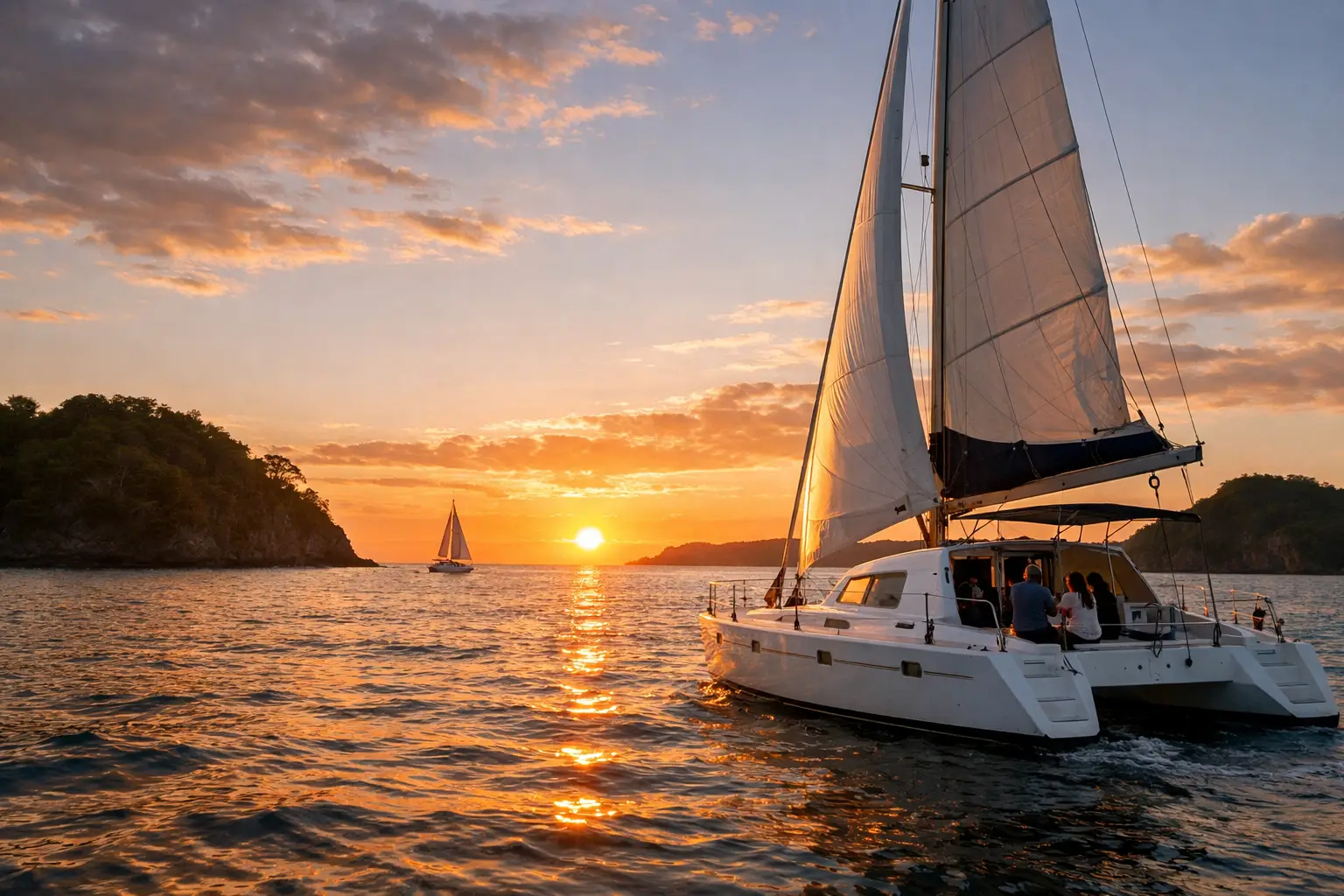
By late afternoon on Costa Rica’s Pacific coast, the light starts to soften, the heat lets go a little, and the ocean takes on that metallic blue-gold sheen that makes people stop mid-sentence. That is exactly why sunset sailing tours remain one of the country’s most reliably memorable outings. They are not just pretty boat rides. Done well, they turn a familiar beach day into something slower, more expansive, and deeply tied to place.
For visitors deciding how to spend one standout evening, a sail at sunset offers a rare combination in Costa Rica: easy luxury, open-air adventure, and a front-row seat to the changing moods of the coast. For prospective homeowners, retirees, and long-stay travelers, it also reveals something else – the lived rhythm of the shoreline after the midday rush fades and the horizon becomes the main event.
Why sunset sailing tours feel different here
Not every coastal destination earns the hype around golden hour. Costa Rica does, especially along the Pacific, where long dry-season evenings, dramatic headlands, and marine life all add dimension to the experience. The landscape matters. A sunset seen from shore is one thing. Watching it from the water, with the coastline stretching behind you and volcanic silhouettes darkening in the distance, lands differently.
There is also the matter of pace. Many travelers fill their itineraries with zip lines, ATV rides, surf lessons, national park visits, and restaurant reservations. A sailing trip asks for a different mindset. You board, settle in, and let the evening unfold. That slower cadence is part of the appeal, especially for people who come to Costa Rica looking for both energy and ease.
The best tours balance atmosphere with authenticity. You may get music, cocktails, snacks, and attentive crew service, but the setting is still the star. Frigatebirds trace the breeze above the mast. Dolphins sometimes pace the bow. In season, humpback whales may surface offshore. Even when wildlife sightings are minimal, the sheer sensory shift from land to sea is enough.
What to expect on sunset sailing tours
Most sunset sailing tours follow a similar arc, though the details vary by region and operator. Departure usually happens in the late afternoon. Some tours leave directly from a marina, while others involve a beach pickup by dinghy if the shoreline has no formal port. That small logistical detail can affect the overall feel, especially for guests with mobility concerns.
Once underway, the boat often cruises along the coast before anchoring in a protected bay for a swim, snorkel session, or simply time on deck. Then comes the sail into evening light. On catamarans, the experience tends to be social and spacious, with room to move around, lounge on netting, and mingle. On smaller monohulls, the outing can feel quieter and more intimate, with a stronger sense of actual sailing and wind direction shaping the ride.
Food and drink are typically part of the package, but quality varies. Some outings offer a casual open bar and simple appetizers. Others lean closer to boutique hospitality, with thoughtful cocktails and better food. Neither approach is inherently better. It depends on whether you want a celebratory group atmosphere or a more refined, low-key evening.
This is also one place where expectations should stay flexible. A sunset cruise is still a marine excursion. Sea conditions can change. Clouds may filter or even hide the sun. The boat may shift course for comfort or safety. In Costa Rica, nature is never a guaranteed performance, and that is part of the contract.
Choosing the right kind of sailing experience
The phrase sunset sailing tours covers a wide range of experiences, and not all of them suit the same traveler. That is where a little planning pays off.
If you are traveling as a family, space and stability matter. Larger catamarans tend to be easier with children, older adults, and anyone who is unsure how they will handle motion on the water. They usually offer more shade, easier boarding, and a gentler social atmosphere.
If you are celebrating something – an anniversary, milestone birthday, engagement, or private group trip – a charter may be worth the extra cost. Privacy changes the tone completely. Instead of joining a mixed crowd, you get a more personal evening and more control over music, timing, and stops.
If your priority is marine life, ask direct questions before booking. Some stretches of coast are more active than others at certain times of year, but no responsible operator should promise dolphins or whales on demand. The better sign is a crew that knows local patterns, respects wildlife distance rules, and treats sightings as a privilege rather than a gimmick.
And if you care about the sailing itself, make sure you are not really booking a motorized cocktail cruise with decorative sails. That may sound harsh, but it is a real distinction. Some guests want the romance of canvas, wind, and heeling gently into the breeze. Others are perfectly happy with comfort, music, and a sunset backdrop. Knowing which experience you want avoids disappointment.
Best places in Costa Rica for a sunset sail
Costa Rica’s Pacific coast offers several strong bases for this experience, each with its own character.
The Papagayo and Playas del Coco area tends to appeal to travelers looking for polished logistics, resort access, and calmer dry-season conditions. It is a convenient choice for people staying in the northwestern beach corridor, and the bays there often deliver a smooth, scenic evening on the water.
Tamarindo has a more active, social energy. Sunset sails from this area can feel lively and accessible, attracting surfers, vacation groups, and couples who want an easy add-on to a beach town stay. The coastline is beautiful, though boarding can be more casual depending on tides and launch conditions.
Further south, Manuel Antonio and Quepos combine dramatic jungle-backed scenery with a stronger wildlife lens. Sailing here can feel especially cinematic, with steep green shorelines meeting the sea and a good chance of seeing marine life. It is a strong fit for travelers who want the outing to feel distinctly tied to Costa Rica’s biodiversity, not just its beaches.
In the Nicoya Peninsula, places such as Santa Teresa and nearby coves offer a more laid-back interpretation of the experience. The vibe can be more barefoot and less polished, which some travelers strongly prefer. It all comes down to whether you want marina ease or a more bohemian edge.
A few practical details that matter more than people think
What you wear can shape your comfort more than the brochure suggests. Light clothing, flat sandals or secure water shoes, and a dry layer for the ride back usually make sense. Even warm evenings can feel cooler underway once the sun drops. If you plan to swim, bring only what you are comfortable getting wet.
Timing matters too. In Costa Rica, sunset times do not swing as dramatically through the year as they do farther north, but weather patterns do. The dry season often brings clearer horizons and calmer planning. The green season can deliver richer skies, dramatic cloud formations, and fewer crowds, though afternoon rain is always more likely. There is no universal best month. It depends on whether you value certainty, atmosphere, or shoulder-season breathing room.
If anyone in your group is prone to motion sickness, address it before boarding, not halfway through the trip. Boats at anchor can sometimes feel more unsteady than boats underway, which surprises first-time guests. Choosing the right vessel and preparing early can make a major difference.
This is also one of those experiences where cheapest is not always smartest. A lower rate may still deliver a lovely evening, but it can also mean crowded decks, rushed service, lower-quality food, or less attentive safety standards. In a destination where tourism and conservation are closely linked, reputable operations tend to show their value in quieter ways – trained crews, maintained equipment, responsible marine practices, and realistic communication.
The bigger appeal goes beyond the sunset
A good sail offers more than a photo opportunity. It gives travelers a way to understand the coast as a living system rather than a postcard backdrop. You notice where the hills fall into the sea, how fishing boats move at dusk, how pelicans skim the surface with absurd precision, how quickly the shoreline shifts from bright and social to dark and elemental.
That perspective matters in Costa Rica, where so much of the national identity is tied to ecological richness and outdoor life. The ocean is not scenery on the edge of the experience. For many communities, it is central to work, recreation, cuisine, and daily rhythm. An evening on the water makes that relationship easier to feel.
For readers who return often, or who are considering spending more serious time here, sunset sailing tours can also function as a kind of orientation. They reveal the quality of a destination’s marine operations, hospitality standards, coastline management, and crowd levels in just a few hours. What feels magical on vacation can also tell you something practical about a place.
The most memorable trips are rarely the ones that chase spectacle too hard. They are the ones where the crew reads the moment well, the boat feels right for the group, and the coast gets room to speak for itself. When the sky finally shifts from gold to apricot to that brief electric band of pink over the Pacific, nobody needs to be convinced they made the right plan. In Costa Rica, some evenings are best measured not by how much you did, but by how fully you paid attention.
Frequently Asked Questions
Are sunset sailing tours suitable for beginners?
Yes, they are designed for all experience levels and require no sailing knowledge.
Do tours operate year-round?
Yes, but dry season offers clearer skies, while the green season provides dramatic cloud formations.
Can children join sunset sailing tours?
Most tours are family-friendly, especially larger catamarans with stable decks.
What happens if it rains?
Tours usually still operate unless conditions are unsafe; rain can even enhance the atmosphere.
Do you need to know how to swim?
No, but it helps if you plan to snorkel or swim during the trip.