
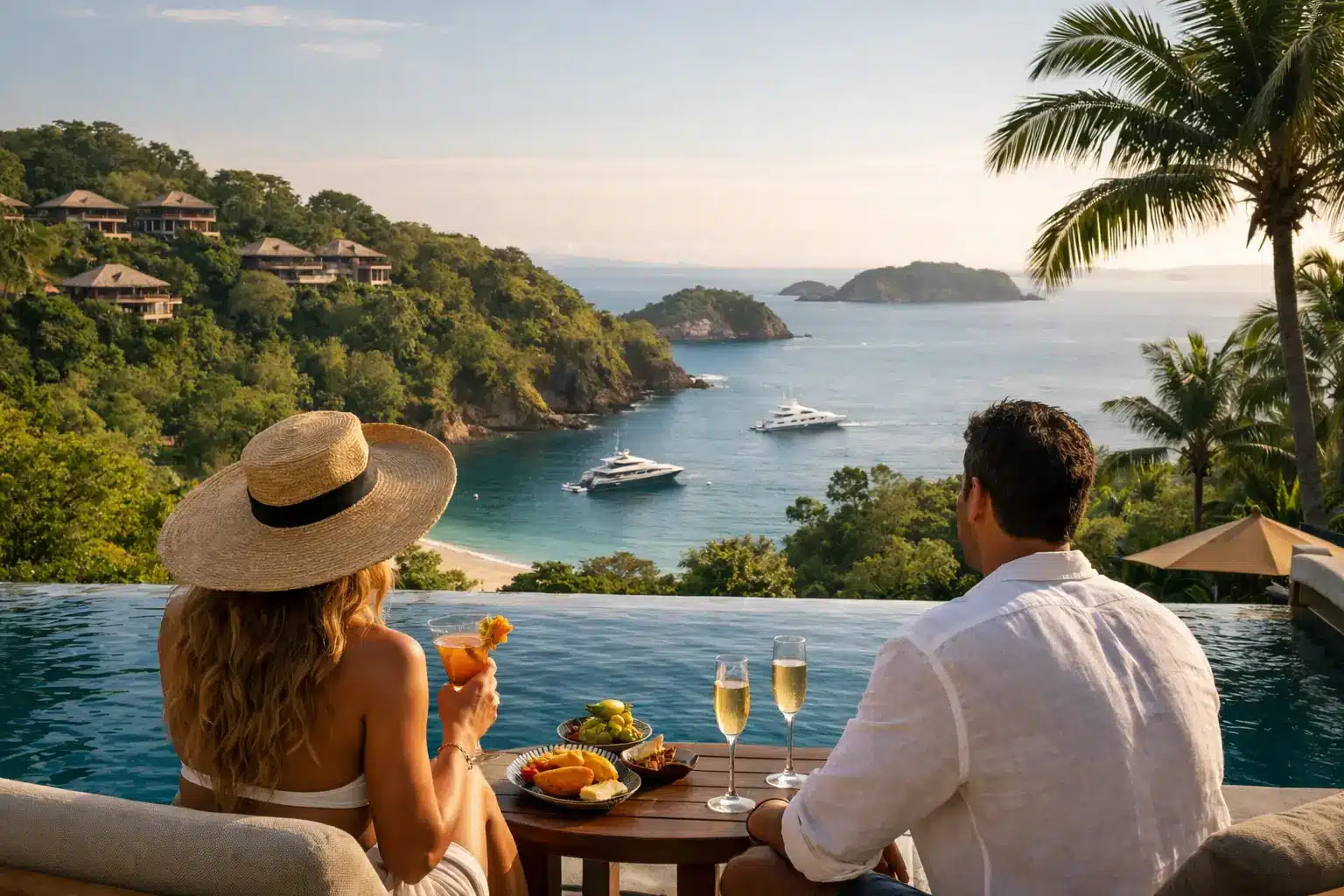
Privacy is the real luxury in Costa Rica, and that is the first clue to answering the question of where do the famous and ultra wealthy hang out in Costa Rica. They are not usually posing for cameras in obvious hotspots. More often, they are tucked behind gated beach estates, arriving by charter, slipping into oceanfront resorts with low profiles and very high standards, or spending long stretches in places where nature still leads the experience.
Costa Rica has never built its appeal around flashy excess. That is exactly why high-net-worth visitors, global entrepreneurs, celebrities, and legacy families keep coming. The country offers security, beauty, political stability, strong private services, and a lifestyle that feels refined without feeling staged. The wealthy do not come here only to be seen. They come to disappear comfortably.
Where do the famous and ultra wealthy hang out in Costa Rica?
The short answer is along a handful of coasts and hilltops where luxury infrastructure, privacy, and natural beauty meet. The longer answer is more interesting, because each enclave attracts a slightly different kind of elite traveler or property owner.
Some want full-service resort living with marinas, golf, and private aviation access. Others prefer bohemian exclusivity, where barefoot style still comes with seven-figure homes and discreet concierge teams. A few choose mountain retreats or urban compounds, but the strongest pattern is coastal and carefully curated.
Peninsula Papagayo is the polished front-runner
If one place most clearly answers where the famous and ultra wealthy hang out in Costa Rica, it is Peninsula Papagayo in Guanacaste. This is the country’s best-known luxury enclave, and for good reason. The peninsula offers a rare combination of high-end resort brands, private residences, beach clubs, golf, marina access, and managed security, all within reach of Liberia’s international airport.
This is where people with options choose convenience without sacrificing scenery. The landscapes are dramatic, the service level is international, and the atmosphere is exclusive without being chaotic. Owners and guests can move between secluded villas, wellness programs, fine dining, and yachting with very little friction.
It also appeals to buyers and travelers who think beyond a single vacation. Papagayo has long attracted investors, second-home owners, and those looking for a Costa Rica base that feels turnkey. The trade-off is that it is one of the most structured luxury environments in the country. For some, that is the point. For others, it can feel less spontaneous than Costa Rica’s more free-form beach communities.
Santa Teresa attracts the discreet cool crowd
Santa Teresa, on the Nicoya Peninsula, offers a different flavor of wealth. Here, luxury hides behind dusty roads, surf breaks, jungle landscaping, and a distinctly low-key aesthetic. It is a place where fashion insiders, tech founders, professional surfers, wellness entrepreneurs, and celebrities can blend into a scene that values understatement.
The appeal is not old-school formality. It is privacy mixed with cultural cachet. A person can spend the morning surfing, the afternoon in a high-design villa, and the evening at a stylish restaurant where nobody makes a spectacle of who has arrived.
Santa Teresa’s profile has risen sharply over the past decade, and with that success comes complexity. Demand has pushed real estate values upward, infrastructure pressure is real, and the line between laid-back village and luxury destination keeps shifting. For affluent visitors, that tension is often manageable. For the community, it raises bigger questions about development, water, roads, and preserving the character that made the place desirable in the first place.
Las Catalinas and Flamingo lean into curated coastal luxury
Farther up the Guanacaste coast, Las Catalinas and Playa Flamingo appeal to affluent travelers who want beauty with polish, but not always the scale of Papagayo.
Las Catalinas feels intentionally designed for lifestyle. The architecture, walkability, mountain biking, ocean views, and elegant residences create a world that is easy to settle into. It attracts buyers and guests who appreciate aesthetics, activity, and community. The mood is sophisticated rather than showy.
Flamingo, especially with its marina and high-end residential growth, has also strengthened its position on the luxury map. Boating culture matters here. So does accessibility. Wealthy visitors who want waterfront living, fishing, yachting, and upscale homes often keep this area on their short list.
These communities are not identical. Las Catalinas is more planned and design-forward. Flamingo has a stronger maritime identity and a broader surrounding coastal network. Both benefit from Guanacaste’s dry climate and international accessibility, which remain major draws for second-home owners and luxury tourists from North America and Europe.
Dominical, Uvita, and Ojochal draw wealth that wants space
Not every affluent traveler wants resort polish or social visibility. Costa Rica’s South Pacific has become a magnet for those who value dramatic nature, larger properties, and a more grounded connection to the landscape.
Dominical, Uvita, and Ojochal have attracted investors, retirees, entrepreneurs, and high-end homeowners looking for ocean-view estates framed by jungle, mountains, and marine life. The lifestyle here feels more expansive. Homes can be spectacular, but the surrounding experience still revolves around waterfalls, rainforest, whale watching, surf, and open space.
This region tends to attract people who are serious about wellness, privacy, and long stays. It is less about being part of a scene and more about building a life or retreating into one. The trade-off is practical: services are improving, but this is not the same plug-and-play luxury environment found in the northwest. For many buyers, that is a feature, not a flaw.
Tamarindo is visible wealth, but not always quiet wealth
Tamarindo deserves a nuanced answer. Yes, affluent visitors and property owners spend time there. Yes, luxury villas, strong real estate demand, and upscale dining are part of the picture. But Tamarindo is more public-facing than the enclaves that typically attract celebrities seeking discretion.
It works well for people who want energy, convenience, nightlife, surfing, and a social atmosphere. It also serves as a base for investors who like liquidity, rental potential, and year-round activity. In that sense, it certainly belongs in the broader conversation about where wealthy people spend time.
Still, if someone asks specifically where the ultra wealthy hang out in Costa Rica when they want to be left alone, Tamarindo is usually not the first answer. It is luxury-adjacent and prosperous, but more exposed.
Central Valley pockets offer quiet status
Some affluent residents and long-term investors choose the Central Valley, especially Escazu, Santa Ana, and select gated communities in the hills. This is less about tropical fantasy and more about practical high-end living. International schools, private healthcare, business access, embassies, fine dining, and established residential infrastructure make these areas attractive to executives, diplomats, and families splitting time between Costa Rica and abroad.
For full-time or part-time residents, this can be the smartest choice. The weather is milder, logistics are easier, and private compounds can be exceptionally comfortable. But it is not usually what people mean when they imagine celebrity Costa Rica. The glamour here is quieter and more residential.
What the wealthy are actually looking for
The geography matters, but the deeper answer is about priorities. The famous and ultra wealthy tend to choose Costa Rican destinations that offer four things: privacy, easy access, service quality, and a strong natural setting.
Privacy comes first. In Costa Rica, that often means gated estates, hidden boutique properties, and communities where discretion is built into the culture. Accessibility matters more than many people realize. Even the most secluded home loses appeal if it is difficult to reach consistently. That is why Guanacaste remains so strong, and why heli-access, private charters, and proximity to airports matter at the top end.
Service quality is another dividing line. Wealthy travelers may love rustic beauty, but they still expect reliable staffing, legal clarity, secure ownership structures, wellness offerings, and hospitality that feels effortless. Then there is the natural setting, the part Costa Rica delivers better than almost anywhere. Ocean views, tropical dry forest, rainforest, wildlife, and outdoor living are not extras here. They are the foundation of the luxury experience.
The Costa Rica status symbol is not what many expect
In some destinations, wealth presents itself. In Costa Rica, the strongest status symbol is often restraint. A home hidden in the trees. A beach club with excellent service and very little noise. A dinner where the ingredients are local, the setting is world-class, and nobody cares what logo is on your shirt.
That does not mean flashy wealth is absent. It exists, especially in marquee real estate and premium hospitality. But Costa Rica’s high-end appeal is more often rooted in access to nature, well-being, and freedom from spectacle. That is part of why the country continues to attract people who could vacation almost anywhere.
For readers of Howler who are curious about lifestyle, relocation, or investment, this matters. The map of luxury in Costa Rica is not just a list of expensive places. It is a guide to the country’s different versions of exclusivity. Papagayo offers refined ease. Santa Teresa offers stylish discretion. Flamingo and Las Catalinas offer curated coastal comfort. The South Pacific offers drama and space. And the right choice depends less on net worth than on the kind of life someone wants when they get here.
If you want to understand where the famous and ultra wealthy really spend their time in Costa Rica, follow the signals that matter most here: privacy, beauty, access, and a setting that still feels deeply connected to the land.