
Palm Oil is one of those subjects that can quietly sit in the background of daily life until you start looking closely at the landscape. Then it appears everywhere – in supermarket products, export figures, rural jobs, environmental debates, and long stretches of tropical farmland that tell a bigger story about land use in Costa Rica.
For readers who know the country through beaches, rainforests, and wildlife corridors, oil palm can feel like a contradiction. Costa Rica is celebrated worldwide for conservation, yet it is also an agricultural nation with real economic needs, regional industries, and communities that depend on commercial crops. Palm oil sits right at that intersection.
Where Palm Oil fits in Costa Rica
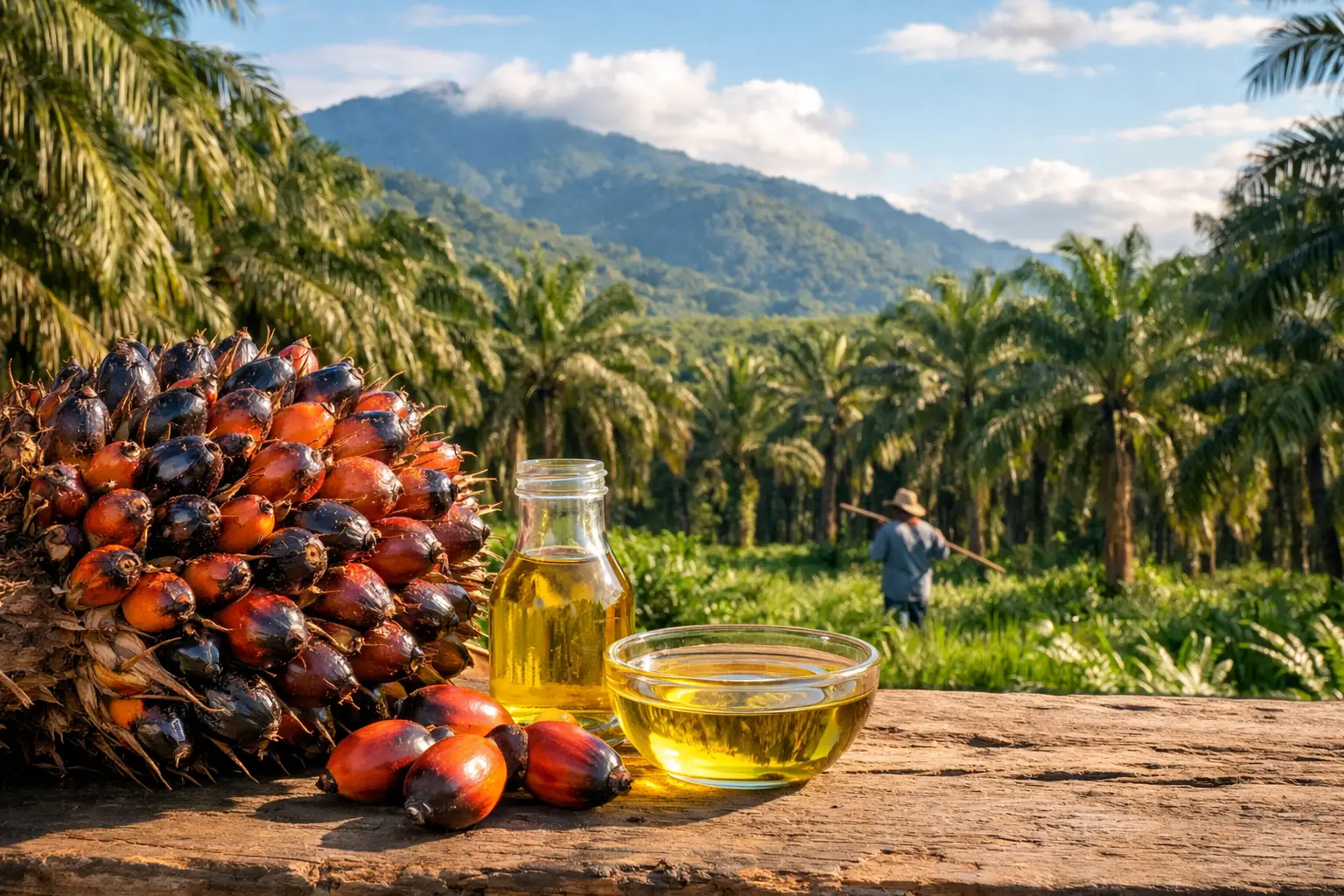
In Costa Rica, African oil palm is cultivated mainly in the country’s warmer, wetter lowland regions, especially on the Pacific side. You will see the crop most often in areas where climate and soil support high yields, and where agricultural infrastructure already exists. These plantations are not spread evenly across the country, which matters because local impact is often more meaningful than national averages.
Palm oil has long been part of Costa Rica’s agricultural economy. It generates employment, supports processing facilities, and contributes to exports. In some rural communities, it is not an abstract policy issue. It is part of how families pay bills, how transport businesses operate, and how local economies remain active outside the tourism spotlight.
That practical role is worth remembering. It is easy to discuss crops in purely moral terms from a distance, but on the ground, agricultural decisions are tied to livelihoods.
Why Palm Oil is Controversial
The controversy around palm oil is not hard to understand. Around the world, the industry has become associated with deforestation, habitat loss, monoculture farming, water pollution, and pressure on biodiversity. Those concerns shape how many travelers, investors, and environmentally minded readers react to the crop before they even see a plantation.
In Costa Rica, the conversation is more nuanced. The country has stronger environmental awareness than many agricultural economies, and there is greater public scrutiny around land management. That does not mean palm oil is impact-free. It means the real question is not simply whether the crop exists, but how it is grown, where it expands, and what systems are in place to reduce harm.
Monoculture always carries trade-offs. A large single-crop landscape does not function like a healthy mixed ecosystem. It can reduce habitat complexity, limit species movement, and place pressure on soil and waterways if poorly managed. Even when a plantation is legal and productive, it still changes the ecological character of a place.
The economic case, and its limits
Supporters of palm oil point to its efficiency. Oil palm produces high yields compared with other vegetable oil crops, which means more oil can be produced on less land than some alternatives. That argument matters in a world that is not going to stop consuming edible oils, cosmetics, cleaning products, and processed foods anytime soon.
For Costa Rica, that efficiency can translate into a competitive agricultural product and stable rural employment. But efficiency alone does not settle the issue. A productive crop can still bring environmental costs if expansion happens in the wrong places or if labor, water, and waste management are treated as afterthoughts.
This is where the conversation gets more honest. Palm oil is neither a villain by default nor a free pass for development. It is an industry that demands oversight.
What travelers and residents actually notice
Most visitors will not arrive in Costa Rica expecting to think about edible oils, but they may notice palm plantations while driving through certain regions. The visual experience can be striking. Row after row of evenly spaced palms creates an ordered, industrial landscape that feels very different from the layered texture of secondary forest or jungle.
That contrast often raises broader questions about what kind of development people want to support in Costa Rica. Tourism depends heavily on the country’s green reputation, scenic value, and biodiversity. Agriculture depends on land, labor, and market demand. Those two realities do not always compete, but they are not automatically aligned either.
For expats, property buyers, and long-stay visitors, understanding crops like oil palm offers a more complete view of the country. It reveals that Costa Rica is not just a postcard. It is a working nation balancing conservation ideals with economic realities.
A more useful way to think about Palm Oil
The most useful approach is not blanket approval or blanket outrage. It is asking better questions. Was plantation land converted from forest, or from older agricultural use? Are waterways protected? Are workers treated fairly? Is there credible environmental management, or just good marketing?
Those questions matter far more than a simplistic label. They also reflect the kind of informed curiosity that serves anyone engaging seriously with Costa Rica, whether as a traveler, investor, or future resident.
Palm oil is part of the country’s modern story, even if it is not the part that makes the cover photo. To understand Costa Rica fully, you have to look at both the rainforest canopy and the cultivated fields – and pay attention to what each one asks of the land.
FAQ
What is palm oil used for in Costa Rica?
Palm oil in Costa Rica is used mainly as part of the agricultural export economy. Globally, it is found in foods, cosmetics, soaps and many processed products.
Where are palm oil plantations found in Costa Rica?
Palm oil plantations are found mainly in warmer, wetter lowland regions, especially on the Pacific side. These areas offer the climate and infrastructure the crop needs.
Why do people criticise palm oil in Costa Rica?
People criticise palm oil because monoculture plantations can reduce biodiversity and alter landscapes. Concerns often include water quality, habitat loss and the environmental cost of single-crop farming.
Is palm oil important to Costa Rica’s economy?
Yes, palm oil is important in some rural areas because it supports jobs, processing and exports. Its economic value is especially visible in communities tied to agriculture.
Is all palm oil production in Costa Rica environmentally harmful?
Not all palm oil production is the same, but all monoculture farming carries trade-offs. The real difference comes down to land history, environmental controls and management practices.
Why should travellers care about palm oil in Costa Rica?
Travellers should care because palm oil reveals a more complete picture of Costa Rica. It shows the country not only as a conservation leader, but also as a place balancing real economic needs with ecological responsibility.
Can palm oil plantations replace rainforest in Costa Rica?
They can change natural landscapes if expansion is poorly controlled. That is why land-use policy and environmental oversight matter so much.
What is the smarter way to discuss palm oil in Costa Rica?
The smarter way is to ask better questions about land use, labour, water and environmental management. Simple labels rarely explain the full reality.



Former Navy Journalist, published author and international speaker. Howler executive since 2019.