

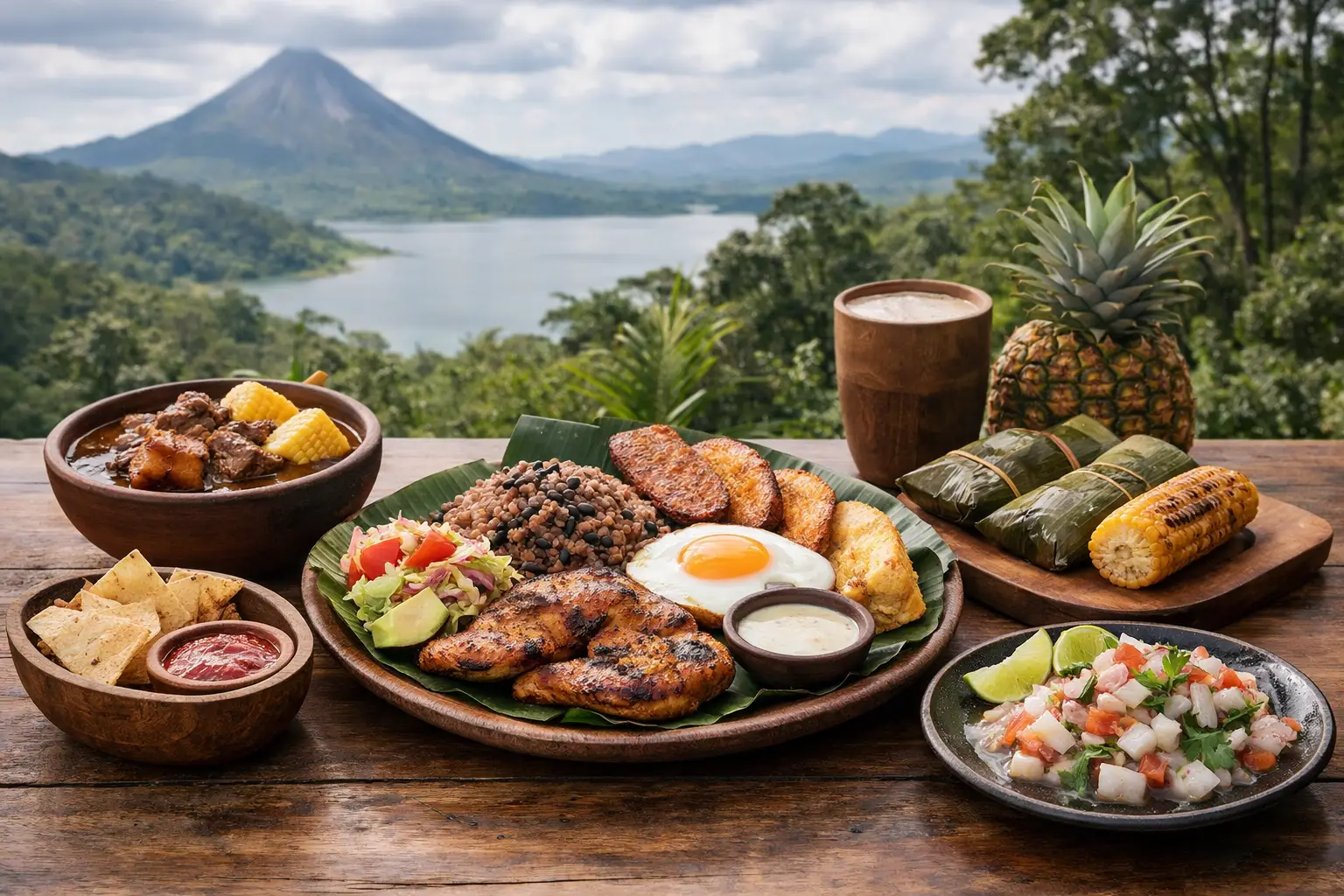
You can learn a lot about Costa Rica before your flight lands, but the country starts making real sense when breakfast arrives. A plate of gallo pinto, eggs, sweet plantains, fresh cheese, and strong coffee tells you more than a brochure ever will. This traditional Costa Rican food guide is for travelers, future residents, and curious eaters who want more than a restaurant checklist – it is a way to understand the country through its daily table.
Costa Rican food is often described as simple, and that is true only if simple means grounded, nourishing, and deeply tied to place. The cuisine is not built around heavy sauces or elaborate presentation. It leans on rice, beans, corn, plantains, root vegetables, fresh cheese, herbs, seafood, and fruit, then lets freshness do most of the work. The result is food that feels honest and balanced, with regional shifts that reflect the country’s coasts, mountains, farms, and cultural influences.
What defines traditional Costa Rican food?
At its heart, traditional Costa Rican food is everyday food. It is shaped by Spanish colonial influence, Indigenous ingredients, Afro-Caribbean traditions on the Atlantic side, and the rhythms of agricultural life. Meals are usually satisfying rather than flashy, and many of the country’s best-known dishes were never meant to impress tourists. They were meant to feed families well.
That matters if you are visiting with certain expectations. If you are looking for fiery heat in every dish, you may be surprised. Costa Rican cooking is generally mild, though hot sauce is often available at the table. If you are expecting endless street food culture in the style of Mexico or parts of Asia, the experience is different here. Costa Rica’s culinary identity is less about spectacle and more about consistency, comfort, and ingredients that taste like where they came from.
A traditional Costa Rican food guide to the dishes that matter
Start with gallo pinto, because everyone does. This rice-and-beans dish is the national staple, especially at breakfast, and every household has its own version. On the Pacific side and in the Central Valley, it often comes seasoned with onions, peppers, cilantro, and a splash of salsa Lizano, the beloved tangy-sweet condiment found on tables across the country. In the Caribbean, the seasoning profile can shift, sometimes reflecting the influence of coconut and Afro-Caribbean cooking traditions.
Casado is the lunch plate that gives you the clearest picture of everyday eating. The name suggests a “married” combination, and that is exactly what it is – rice, beans, salad, fried sweet plantains, and a protein such as chicken, fish, beef, pork, or egg, all sharing one plate. Some versions include pasta, picadillo, avocado, or a small tortilla. Casado is common in sodas, the local family-run eateries that remain one of the best ways to eat well without ceremony.
Then there is olla de carne, a beef and vegetable stew that feels like a mountain afternoon in edible form. It is slow-cooked, hearty, and built around yuca, potatoes, carrots, corn, plantains, chayote, and other local vegetables. This is not delicate food, and it is not supposed to be. It is comfort food with roots in rural kitchens and Sunday family meals.
Picadillos deserve more attention than they usually get. These finely chopped mixtures of vegetables and sometimes meat are tucked into the daily life of Costa Rican cooking. Picadillo de papa uses potato and ground beef. Picadillo de chayote, arracache, or green papaya can show up as side dishes with tortillas and rice. They are humble, yes, but also revealing. They show how cooks stretch ingredients, honor seasonality, and make something flavorful from what the land provides.
Corn plays a quiet but foundational role. Chorreadas, sweet-salty fresh corn pancakes, are a favorite in many regions, often served with natilla, a rich cultured cream. Tamales are especially important around the holidays, wrapped in banana leaves and filled with masa, rice, vegetables, and meat. Like tamales across Latin America, they carry family tradition as much as flavor. Recipes are personal, and debates about the right filling or texture can get serious fast.
Coastal flavors and regional differences
A good traditional Costa Rican food guide has to leave room for geography, because the country’s food changes with the landscape.
On the Caribbean coast, Afro-Caribbean influence is essential to the story. Rice and beans cooked in coconut milk is distinct from the gallo pinto many visitors first encounter elsewhere. Rondón, a rich seafood and root-vegetable soup, is one of the region’s signature dishes, layered with coconut, spice, and history. You will also find pati, a flaky pastry filled with spiced meat, reflecting Jamaican influence and the cultural legacy of migration and trade.
On the Pacific coast, seafood naturally comes forward. Whole fried fish, ceviche, grilled octopus, and shrimp dishes are common, though not every seafood plate marketed to travelers should be mistaken for traditional cuisine. The closer the preparation stays to local fishing culture and straightforward seasoning, the more likely you are tasting something rooted in place rather than designed for a generic beach menu.
In the Central Valley, where many visitors spend time in San José and surrounding towns, home-style classics dominate. This is where casados, soups, stews, pastries, coffee, and bakery culture can really shine. Mountain communities also bring cooler-weather appetites, with dishes that feel especially suited to afternoon rain and family tables.
Where visitors often get it wrong
One common mistake is assuming Costa Rican food is bland because it is mild. Those are not the same thing. The cuisine tends to favor herbs, aromatics, and ingredient quality over aggressive spice. Cilantro, onion, sweet pepper, garlic, achiote, and the acidity of pickled vegetables all do important work.
Another mistake is eating only in international restaurants and deciding the local food scene is limited. In many tourist-heavy areas, the most visible dining options are often built for familiarity first. If you want a real sense of traditional cooking, look for a busy soda with a handwritten menu, workers on lunch break, and dishes that rotate with the day.
The trade-off, of course, is that traditional food is not always plated for Instagram, and English may not be widely spoken in smaller local spots. For many travelers, that is part of the reward. You are not just ordering a meal. You are stepping into a daily rhythm.
Drinks, sides, and small details that complete the table
Fresh fruit is a major part of the experience, and it deserves the same respect as the main dishes. Costa Rica’s tropical abundance shows up in juices and smoothies made from mango, pineapple, papaya, watermelon, guanábana, cas, mora, and tamarind. They are refreshing, but they also reflect how closely the cuisine is tied to climate and agricultural diversity.
Coffee is another essential piece of the food story. In a country known for high-quality beans, a cup of Costa Rican coffee with breakfast or an afternoon pastry is less a luxury than a daily ritual. It is one of the simplest, clearest pleasures available to a visitor.
On the side, watch for patacones, the savory fried green plantains often served with beans, guacamole, or ceviche. Natilla appears in many meals. So does salsa Lizano, which occupies a category of its own in Costa Rican kitchens. Sweet, lightly spiced, and hard to compare exactly to anything else, it is one of those flavors that becomes more familiar with every meal.
How to eat like someone who wants to understand the country
If you are in Costa Rica for a week, do not chase novelty at every meal. Eat gallo pinto more than once. Try casado in different towns. Order the soup your server recommends. Accept that one of the best lunches you have may come on a plastic tablecloth with no ocean view.
If you are considering a longer stay or relocation, pay attention to how food fits into everyday life. Traditional Costa Rican meals are often generous without being excessive, affordable when eaten locally, and tied to a slower dining rhythm than many US readers are used to. Food here can be a small but meaningful adjustment toward the broader pace of life.
And if you care about culture, ask questions. Which dishes are typical here? Is this recipe from the coast, the mountains, or a holiday tradition? Costa Rican cuisine rewards curiosity. It is not trying to overwhelm you. It is inviting you to notice.
The best meals in Costa Rica often feel almost modest at first glance, then stay with you long after the plate is cleared. That is part of their charm. Eat with attention, and the country will reveal itself one familiar, satisfying bite at a time.
FAQ
What is the national dish of Costa Rica?
Gallo pinto is widely considered the national dish of Costa Rica, especially as a breakfast staple.
What is a soda in Costa Rica?
A soda is a small local eatery, usually family-run, serving affordable traditional meals.
Is Costa Rican food spicy?
Costa Rican food is usually mild, though hot sauce is often available for those who want more heat.
What should I order for lunch in Costa Rica?
A casado is one of the best lunch choices if you want a classic everyday Costa Rican meal.
What foods show Caribbean influence in Costa Rica?
Rice and beans cooked with coconut milk, rondón and pati strongly reflect Caribbean influence.
Is Costa Rican food good for travellers who want simple meals?
Yes, it is often ideal for travellers because it is balanced, filling, fresh and easy to enjoy.