Don’t Become a Statistic… This is a Serious Warning ⚠
A beautiful beach can turn dangerous in seconds. Rip Current Caution for Costa Rica Beaches is not a dramatic warning meant to scare visitors away – it is practical knowledge that can save lives in a country where the coastline is as powerful as it is stunning.
Costa Rica’s Pacific and Caribbean shores draw surfers, swimmers, families, and first-time beachgoers from around the world. What many travelers do not realize is that some of the same forces that create world-class surf and dramatic coastal scenery also create strong, fast-moving channels of water that can pull people away from shore. Even confident swimmers can get into trouble, especially when they mistake a rip current for ordinary surf.
Why are rip currents a serious issue in Costa Rica
Costa Rica is blessed with hundreds of beaches, but they do not all behave the same way. Open-ocean beaches with heavy swell, changing tides, river mouths, steep drop-offs, and shifting sandbars can all increase rip current activity. Conditions also change quickly. A beach that looks calm in the morning may become more hazardous later in the day as tide, wind, and swell shift.
This matters because many visitors are unfamiliar with local conditions. They may come from lakes, calmer coastlines, or resort beaches where lifeguards are always present. In Costa Rica, some of the most beautiful beaches are also the least monitored. Natural beauty here often comes with wildness, and wildness asks for respect.
Rip Current Caution for Costa Rica Beaches: what to look for
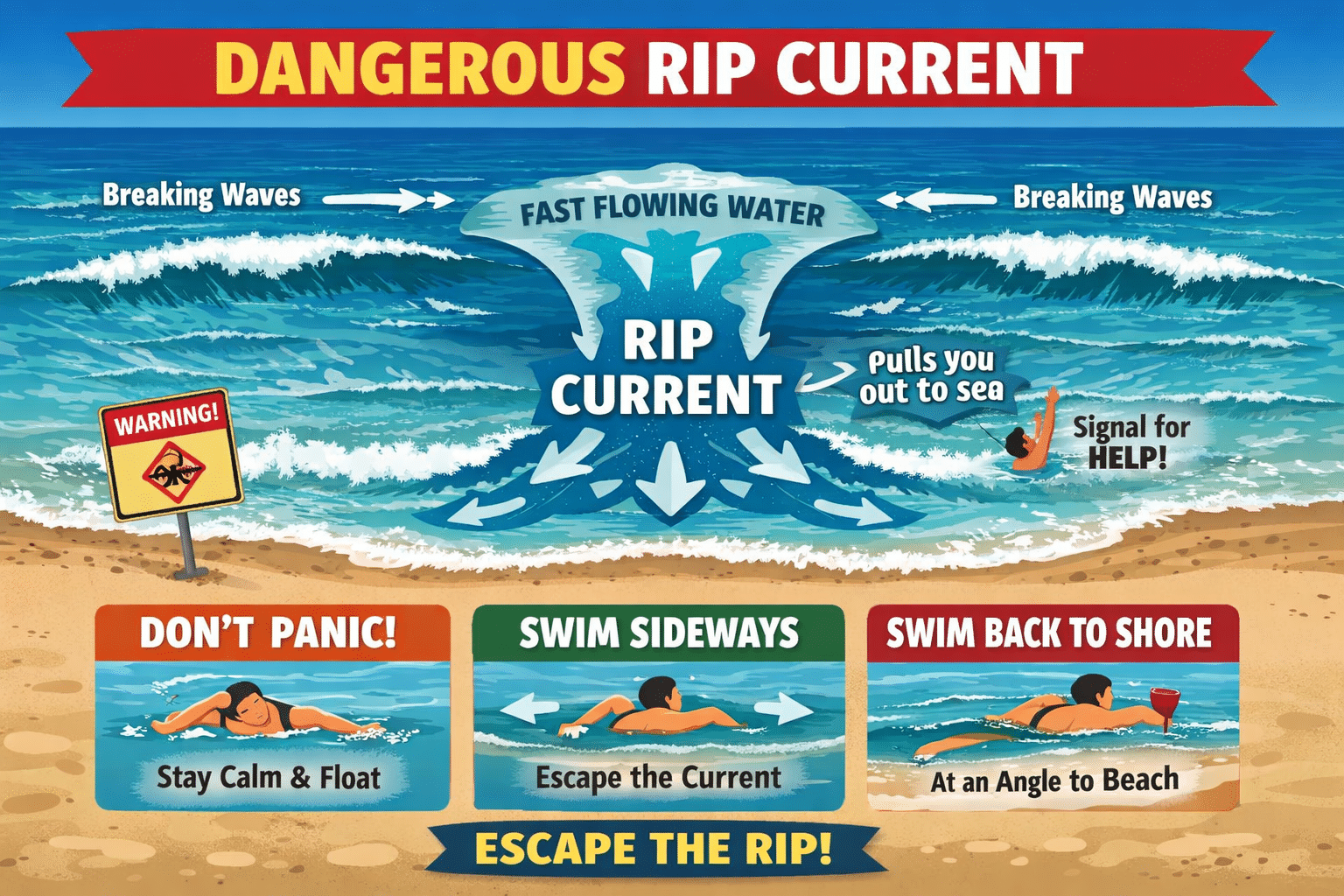
Rip currents are not giant waves pulling you underwater. They are narrow channels of water moving quickly away from the shore. That distinction matters because it changes how you survive them.
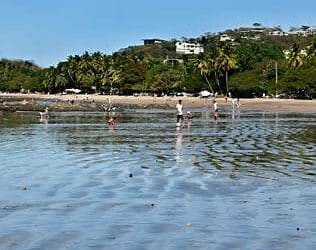
From the beach, a rip current may appear as a darker or deeper-looking gap between breaking waves. You might notice an area where the water looks unusually choppy, foamy, or discolored, especially if sand is being stirred up and carried seaward. Sometimes the warning sign is actually a lack of breaking waves in one section, which can fool people into thinking that area is safer for swimming.
If locals avoid a certain stretch of beach, pay attention. If a beach has warning signs, take them seriously. If conditions seem rough and you are unsure, that uncertainty is your answer.
Beaches are not equal, and experience does not always transfer
Travelers often assume that being a good swimmer is enough. It is not. Ocean swimming requires a different kind of judgment, and Costa Rica’s beaches can challenge even seasoned visitors.
Long sandy beaches exposed to strong surf often carry more risk than sheltered coves. River mouths can create unpredictable current patterns. Popular surf beaches may be safe for skilled surfers but not for casual swimmers. Children, tired adults, and people using inflatables are especially vulnerable, but athletic adults are frequently the ones who overestimate what they can handle.
There is also a common vacation mindset at work. People are relaxed, distracted, and eager to jump in. They may have had a drink, spent hours in the sun, or entered the water without first watching the surf. That is often where bad decisions begin.
What to do if you get caught in a rip current
The first rule is the hardest one in practice: do not panic. A rip current can carry you away from shore, but it does not usually pull you under. Panic leads people to fight the current head-on, which can exhaust even strong swimmers within minutes.
Instead, float or tread water to conserve energy. If you can, swim parallel to the shoreline until you are out of the narrow current, then angle back toward shore. If you cannot swim out right away, keep floating and signal for help by raising one arm.
If you are with others, do not rush in blindly to rescue someone unless you are trained and equipped to do so. Many drownings happen when one person tries to save another in dangerous surf. The better response is to alert lifeguards if present, throw something that floats, and keep visual contact with the person in the water.
The smartest beach habits are simple
The safest beachgoers are rarely the boldest. They are the ones who pause, observe, and ask questions.
Swim near lifeguards whenever possible. Ask locals or hotel staff whether a beach is safe for swimming that day, not just in general. Watch the water for several minutes before entering. Avoid swimming alone. Keep children within arm’s reach, even in shallow water. And if the ocean looks stronger than you expected, enjoy the beach from the sand.
That last point is worth emphasizing. In Costa Rica, a beach day does not have to mean a swim. Some shores are better for walking, tide pooling, sunset watching, or surfing with a qualified instructor. Knowing the difference is part of being a responsible traveler.
Respecting the ocean is part of loving Costa Rica
Part of Costa Rica’s appeal is that so much of it still feels alive and untamed. The ocean is not staged for visitors. It is dynamic, seasonal, and deeply shaped by weather and geography. That is exactly what makes the country’s coastline unforgettable.
A little caution does not diminish the experience. It deepens it. When travelers understand the water, they move through this place more wisely and with greater appreciation for the forces that shape it. On any beach in Costa Rica, confidence should start with awareness, because the best souvenir from the sea is getting back to shore safely.
Make sure Safety Is First. Don’t Let Something You Can Avoid Ruin Your Experience.
FAQ: Rip Currents in Costa Rica
Are rip currents common in Costa Rica?
Yes, they are common on both Pacific and Caribbean coasts, especially on open beaches.
Can a strong swimmer escape a rip current easily?
Not always. Even strong swimmers can become exhausted if they fight the current incorrectly.
Do rip currents pull you underwater?
No, they pull you away from shore, not down.
Is it safer to swim at beaches with lifeguards?
Yes, significantly safer. Lifeguards are trained to spot and respond to dangerous conditions.
What time of day are rip currents strongest?
They can occur at any time, but changing tides and afternoon swells often increase risk.
Should I avoid all swimming in Costa Rica?
No, choose beaches wisely and follow safety guidance.




Howler Staff are John, Terry and whomever else we can get to write great articles.