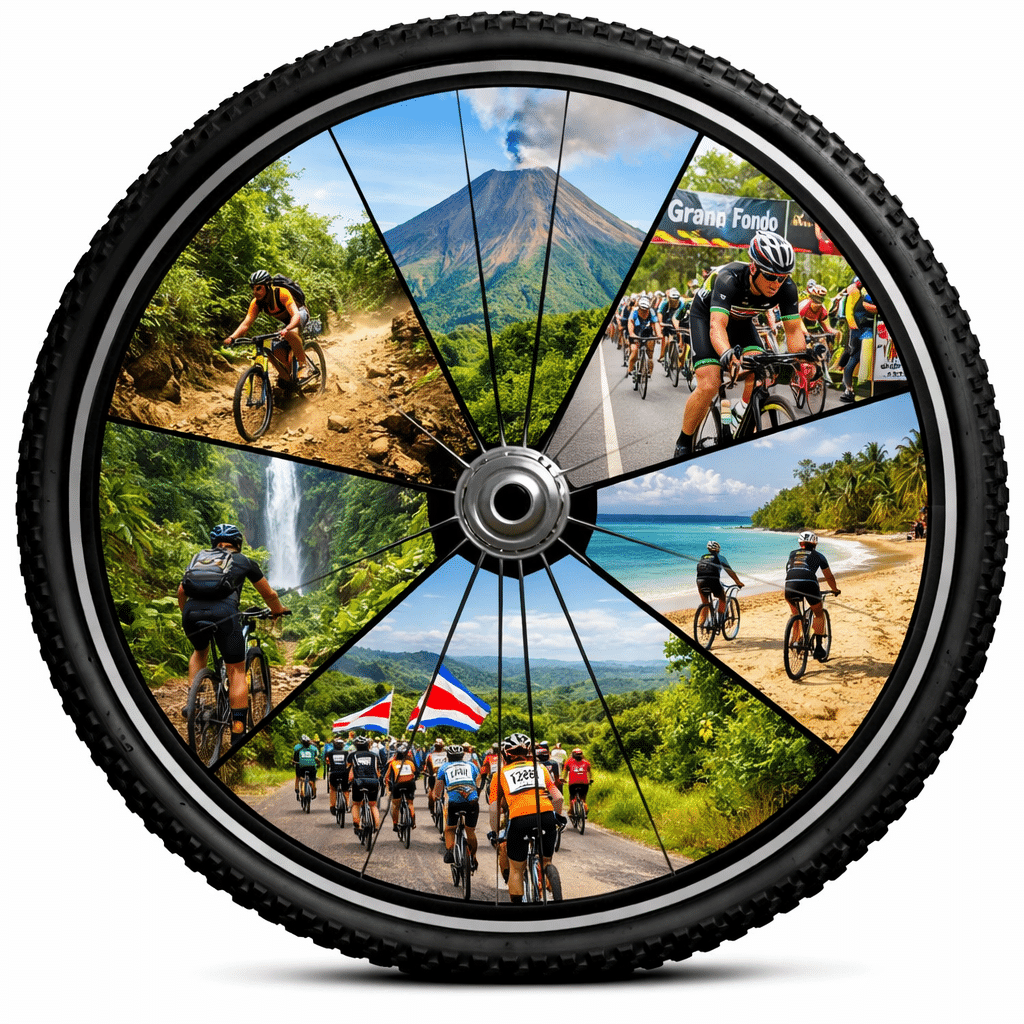
A country famous for surf breaks, volcanoes, and rainforest is also becoming one of the most compelling places in the Americas to ride on two wheels. Bicycling Costa Rica, The Rise of the Sport, Tours, Events and more is not just a catchy phrase – it reflects a real shift taking place across the country, from mountain trails and gravel backroads to charity rides, gran fondos, and destination cycling trips that mix athletic challenge with pure tropical scenery.
For visitors, the appeal is obvious. Costa Rica packs an astonishing range of terrain into a relatively small map. A rider can climb through cool mountain air in the Central Valley, descend toward the Pacific under blazing sun, or pedal past coffee farms, cloud forest, cattle country, and beach towns in the same trip. For residents and local athletes, cycling has grown into something bigger than recreation. It is now part sport, part lifestyle, and part lens through which people experience the country.
Why is bicycling growing so quickly in Costa Rica
The rise of cycling here is tied to several forces moving at once. First, Costa Rica already attracts people who value nature, wellness, and outdoor adventure. Cycling fits that identity perfectly. It offers a more intimate way to see the landscape than a car ever can, while still delivering the fitness challenge many travelers and expats are looking for.
Second, the country’s geography naturally favors variety. Road cyclists can find long climbs and quiet rural routes. Mountain bikers have access to volcanic terrain, forest tracks, technical descents, and farm roads that turn every ride into an exploration. Gravel riders, a category that has exploded globally, find especially good conditions in Costa Rica because so many scenic routes connect through unpaved roads.
There is also a growing event culture around the sport. Organized races, local club rides, endurance challenges, and destination tours have helped build community and visibility. That matters because cycling grows fastest when newcomers can see a clear entry point. A strong event calendar tells visitors and residents alike that this is not a niche pastime. It is an active scene.
One more factor deserves attention: Costa Rica’s image abroad. Many travelers now want more than passive sightseeing. They want movement, immersion, and a sense of earned experience. Cycling delivers all three. It turns a vacation into a story.
What makes Costa Rica such a memorable cycling destination
Costa Rica is not an easy place to ride, and that is exactly why many cyclists love it. The terrain demands respect. Climbs can be long, gradients can be punishing, and weather can change fast. Yet that challenge is balanced by rewards few destinations can match.
The scenery is the first one. Riders move through landscapes that feel cinematic – mist over mountain roads at sunrise, scarlet macaws crossing the coast, sugarcane fields opening to distant volcano views, and roadside sodas serving fresh fruit after a hard effort. Even a training ride can feel like a travel experience.
The second is cultural contact. On a bike, Costa Rica reveals its rhythm at human speed. You notice schoolchildren waving from village roads, farmers moving cattle, roadside stands with coconut water, and small towns that rarely appear on standard itineraries. This is where the country feels most personal.
The third is the climate, with one clear caveat. You can ride year-round, but not every region rides the same way in every season. The dry season often offers more predictable road conditions, while the green season can bring lush scenery, fewer crowds, and muddy, dramatic off-road riding. The trade-off is obvious: beauty and solitude often come with rain, slick surfaces, and route changes.
Bicycling Costa Rica tours for every kind of rider
Costa Rica’s cycling tours have become more sophisticated in recent years, which is good news for travelers who want the thrill without the guesswork. Some tours focus on serious mileage and elevation, designed for experienced road riders or mountain bikers who want a training-style trip. Others are more lifestyle-oriented, blending moderate riding with wildlife viewing, boutique lodging, and time at the beach.
The best choice depends on your expectations. If you are a performance cyclist, look for tours that are clear about elevation gain, road surface, support vehicles, and daily distance. Costa Rica’s compact geography can fool first-time visitors into thinking routes will be easy. They often are not. Heat, humidity, and climbing change the equation.
If your goal is sightseeing with activity, guided tours can open doors that are hard to access on your own. Local guides know which roads are scenic, which are safest, and which hours of the day are best for riding particular regions. That local knowledge matters here more than in flatter, more predictable destinations.
Self-guided cycling is possible as well, especially for confident riders used to route planning and changing conditions. But it works best when paired with realistic expectations. Road quality varies. Signage can be inconsistent in rural areas. Afternoon rain can completely alter a route. Freedom is part of the appeal, but so is preparation.
Events putting Costa Rica on the cycling map
A growing sport needs moments that gather people, and Costa Rica now has them. Competitive races, gran fondo-style rides, mountain bike events, and charity rides have all helped elevate the profile of cycling across the country. These events do more than test endurance. They bring together local athletes, visiting riders, sponsors, hospitality businesses, and communities along the route.
For international riders, events offer a strong reason to build a trip around cycling rather than simply adding a bike day to a broader vacation. There is a different energy when roads fill with riders before sunrise, support crews line up, and small towns become cheering points. It creates a sense of occasion that transforms a ride into a memory.
For Costa Rica, that momentum has wider value. Cycling events spread tourism beyond the usual beach-and-resort circuit. Riders stay in mountain towns, eat in local restaurants, hire guides, use transport services, and often return later with family or friends. In that sense, the rise of cycling is also a story about regional economic opportunity.
There is, however, an important balance to maintain. Event growth should support local communities without overwhelming them, and route planning should respect environmental realities. Costa Rica’s strongest tourism stories are usually the ones that combine adventure with stewardship, not volume for its own sake.
Where riders are finding the best routes
The Central Valley remains a natural base for many cyclists because it offers access, infrastructure, and elevation. Serious road riders appreciate the climbs and cooler early mornings. Mountain bikers can reach varied terrain without needing to travel far.
Elsewhere, the hills around coffee country continue to attract riders who want scenic roads with a strong rural character. Coastal regions appeal to cyclists who prefer combining riding with beach stays, although the heat can be intense and traffic patterns require extra attention. Guanacaste, for example, brings dry-season appeal and broad landscapes, while higher-elevation areas offer relief from the sun and more sustained climbing.
For off-road and gravel enthusiasts, some of the best experiences are found on the roads between places rather than the places themselves. Farm routes, forest access roads, and lesser-known connections often deliver the most satisfying rides. They also demand flexibility. A route that looks straightforward on a map can turn rough, steep, or muddy very quickly.
What visiting cyclists should know before they ride
Costa Rica rewards preparation. Start with timing. Early departures are almost always the smart move because temperatures are lower, traffic is lighter, and afternoon weather is less likely to interrupt the ride. Hydration is not optional here. Even fit riders can underestimate how quickly heat and humidity take a toll.
Bike choice matters too. A pure road setup works in some regions, but many visitors are happier on an endurance road bike, gravel bike, or hardtail mountain bike, depending on the itinerary. Wider tires offer a margin of comfort and security that becomes valuable very fast.
Safety deserves a practical view rather than a romantic one. Costa Rica has beautiful routes, but not every road is ideal for cycling. Shoulders vary, traffic can be unpredictable, and visibility changes with rain and mountain fog. The smartest riders stay alert, wear high-visibility gear, and treat route selection as seriously as fitness.
Finally, fitness at home does not always translate directly here. Sea-level strength can feel different on steep tropical climbs. Build in room for adaptation. The point is not simply to conquer Costa Rica. It is to experience it well.
More than a sport
What makes cycling in Costa Rica especially compelling is that it reflects so much of the country itself. It is beautiful, demanding, social, and deeply connected to the land. It can be elite and competitive, but it can also be joyful, local, and wonderfully unpolished.
That is why the sport continues to gain ground. It speaks to travelers who want active immersion, to residents building healthier routines, and to communities seeing new value in the roads and landscapes they know so well. For readers who come to Costa Rica looking for a fuller experience, cycling may be one of the best ways to find it – not as a shortcut through the country, but as a richer way to move through it.