
Most souvenirs are forgettable within a week.
They end up in a drawer, on a shelf, or at the back of a suitcase with a faint smell of sunscreen and airport duty-free perfume. But the best things you bring home from Costa Rica are different. They do not just remind you where you went. They remind you what the country feels like.
Costa Rica is a place where culture still lives in the handmade. It lives in painted wood, carved masks, clay shaped by memory, and simple tools used every day without ceremony yet full of meaning. The objects that best represent this country are not always the flashiest ones. They are the ones rooted in work, ritual, ancestry, and place.
If you want to take home something that truly reflects Costa Rican culture, skip the generic souvenir racks and look for pieces with story, heritage, and soul. These five stand above the rest.
The painted oxcart: a rolling symbol of Costa Rica’s past
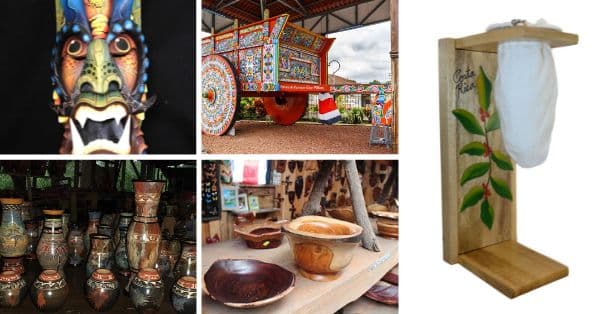
Few objects are more deeply tied to Costa Rica’s identity than the painted oxcart, known as the carreta. Today it is seen as cheerful, decorative, and unmistakably Costa Rican. But its origins are grounded in labour, agriculture, and the rise of the coffee trade.
In the 19th century, oxcarts were vital to the country’s economy. They hauled coffee from inland farms in the Central Valley to ports, moving the crop that helped shape Costa Rica’s early prosperity. Before roads, trucks, and modern freight, these carts were lifelines.
What transformed them from practical vehicles into cultural icons was the artistry. In towns such as Sarchí, craftsmen began painting the carts with dazzling geometric patterns, floral details, and radiant colours. Wheels became works of art. Panels became statements of pride. Each cart felt personal, regional, and alive.
That is why even a miniature version carries weight. It is not simply a charming object. It is a tribute to the country’s agricultural roots, artisan talent, and long tradition of turning the functional into the beautiful. A painted oxcart feels joyful at first glance, but behind the colour is a story about the making of Costa Rica itself.
Boruca masks: art shaped by memory and resistance
Some cultural objects are decorative. Boruca masks are something more. They are dramatic, symbolic, and filled with history.
These masks come from the Boruca Indigenous people of southern Costa Rica and are closely linked to the Danza de los Diablitos, a traditional festival that commemorates resistance to Spanish colonisation. The masks often feature devils, jaguars, birds, or fierce hybrid creatures with intense expressions and intricate details. They do not whisper. They speak boldly.
That boldness is the point. A Boruca mask represents survival, identity, and the power of tradition passed from one generation to the next. Every hand-carved line and painted surface carries cultural meaning. The artistry is striking, but what truly makes these masks powerful is that they are still connected to a living tradition rather than a past frozen in glass.
To buy a Boruca mask from an artisan or community source is to bring home a piece of Costa Rica that is deeply rooted in indigenous heritage. It is not simply something beautiful to hang on a wall. It is an object that carries history, pride, and continuity.
The chorreador: coffee, ritual, and everyday Costa Rica
There are more sophisticated coffee devices in the world. That is not the point.
The chorreador is Costa Rica’s traditional coffee maker, a simple wooden stand holding a cloth filter through which hot water is poured over fresh grounds. The result is a clean, rich cup of coffee, made slowly and without fuss. Its beauty lies in its simplicity.
Coffee is central to Costa Rica’s story. It shaped the economy, influenced politics, built fortunes, and became woven into everyday life. But the chorreador represents something more intimate than export history. It represents the daily ritual of coffee in the home. It brings to mind quiet mornings, kitchen conversations, and the warmth of being offered a cup as a gesture of welcome.
That is why the chorreador makes such a meaningful purchase. It is culturally specific, visually charming, and genuinely useful. Unlike many souvenirs, it can slip into your life at home. Each time you use it, the memory of Costa Rica feels less like a past holiday and more like a ritual you have carried forward.
Chorotega pottery: ancient tradition in modern form
Chorotega pottery is one of Costa Rica’s oldest artistic traditions, and it remains one of the most elegant things you can bring home.
Produced mainly in Guanacaste, this pottery is tied to the heritage of the Chorotega people and reflects techniques that reach back to pre-Columbian times. Authentic pieces are often made with local clay, hand-shaped, burnished, and decorated with motifs inspired by nature, animals, and ancestral symbolism. The colours tend to be earthy and grounded, the forms timeless.
What makes Chorotega pottery so compelling is its quiet authority. It does not need bright paint or elaborate ornament to make an impression. A well-made vase, bowl, or plate carries the beauty of restraint. It feels ancient and contemporary at the same time.
In a modern home, it works effortlessly. On a shelf, a dining table, or a sideboard, it brings texture and story without shouting for attention. For travellers who want something refined, rooted, and unmistakably connected to Costa Rica’s deeper cultural layers, Chorotega pottery is one of the best choices available.
Hand-carved woodcraft: where Costa Rica’s forests become form
Costa Rica’s connection to nature is one of the first things visitors notice, so it is no surprise that woodcraft remains one of the country’s most beloved artisan traditions.
Hand-carved wooden pieces can range from serving bowls and boxes to sculptures and wildlife carvings. Toucans, sloths, monkeys, frogs, turtles, and other familiar creatures often appear in these works, each carved with personality and affection. Some pieces are practical. Others are purely artistic. The best ones manage to be both.
Woodcraft in Costa Rica reflects two important things at once: the skill of the artisan and the influence of the natural world. Good carving highlights the grain, texture, and shape of the wood rather than fighting against it. It feels organic, warm, and grounded.
When bought from a true craftsman rather than a mass-market stall, a wooden piece carries an authenticity that is hard to fake. It feels touched by hand, by place, and by the forests that have helped define the country’s image for generations. It is one of the easiest ways to bring a small part of Costa Rica’s landscape home with you.
Buy where the maker still matters
The difference between a meaningful object and a generic souvenir often comes down to one question: who made it?
Costa Rica is full of places where authentic crafts can still be found with their story intact. Sarchí remains famous for painted woodwork and oxcarts. Indigenous communities offer Boruca art with direct cultural connection. Artisan markets and small workshops across the country often sell pieces that are handmade, signed, and explained by the people who created them.
That matters. When you know where something came from, who shaped it, and why it exists, the object becomes more than décor. It becomes part of an exchange. It holds memory on both sides.
The finest cultural purchases are the ones that resist feeling mass-produced. They invite conversation. They hold history. They make a room feel more personal because they arrived there honestly.
Costa Rica offers many beautiful things, but these five carry something extra. The painted oxcart brings colour and agricultural history. The Boruca mask carries indigenous strength and symbolism. The chorreador turns a cup of coffee into a ritual. Chorotega pottery preserves one of the country’s oldest artistic traditions. Hand-carved woodcraft reflects both nature and the hands of the maker.
Bring home one of these, and you are not just buying a souvenir. You are bringing back a piece of Costa Rica’s character.
FAQs
What is the most iconic cultural souvenir from Costa Rica?
The painted oxcart is widely considered the most iconic Costa Rican cultural souvenir because it symbolises the country’s coffee history and artisan tradition.
Why are Boruca masks important in Costa Rica?
Boruca masks are important because they come from an indigenous tradition and are used in the Danza de los Diablitos, which represents resistance to Spanish colonisation.
What is a chorreador used for?
A chorreador is Costa Rica’s traditional coffee maker, used to brew coffee slowly through a cloth filter attached to a wooden stand.
Where does Chorotega pottery come from?
Chorotega pottery comes mainly from Guanacaste and reflects one of Costa Rica’s oldest indigenous artistic traditions.
Are wooden carvings from Costa Rica authentic cultural pieces?
Yes, especially when they are handmade by local artisans and feature native wildlife or traditional craftsmanship.
Where should I buy authentic Costa Rican crafts?
Look for artisan markets, workshops, craft towns such as Sarchí, and indigenous communities rather than airport souvenir shops.
How can I tell if a Costa Rican souvenir is handmade?
Handmade pieces often show individual variation, artist signatures, visible carving or brushwork, and information about the artisan or community. What Costa Rican souvenir is both cultural and practical?
The chorreador is one of the best practical cultural souvenirs because it can be used at home while reflecting Costa Rica’s coffee tradition.

Howler Staff are John, Terry and whomever else we can get to write great articles.