

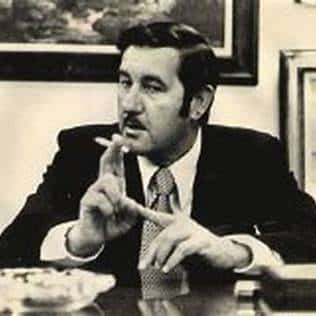
Costa Rica has always attracted outsiders with big dreams: coffee barons, banana kings, surf nomads, eco-idealists, and retirees looking for a softer life under harder sunlight. But in the early 1970s, the country also drew a rarer breed—men with money they couldn’t explain, legal problems they couldn’t outrun forever, and charm so polished it could pass as public service.
Robert Vesco didn’t come to Costa Rica to find himself. He came to lose the United States.
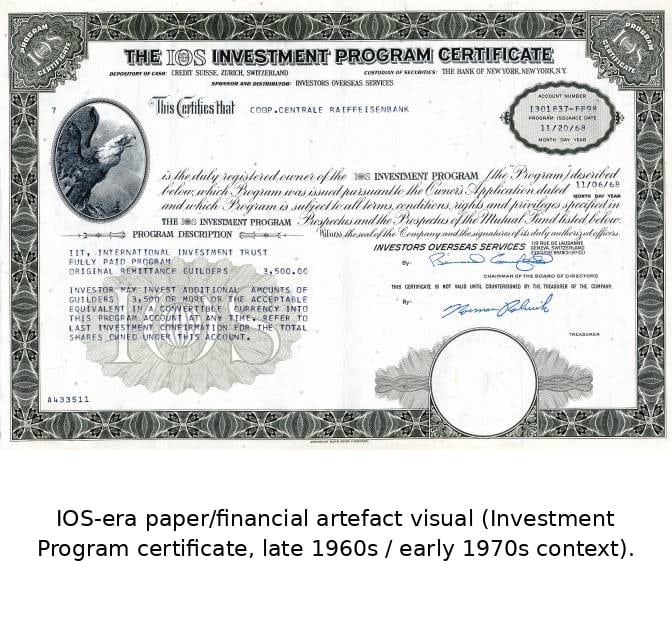
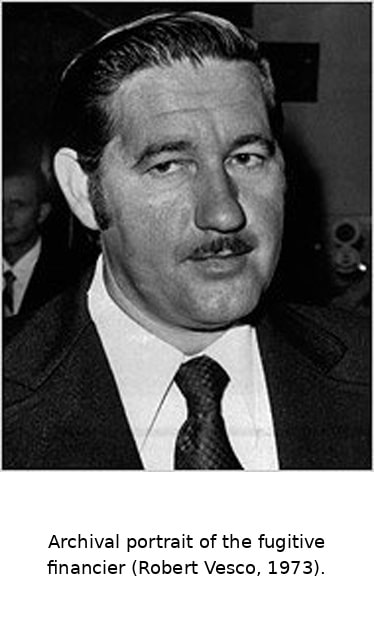
By the time his name hit Costa Rican headlines, Vesco was already one of the world’s most notorious financial fugitives—accused by U.S. regulators of siphoning hundreds of millions from Investors Overseas Services (IOS), a sprawling mutual fund empire that had been pitched to ordinary investors as a glamorous passport to global wealth. The U.S. Securities and Exchange Commission alleged more than $224 million had been stolen, and Vesco knew the next step wouldn’t be a polite letter—it would be handcuffs. (SFGATE)
The pathway: from Detroit dropout to international fugitive
Vesco’s origin story is pure American hustle—until it becomes pure American cautionary tale.
Born in Detroit, he dropped out of high school and muscled his way into business through aggressive deals and takeover tactics. He built International Controls Corp. into a powerhouse and became rich young—exactly the kind of self-made myth that looked great in profiles and disastrous in court filings later. (SFGATE)
Then came IOS. In 1970, he swooped in as the “rescuer,” buying control for under $5 million and gaining access to an estimated $400 million in funds—at a time when the company’s books were already a mess. Investigators later argued that chaos wasn’t an obstacle; it was an invitation. (SFGATE)
When scrutiny tightened, Vesco fled. First the Bahamas, then—crucially—Costa Rica, where a friendly political climate and a complicated extradition process offered something even better than a hiding place: time. (SFGATE)
Why Costa Rica?
To understand why Vesco chose Costa Rica, you have to understand what Costa Rica was in that moment.
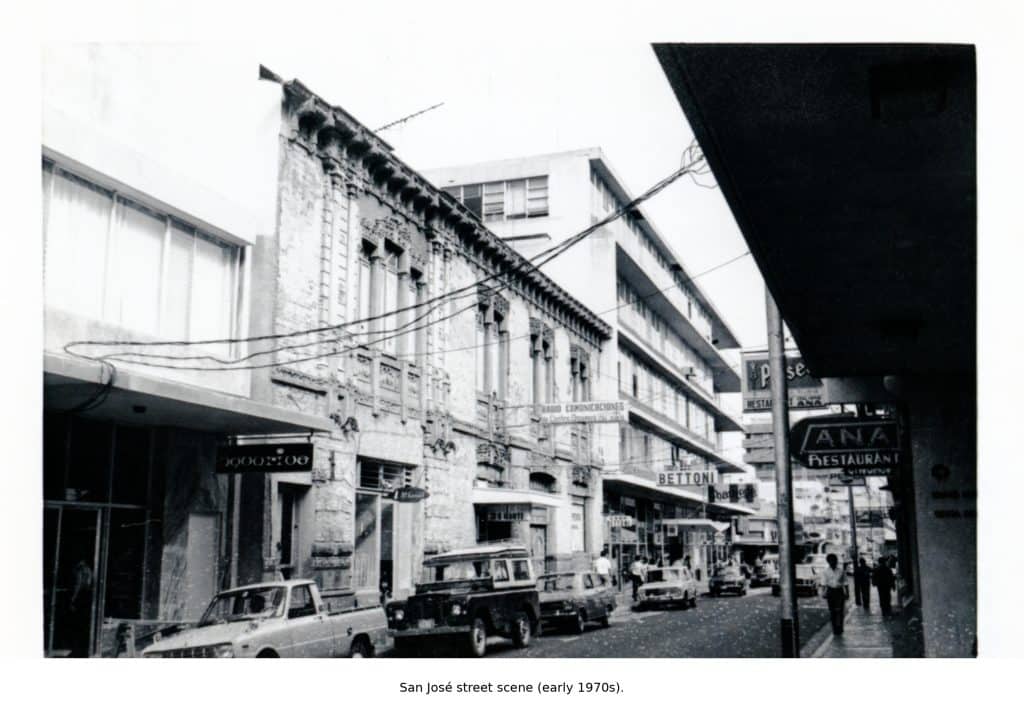
In the 1970s, Costa Rica had a reputation unlike almost any other country in the region: stable democracy, no standing army, a confident national identity, and a political culture that liked to see itself as principled and modern. It also had something else—an appetite for investment and development, especially outside San José. A man who arrived promising jobs, infrastructure, and cash donations could quickly look less like a threat and more like a “builder,” at least to the communities that benefited first.
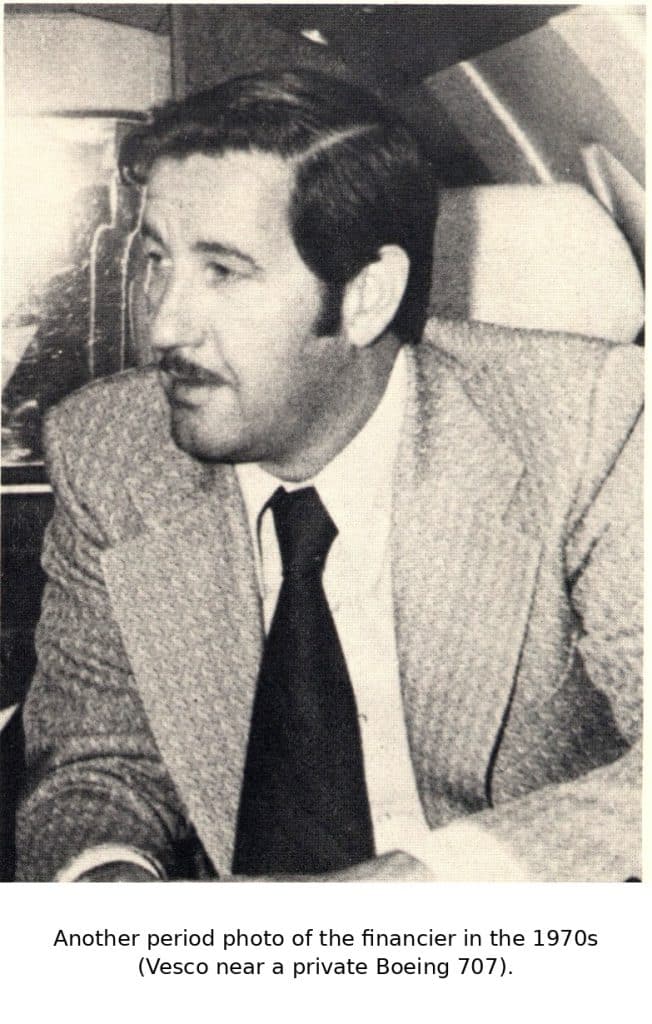
Vesco’s pitch—according to contemporaneous reporting—was to create a kind of international financial hub where foreign money would enjoy extraordinary freedom from scrutiny. And he didn’t arrive quietly. Reports describe him showing up with a yacht and a private Boeing 707, carrying the aura of a man who expected doors to open because doors had always opened. (Tico Times)
The Pepe connection: friendship, protection, and fallout
The most combustible ingredient in Vesco’s Costa Rican chapter was not his wealth. It was his access.
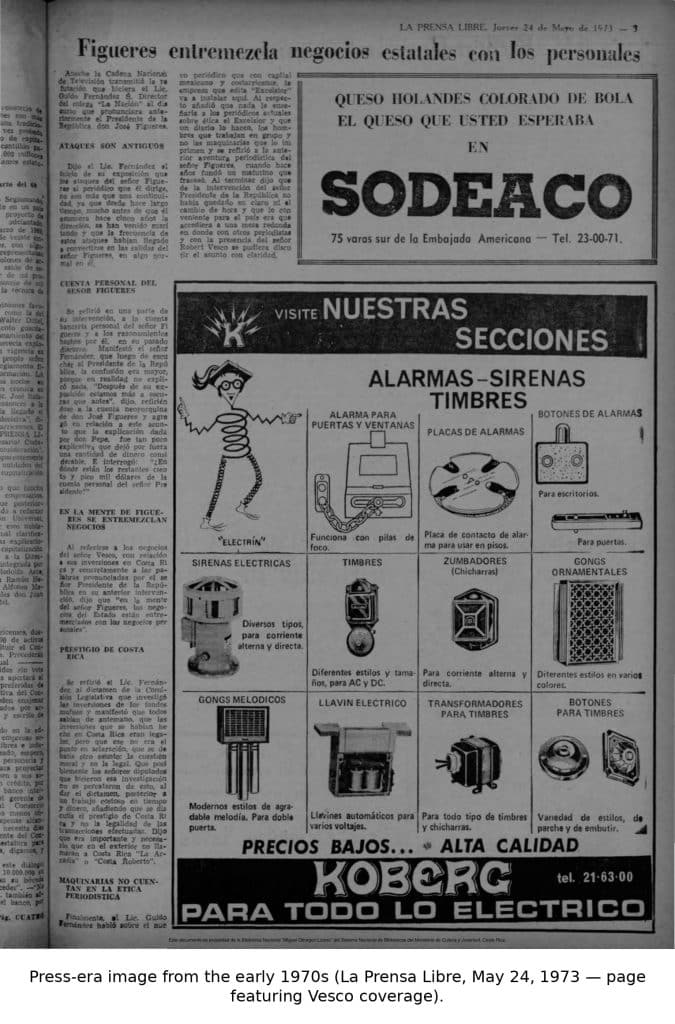
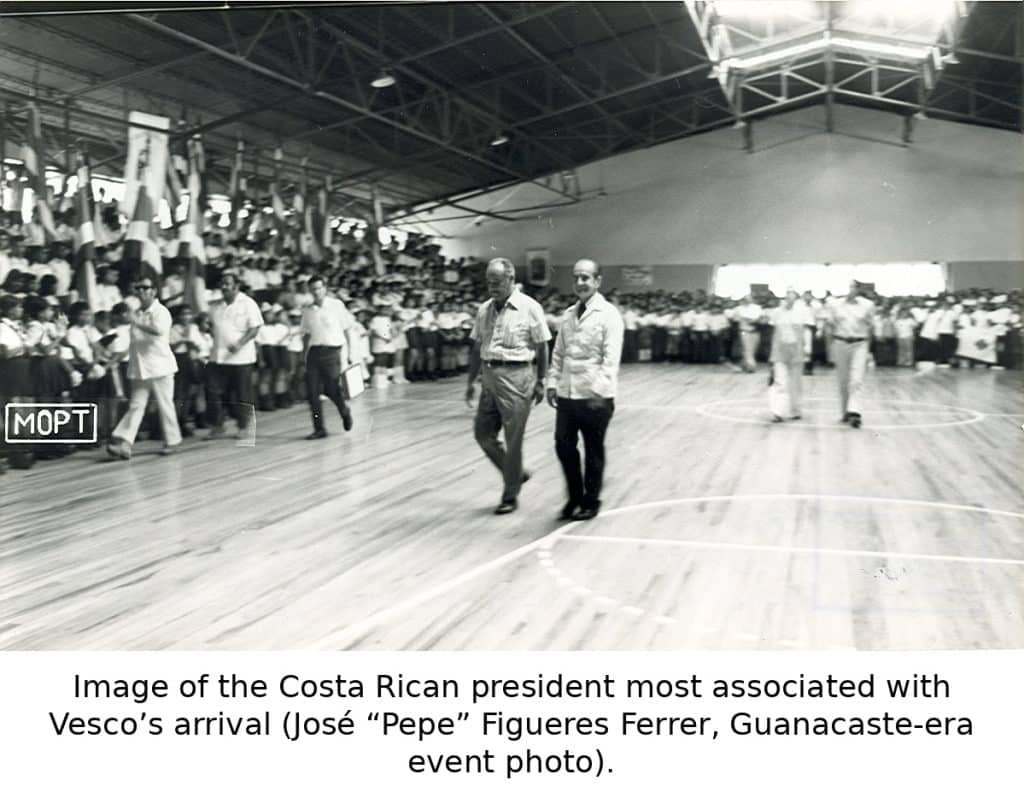
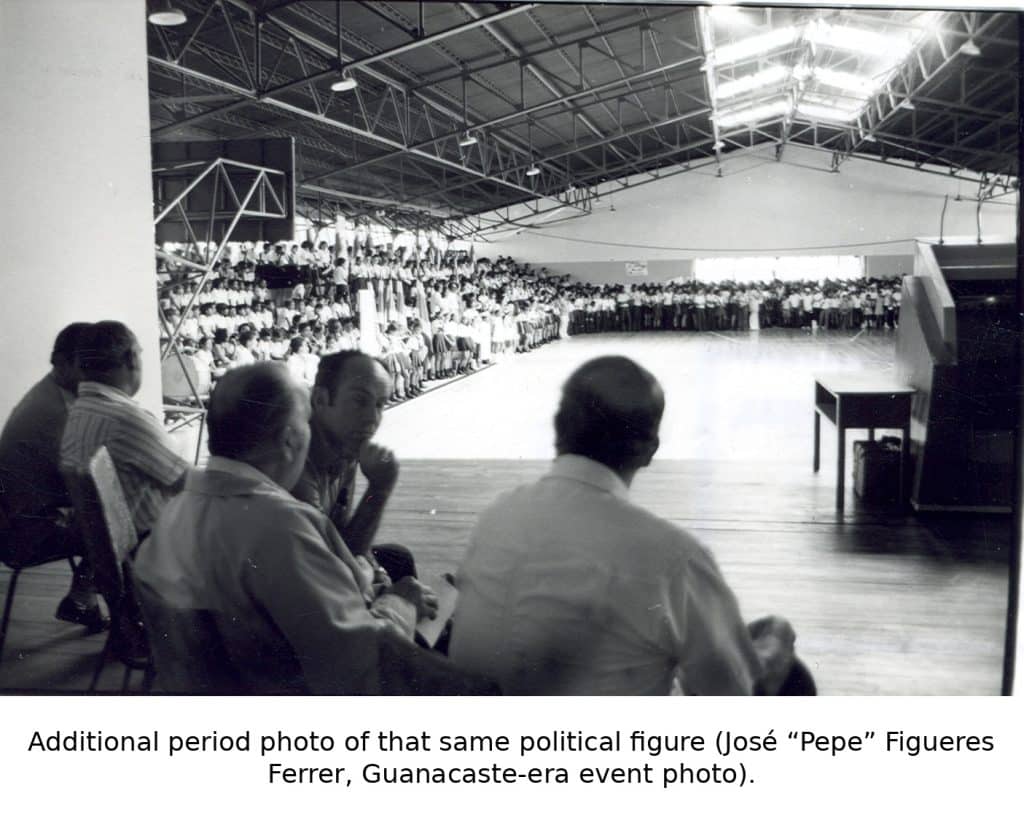
He cultivated a relationship with José “Pepe” Figueres Ferrer, three-time president, 1948 civil war leader, and a national figure whose legacy still towers over Costa Rica’s modern political identity. Vesco didn’t just mingle; he invested into circles around power, including ventures connected to Figueres. (Wikipedia)
The friendship detonated public trust because it looked like something worse than poor judgment: it looked like the national myth was for sale.
Figueres defended the relationship publicly. A widely repeated quote—attributed to him on television—captures the tone: “I wish more Vescos would come to Costa Rica — we need them.” (SFGATE)
Whether said in bravado or conviction, it landed like a confession. Costa Rica didn’t “need” fugitives; it needed credibility. And Vesco was beginning to cost the country that.
What Vesco did in Costa Rica: land, influence, and a parallel kingdom
Once in-country, Vesco moved fast—because fugitives always do.
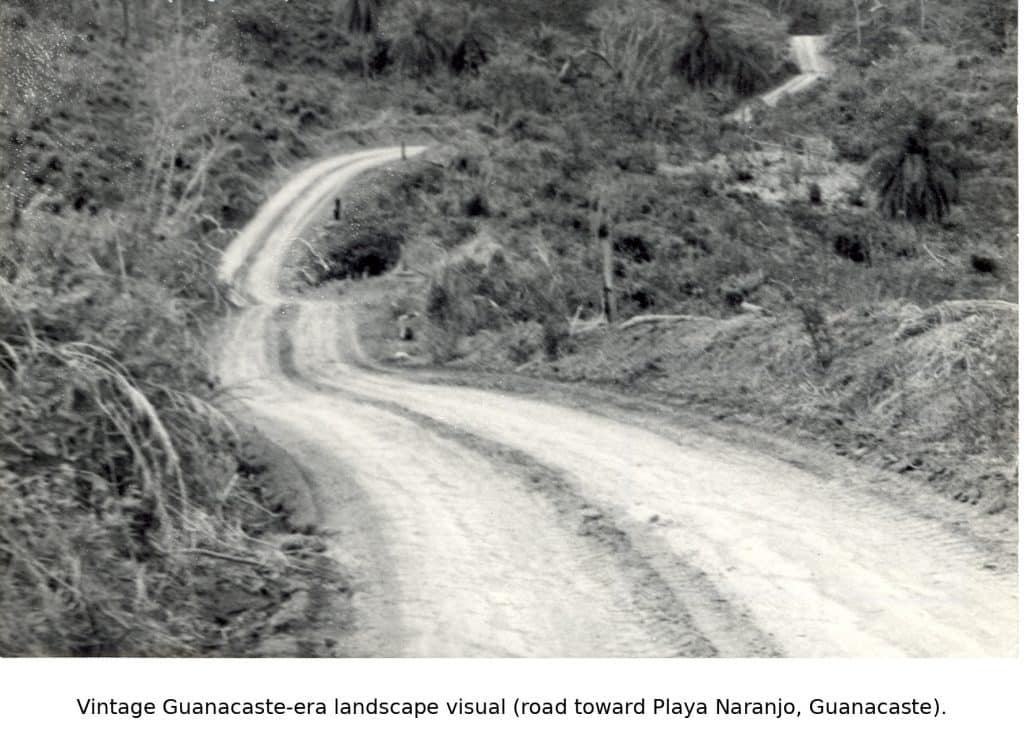
He established himself in the Central Valley and invested in businesses and properties while cultivating goodwill through philanthropy. He also acquired a large ranch property in Guanacaste, complete with an airstrip—an almost perfect tool for a man who measured safety in runway length. (Tico Times)
Locals remembered the money that flowed into schools and communities. Critics saw something darker: a man accused of massive fraud laundering legitimacy through generosity—buying protection the way others buy insurance.
He also bought into institutions in ways that blurred the line between benevolence and self-interest. One striking example reported at the time: he purchased a private school and intended to reshape it into a centre focused on learning disabilities, linked to his own family’s needs. (Tico Times)
This is how Vesco operated: not just hiding—building a life that made removal politically inconvenient.
The extradition battle—and the “Vesco Law”
The United States pushed for his extradition. Costa Rica’s system pushed back—slowly, legally, and with enough complexity to make delay feel like policy.
U.S. diplomatic cables from the era show the extradition effort unfolding in real time, including requests for a preliminary arrest warrant and assessments of the odds in Costa Rica’s courts. (Office of the Historian)
The controversy reached a peak when Costa Rica passed changes popularly nicknamed the “Vesco Law,” shifting extradition authority toward the executive branch. U.S. State Department records from 1976 discuss efforts to amend or repeal the law and its role in the broader fight to get Vesco out. (Office of the Historian)
To Costa Rican critics, it looked like the rules were being rewritten for one man. To Vesco, it was a protective moat around a very expensive castle.
The machine-gun factory idea that finally broke the spell
Every fugitive eventually makes one move too many. Vesco’s was absurd on its face—and politically radioactive.
He became linked to a plan to finance an automatic-weapons venture in Costa Rica, reportedly involving Figueres’ son. In a country defined by the abolition of its army, the optics weren’t just bad—they were surreal. The public uproar was fierce, and the idea helped transform Vesco from “controversial investor” into a national embarrassment too expensive to keep. (Tico Times)
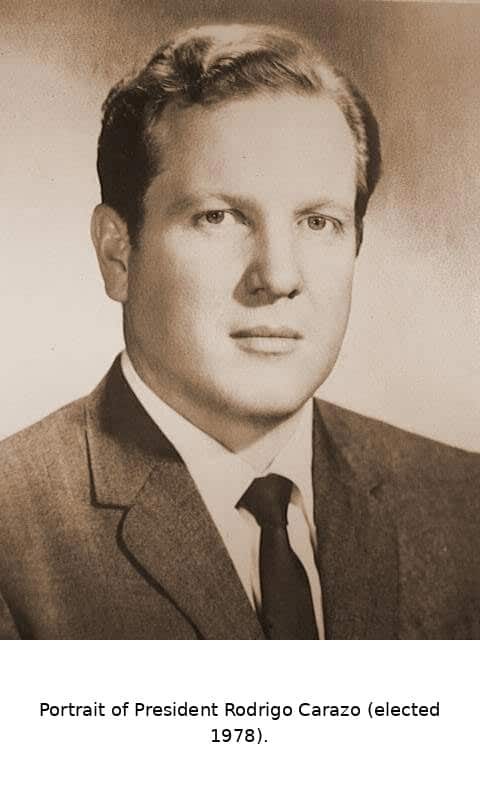
By 1978, the political winds had shifted. Rodrigo Carazo Odio ran on a promise to remove Vesco—and Vesco didn’t wait around to test how serious the new administration would be. He fled before Carazo took office. (Tico Times)
After Costa Rica: hopscotch, a near-return, and Cuba’s long trap
Vesco’s next years read like a map of places that hoped his money would outweigh his notoriety: the Bahamas, Antigua, Nicaragua—and repeated attempts to find a jurisdiction where the U.S. couldn’t reach him. (SFGATE)
In 1982, Costa Rican authorities detained him briefly after he arrived by air, but he slipped away again before the U.S. could secure extradition steps. UPI accounts from the time describe him being arrested and then fleeing once more. (UPI)
Eventually, Cuba took him in. It sounds like the perfect final hiding place—until it isn’t. Vesco later landed in serious trouble with Cuban authorities over a biotech fraud scheme tied to a supposed “wonder drug.” Reuters reported that he died in Havana in November and had spent years in Cuban jail for defrauding a lab connected to Fidel Castro’s family; he was sentenced to 13 years in 1996. (Reuters)
Costa Rica’s La Nación later reported official documents confirming his death and burial in Havana on November 23–24, 2007, citing cemetery and civil registry records. (La Nación)
Even in death, Vesco couldn’t resist becoming a rumour: stories persisted that he faked it and vanished again. That’s the kind of legend a career con artist leaves behind—part smoke, part ego, part public refusal to believe the show is finally over. (SFGATE)
What Costa Rica learned from Vesco
Vesco didn’t just leave a scandal. He left a warning.
He revealed how vulnerable any country can be—even a stable democracy—when prestige, investment hunger, and personal relationships begin to outrank transparency. He also proved something uncomfortable: that philanthropy can be both real and strategic at the same time. A donated school roof doesn’t erase the origin of the money that paid for it—but it can silence people who benefit from the roof.
And he left Costa Rica with a difficult historical footnote: the Vesco years forced the country to publicly wrestle with a question that still matters today—
How much risk is a nation willing to accept for someone else’s money?

Howler Staff are John, Terry and whomever else we can get to write great articles.