
Costa Rica Destination Weddings: Your Legal, Laid-Back Guide
Destination weddings in Costa Rica are popular because they combine a stunning holiday with a relaxed wedding and honeymoon in one trip. Instead of juggling multiple venues and dates at home, couples can gather their closest family and friends in one beautiful place and turn the whole event into a shared adventure.
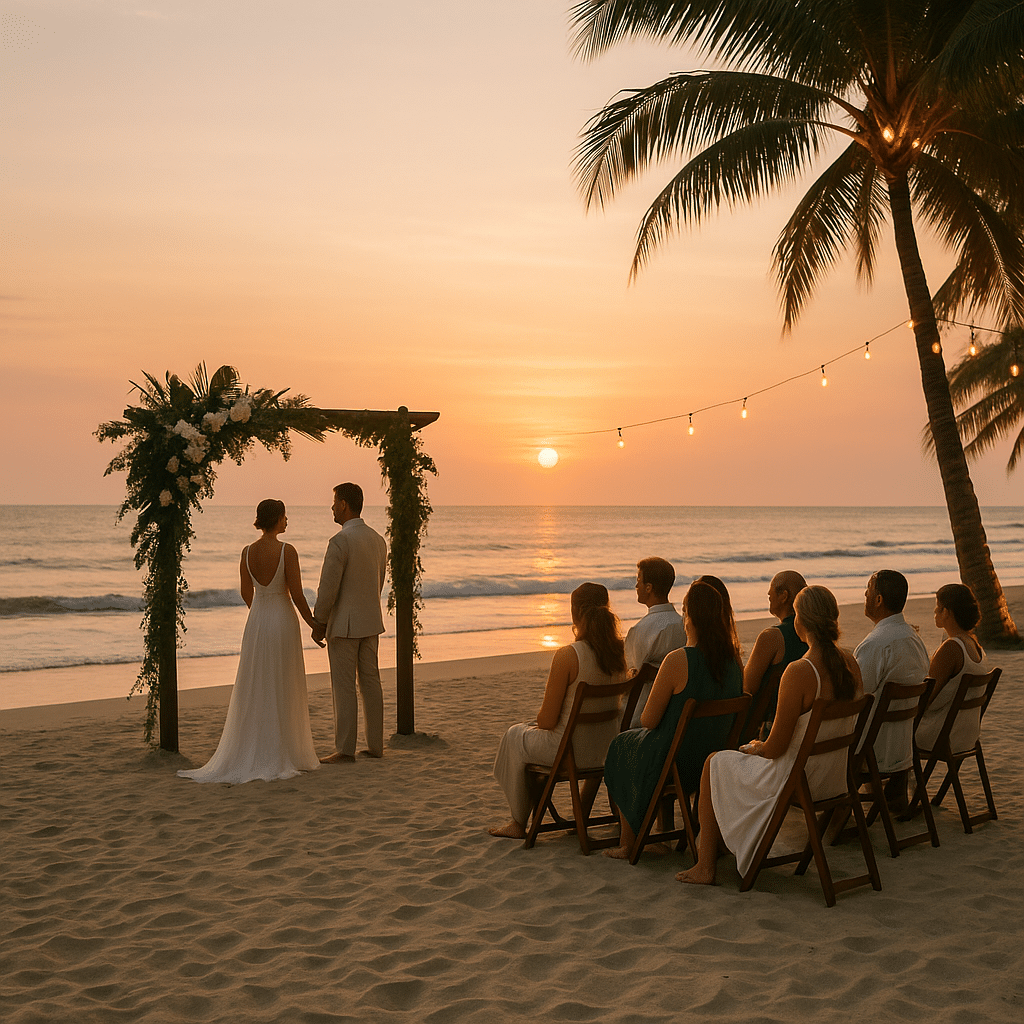
On a Pacific or Caribbean beach, at the edge of a rainforest, or beside a volcano, a Costa Rican ceremony feels more like a long, joyful house party than a rigid, formal event. Guests arrive in holiday mode, couples often stay on for their honeymoon, and many wedding parties end up dancing in the pool in their swimwear by the end of the night. The setting does a lot of the heavy lifting: palm trees, sunsets, warm evenings and local music create an effortless atmosphere.
Why are Costa Rica destination weddings so appealing?
Costa Rica works so well for destination weddings because it offers dramatic scenery, reliable services and a relaxed, holiday mood in one package. Couples can choose between beaches, rainforests, volcano views and mountain hideaways, often with everything – ceremony, reception and accommodation – in the same area.
For many guests, the wedding becomes an excuse for a once-in-a-lifetime reunion. People who might not travel just for a ceremony will happily book a tropical holiday where they can surf, hike, visit hot springs or explore national parks before and after the big day. The result is more time together and less of the “say hello, eat, say goodbye” feeling of a traditional one-day wedding.
Can a Costa Rica destination wedding be cheaper than a traditional one?
Yes, a destination wedding in Costa Rica can cost less than a big traditional wedding at home. The guest list is usually smaller, the scenery acts as natural décor, and couples often combine the wedding and honeymoon into one trip.
Typical savings come from:
- Fewer guests: long-haul flights mean only those who really want to be there will attend.
- Shared costs: guests usually pay their own flights and accommodation.
- Natural backdrops: beaches, gardens and rainforest views reduce the need for elaborate decorations.
- Combined trip: a single journey for both wedding and honeymoon saves on extra travel.
Is it legal to get married in Costa Rica?
Yes, foreign couples can have a fully legal civil wedding in Costa Rica, provided they meet the documentation requirements and use a licensed local lawyer or notary. The legal formalities are usually straightforward when handled by an experienced professional.
A lawyer can be present at the ceremony to validate the marriage while an officiant of the couple’s choice leads the vows. After the paperwork is processed, the couple receive an official marriage certificate, typically a few weeks to a couple of months later, which can then be registered in their home country if required.
What is the difference between a legal and a symbolic ceremony?
A legal ceremony in Costa Rica creates a valid marriage in law, while a symbolic ceremony is purely ceremonial and does not change marital status. Many couples choose to handle the legal part at home and enjoy a more flexible symbolic ceremony abroad.
With a symbolic ceremony:
- Any trusted person can officiate – a friend, relative or spiritual leader.
- The script can be personalised without worrying about legal wording.
- Couples often host a small legal signing at home before travelling, so paperwork is already settled.
This approach keeps bureaucracy simple while still allowing a full “wedding day” experience in Costa Rica.
What costs should couples budget for in Costa Rica?
The main costs for a Costa Rican destination wedding are the venue, suppliers and travel, with plenty of ways to scale up or down. A clear budget from the start helps a planner suggest the right options.
Key expenses to consider include:
- Destination wedding planner to coordinate venues, timelines and local suppliers
- Ceremony and reception venues (beach club, hotel, private villa or restaurant)
- Outfits for the wedding party, suited to warm, humid weather
- Photographer and/or videographer familiar with tropical light and outdoor conditions
- Music – from local DJs to live bands that match the regional vibe
- Flowers and decorations that make use of local tropical blooms
- Welcome bags or small favours with Costa Rican coffee, chocolate or local handicrafts
- Legal fees and translations (if having a legal ceremony)
- Travel logistics, including ensuring all guests have passports valid for at least six months after the wedding date
Where are the best locations in Costa Rica for a dream wedding?
The best place in Costa Rica for a destination wedding is the spot that matches the couple’s style, whether that is barefoot beach, rainforest luxury or volcano views. Different regions offer distinct atmospheres and activities.
Popular choices include:
- Manuel Antonio and nearby beaches for jungle-framed coves and wildlife spotting
- Guanacaste’s Playa Avellanas, Tamarindo, Playa Conchal and Flamingo for golden sands, sunsets and lively coastal towns
- The Caribbean side around Puerto Viejo for a more bohemian feel with rainforest and laid-back beachfront hotels
- Hotels near the Central Pacific, such as Punta Leona or boutique cliff-top properties with sweeping ocean views
- The Arenal area for dramatic volcano vistas and natural hot springs
- Hilltop and mountain estates overlooking the Central Valley for cooler air and panoramic city lights
How can couples add authentic Costa Rican flavour to their wedding?
Couples can make their Costa Rica wedding feel truly local by weaving regional food, music and experiences into the day. This creates memories guests could never have at a conventional hotel ballroom reception.
Ideas include:
- Serving typical Costa Rican dishes and fresh tropical fruit alongside the wedding menu
- Hiring local musicians to play Latin, Caribbean or folk rhythms
- Inviting a local cook to demonstrate how to make handmade tortillas, then letting guests try
- Offering coffee tastings or rum and craft-beer pairings as part of the reception
- Planning activities such as surf lessons, wildlife tours or hot-spring visits around the wedding day
Do couples really need a destination wedding planner in Costa Rica?
A specialist destination wedding planner is strongly recommended in Costa Rica because local knowledge and existing supplier relationships save stress, time and often money. Planning a wedding in another country, in a different language and legal system, is challenging to manage from abroad.
A good planner will:
- Suggest suitable venues based on budget, guest count and preferred style
- Coordinate lawyers, translators and paperwork for legal ceremonies
- Manage contracts, timelines and payments with trusted local suppliers
- Anticipate weather, transport and cultural factors international couples may not think about
With expert help on the ground, the main task for the couple is to choose a planner they trust and clearly communicate their vision and priorities.
FAQ: Costa Rica Destination Weddings
How far in advance should a Costa Rica destination wedding be planned?
Most couples start planning 12 to 18 months ahead, especially for popular dry-season dates between December and April, although smaller weddings can sometimes be arranged more quickly.
What is the best time of year for a beach wedding in Costa Rica?
The dry season, from roughly December to April, usually offers the most reliable sunshine, but the green season can be more affordable and beautifully lush, with passing showers rather than all-day rain in many regions.
Do guests need special vaccinations to attend a wedding in Costa Rica?
Guests should check official health advice for their home country, but for most travellers to the main tourist regions, standard routine vaccinations are usually sufficient.
Can guests extend their stay for a holiday after the wedding?
Yes, many guests turn the trip into a longer holiday, adding a few days for national parks, hot springs, adventure tours or extra beach time.
Is Spanish essential for planning a Costa Rica wedding?
It helps, but it is not essential; most hotels and professional planners speak English and can handle communication with local suppliers on the couple’s behalf.

Howler Staff are John, Terry and whomever else we can get to write great articles.