
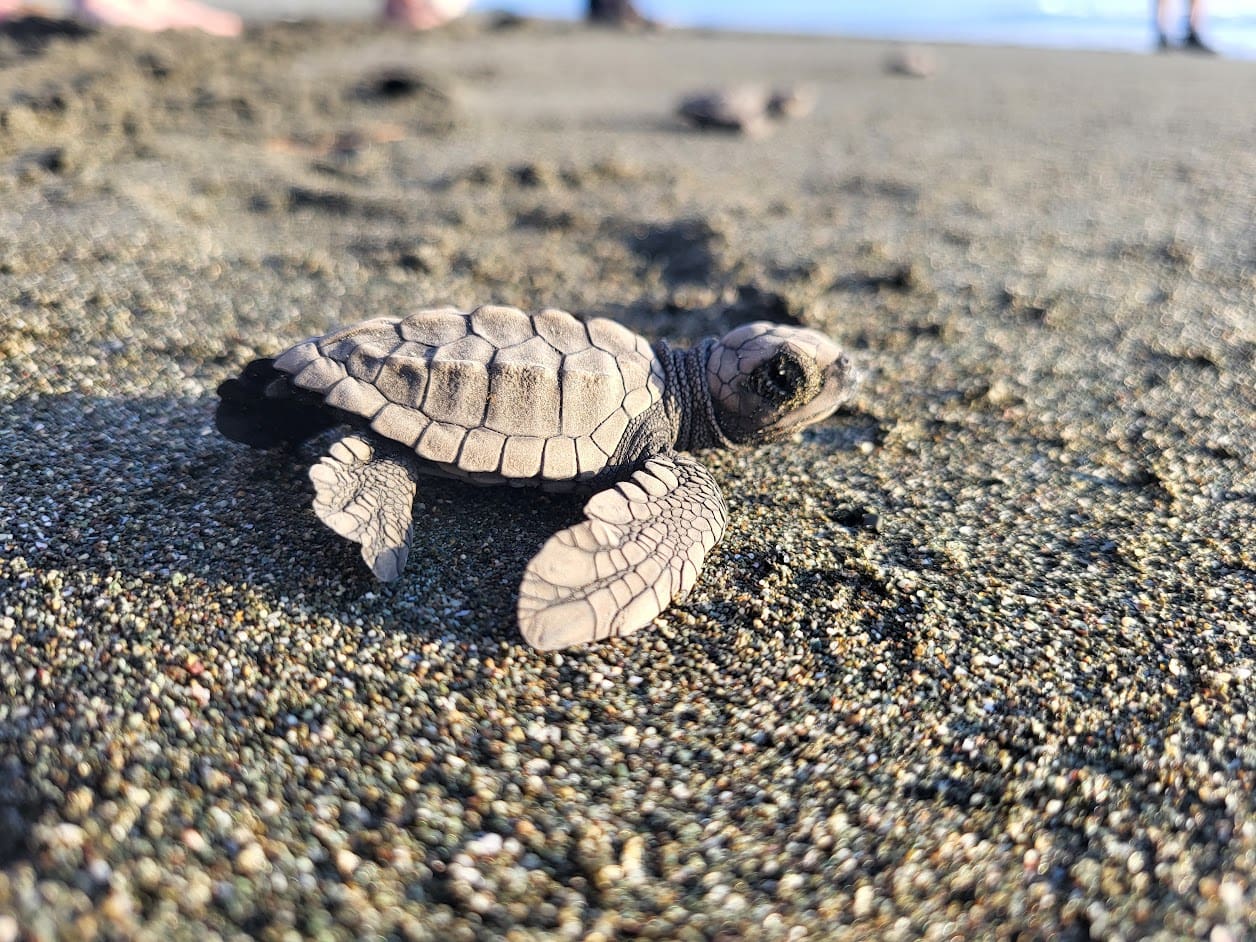
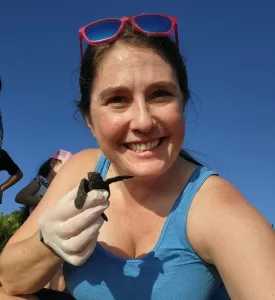
The new little lives struggled over each other as they courageously floundered en masse toward the waiting waves. A millennia of history untold was now unveiled before our very eyes. Tears streamed down my cheeks on this beach in Costa Rica. I was leading a group of excited conservationists from Colorado to the Osa Peninsula. This is one of the brightest biological hotspots left on our planet. Diversity just drips from the leaves. It is a little green oasis left on the Earth, where so often now we only see concrete and asphalt jungle. We were releasing hundreds of newly hatched sea turtles with our colleagues from Tortugas Preciosas de Osa. The Katie Adamson Conservation Fund has been collaborating with this team for almost eight years. I am a retired zookeeper from Denver, but my history is with much larger teammates. For twenty-five years I served as a pachyderm keeper, taking care of great gray behemoths. Now I am smitten with these little dinosaurs in our hands. We weigh and measure them with surgical precision, as our native researchers write down all the data that records our efforts here together. Then, at daybreak, we take buckets of babies out to the beach. The morning overwhelms me.
Caracaras waited in the trees for a chance to sniper one breakfast nugget away, but our community was aware and protective of our charges. The army of Olive Ridleys, Pacific Greens, and amazingly agile Hawksbills were being drawn by a genetic force coded deep inside. They were runners and took off on this last thirty-yard jaunt to their new turquoise freedom. Newly escaped from shells and then sand, this was where they would spread their flippers and grow into the next generation. I let my mind drift to visions of twenty years in the future and seeing a large female laboriously trudging up these same sands to dig and lay. One of these little ladies, amongst the hordes we are releasing, would be the survivor to carry on this ancient tradition.
Frigates found our fray and soared over the breakers for a chance to be the first to start thinning the pack. One female caught a sea turtle at the surface and our horde gasped together. Were we to watch one of our babies be eaten in front of us? Nature can be a harsh teacher. The writhing and flapping helped the little one escape and fall back to the blue. The frigate was determined and in hot pursuit, but the sea turtle hit the water and dove. The bird would go hungry this morning. Cheers erupted from the sands and high fives clapped like waves upon the shore. A lesson learned, this hatchling gets a second chance to dance the depths.
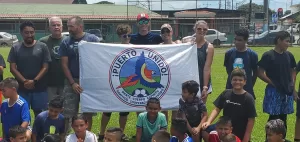
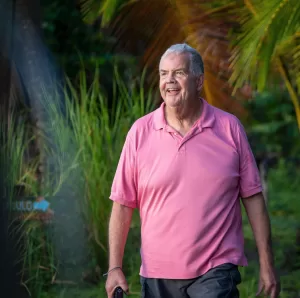
We celebrated our day with a soccer match with the local kids’ club. We played divided between the next generation of humans on the Osa. Would these bipeds be the culprits that bring extinction to their reptilian neighbors, or could we help solidify a passion for the biodiversity that surrounds them? We had zookeepers and spouses, zoo volunteers, board members, and animal nerds all kicking, heading, and falling amongst the grass. Our age and inexperience were both apparent quickly as the young used the old as cones for dribbling antics. Scarlet macaws screeched their approval overhead, and folks stopped by to watch on the streets. We ended in a one-one draw with both sides feeling elated and exhausted. Chuck was our seventy-five-year-old goalie from Minnesota. A veteran zoo volunteer who loves lions and relishes rhinos, he stopped many goals from the boots of babes, but could not be taught how to talk trash to the youngsters. He resonates with a Minnesota nice that draws our communities from around the world to his feet like the mayor on a global stage of conservation that allows us our fusion of cultures. Laughter always accompanies Chuck everywhere he treads on this planet. Nepal, South Africa, Tanzania and now Costa Rica. He knows only friends and what the KACF has built is truly upon this man’s shoulders and through his infectious laugh. The macaws have nothing on Chuck.
 After the match, we make sure the coach has connections with our sea turtle team so the kids can help release hatchlings and see this amazing spectacle that occurs just down a dirt road from their pitch. If they all go assist with the hatchery our KACF community will support them with balls, cones, jerseys, and more. They must be a part of the solution. It is our mantra. Over the next few months, we hear stories of how the children bring their parents to spend time on the sands and watch these little life forces become neighbors. We teach from the youth up. Sometimes that is the best way to keep the eggs from being poached, and the wildlife from being exploited. It is the voice of the child that will help our cause and resonate with their elders. Mission accomplished.
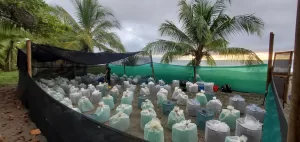 The rest of the trip is made up of planting trees, exploring Corcovado National Park, paddling at night amongst the silvery splash of bioluminescence, releasing snakes to the wild, seeing rehabbed sloths in the trees, and participating in a peccary party. How is it that my new career can encompass so much love? I left zookeeping in June of 2023 to pursue a new passion. We started this NGO for conservation after the loss of a zoo explorer scout. When Katie passed from cancer, we decided to not let her courageous spirit drift away. The KACF was now born from her ashes. A phoenix for the planet, our community carries her love with us everywhere we travel. After a decade of finding ourselves and growing our outreach, I was stepping aside from the career I knew and loved to be the executive director of our fund. This was the bold move that I needed to make.
 I had dreamed of this career since my youth which was spent in the mountains of North Carolina. I grew up near Asheville along the Appalachian Trail. My younger days were spent capturing salamanders, looking for grouse, picking ticks off my clothes, and talking endlessly about the wildlife at our door. I was an explorer from the onset, with a wicked imagination. At four years old I became an ostrich. For four days I had wings and would peck at my meals with an imagined beak and eight-foot-tall frame. I earned a spot at a therapy session where the doctor told my mom that I was normal and would outgrow this preoccupation. She would laugh later at how wrong that doctor was.
At fifteen, I was given a volunteer spot at the Western North Carolina Nature Center. My parents had to drive me back and forth to work with the rats, mice, and eventually the petting zoo. I felt like I had been drafted with the number one pick to the most esteemed NFL franchise. I had arrived. I excelled at my weekend job and quickly annoyed anyone within earshot with stories, dreams, and questions. I had the gift of gab. It’s a Southern thing, and I can make you understand. That is where I fell in love with Henrietta, the elephant. I could sit and watch her bustle about her little life and would be taken to new places, exotic highlands, and acacia woodlands. I was no longer an ostrich, but the ratite still inside wanted to erupt into a planet-saving hero who could impassion people to share better and love those that we live beside.
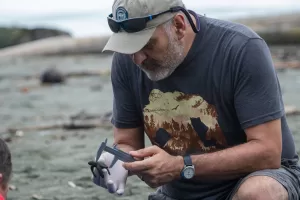
Now, here I stand at fifty-five years old, on this precipice with toes digging in the Costa Rican sand. I am working on my fourth children’s book which will now be translated into four different languages for children around the globe to enjoy. One of these is Spanish. I am excited to come back to these places to share a new part of our story.
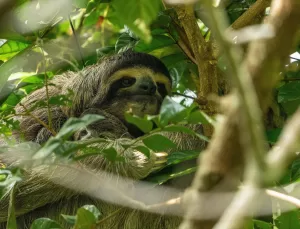
A sloth in the cecropia tree overhead, lets me know that I have chosen wisely. He smiles down at his planet partner as he chews slowly and contently. I plan to return to Costa Rica three times this year. There are too many people to inspire and community connections to be made. Retirement is not for the weak. A jaguar trek in the Talamancas with NAMA and Carolina awaits. The Tapir Valley team will soon be hosting our plant-a-thon. Then it is back to the Osa where turtles tread and where dreams become fulfilled. This bit of heaven on Earth helps me think that maybe we have a chance to save the wildlife that surrounds us. Maybe the KACF can awaken the masses as to what is truly happening to the creatures that we share this planet with. Let us work together and build this partnership. Like the mighty frigate, sometimes things may slip away from us all too quickly and we are left wondering what could have been.